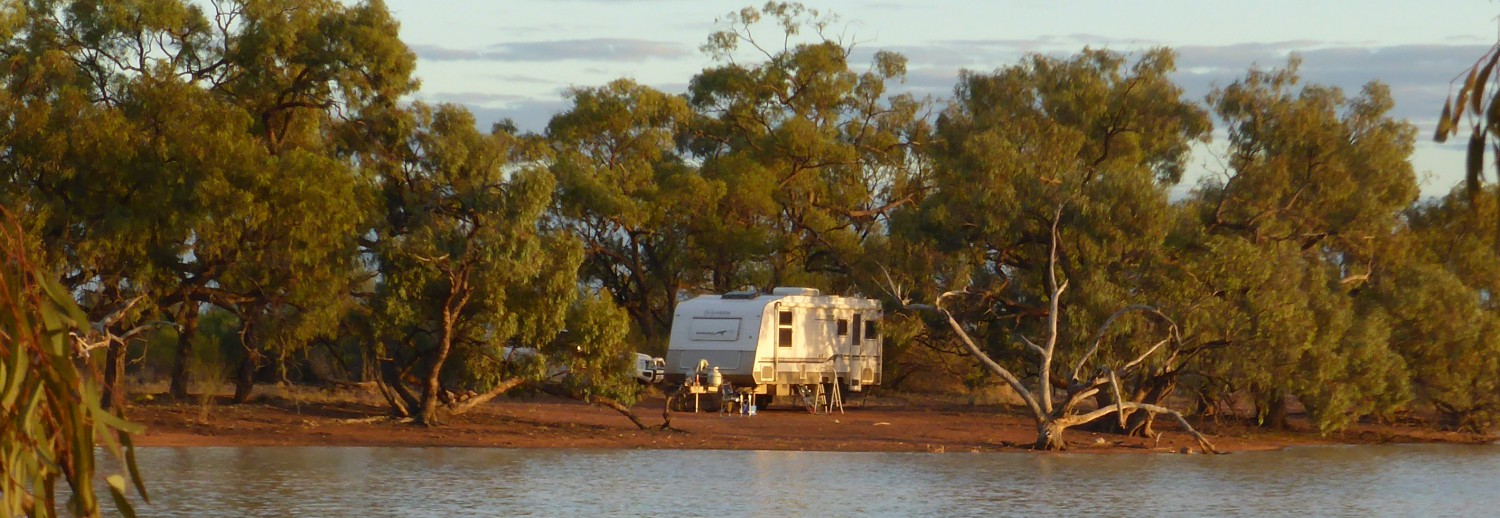
We cruised overnight to the mouth of the Sepic River, waited at the entrance until daybreak then began our approximately 150 km trip up the Sepic. This amazing river is one of the greatest wild rivers on earth, remaining virtually as it has been for thousands of years. The valley is wide and flat, 1100 km long and meandering along in huge sweeping bends. Today the water is about 20m deep water along our route but sometimes it floods to several metres deeper. Even now the flood plain has dozens of large deep lakes and many tributaries so during flood it must be incredible.
Thousands of people live in remote villages. Their subsistence lifestyle is based on fishing and gardening, growing such crops as yams, taro, corn, bananas, water melon and sago. Fish are still plentiful and the land hasn’t been over cropped so there is no reason that it can’t survive for a long time yet. Sepic people believe that they are related to crocodiles and their special relationship with the River is obvious.
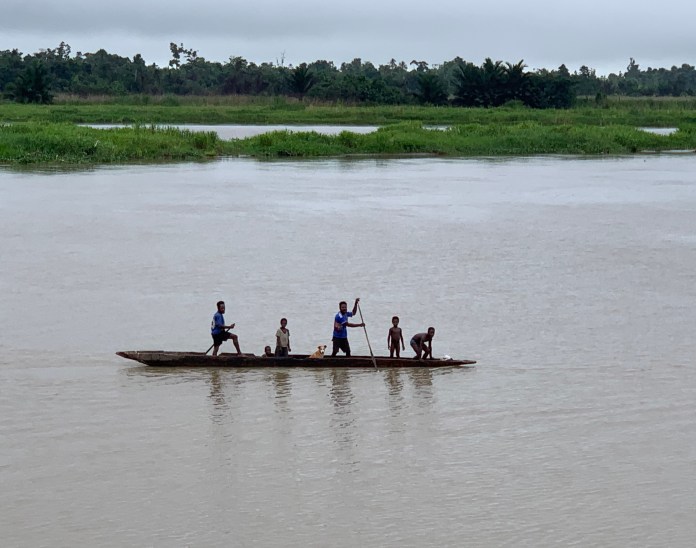
These were amongst the first to meet us when we entered the Sepic
Then hundreds met us along the way, hoping for us to kick balls to them, which they gathered enthusiastically

Our visit created much excitement, 25 canoes at this village, just one of many
We took 2 trips in the tenders, firstly to Angoram for artifact shopping.
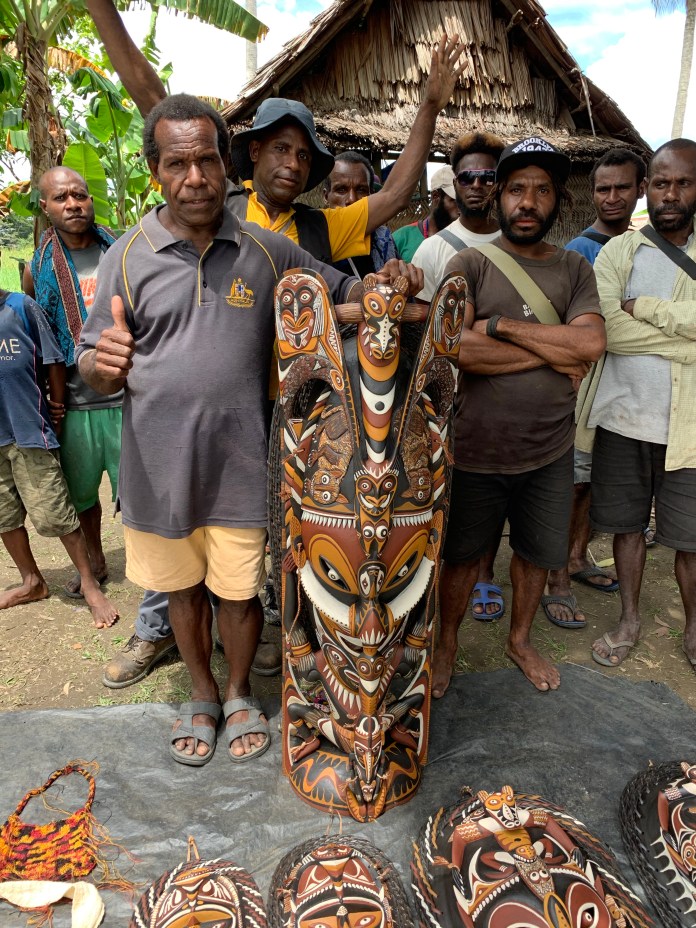
Sepic artefacts are magnificent, this one for $1500; we didn’t buy it.
I came here 50 years ago and things don’t appear to have changed much. The most obvious changes since 1969 are a phone tower that would be used mainly by government officials and now there are more people speaking English, although still not many. Pigin is of course the prevalent language so I had lots of fun trying out my Pigin skills.
The next trip was through a long, deep creek/channel with villages dotted along the banks. Kids and adults alike sang out to us, partly to say Hi but also to either sell us produce, e.g. tiny live crocodiles or water melons, or to ask for mosquito nets or clothing that they knew we would have.
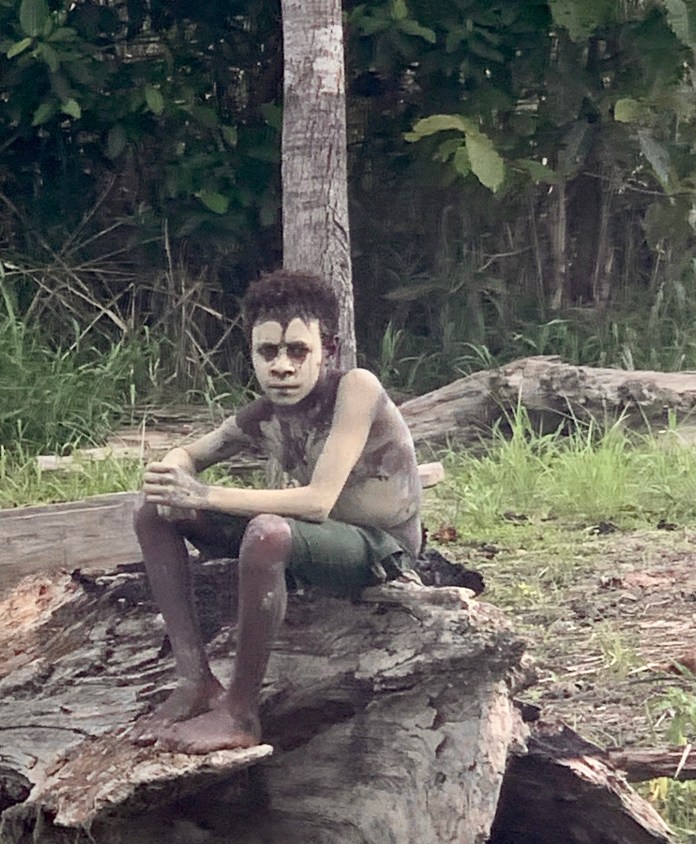
They weren’t all trying to sell something
True North visits the Sepic 3 or 4 times each year and the villagers know that the crew bring gifts. The gifts are gratefully received and often people give us water melons or flowers in return. Next stop was at a stilt village comprised of 30 or 40 houses built high above the lake on wooden posts, presumably above flood level. The Government provided land for these people a few years ago so that they could have more stable living conditions but within a few months they had all moved back to the lake. They paddle their boats for a couple of hours to tend their gardens and raise pigs in their stilt houses. They also farm crocodiles and can make quite good money from that. Although they are poor they seem to be quite content.
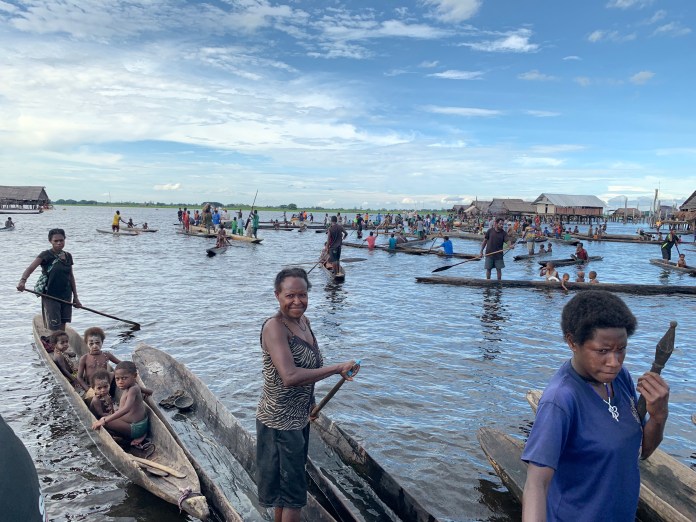
A warm welcome at the stilt village
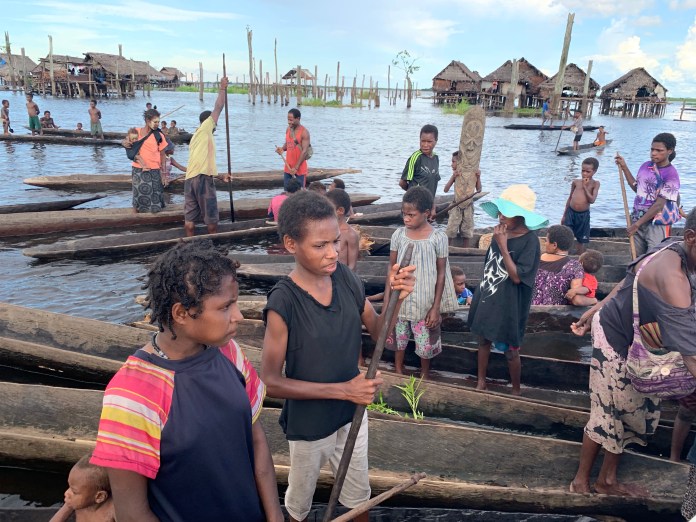
A neighbourhood chat at the stilt village
Today’s trips on the Sepic certainly gave us plenty to think and talk about back on the True North for the night.
 Ted and Jo