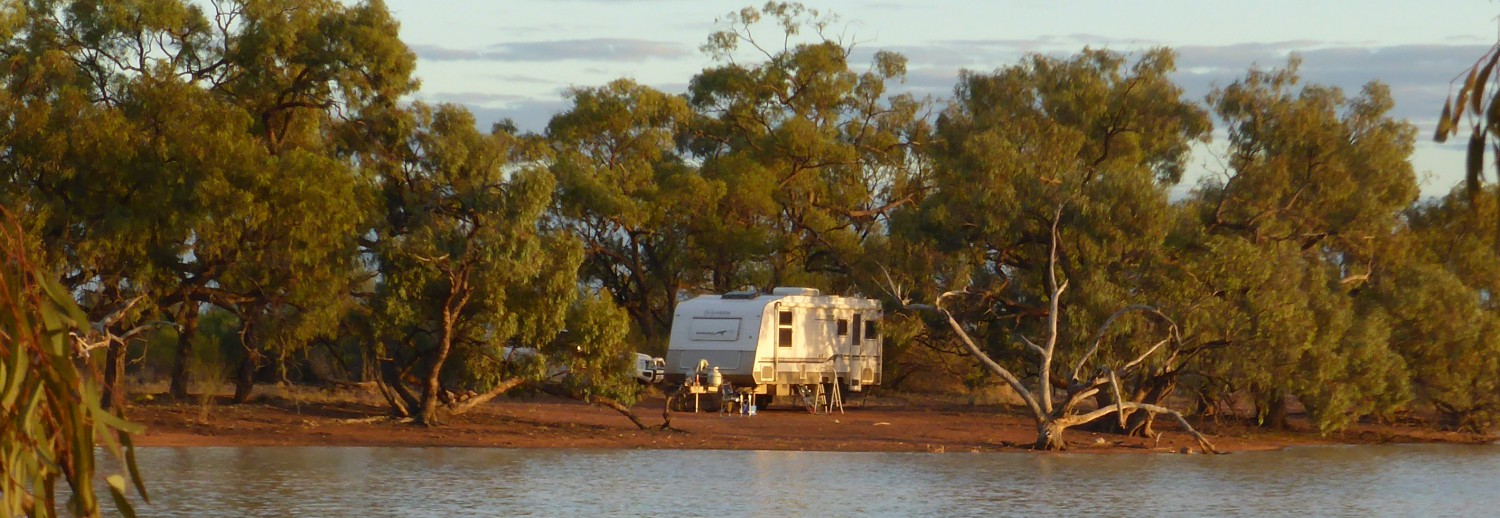
Firstly, a note about COVID-19. When we left Adelaide two weeks ago we were so happy that Australia was in a good position. We acknowledge that people all over the world are suffering and we feel sad for them. In Australia all state borders were open and we could travel anywhere. We have both had our first vaccination and felt comfortable – and very fortunate – to be able to go on a long holiday. We knew of course that things could change at any time. Then Victoria got hit again and now that state is in quite severe lockdown conditions again and other states have again closed their borders to Victorians. We feel sad for our Victorian families and friends who are again struggling with restrictions. To all Victorians, we wish you well.
A long time ago, probably 30 years or so, we visited Fraser Island on a 2 or 3 night coach trip from Hervey Bay and enjoyed it so much that this year we decided to make Fraser Island our first target destination. It is about 2500 km from Adelaide, 10 days on the road, including 2 rest days so quite easy travelling.
Fraser Island is as good as we remembered. The largest sand island in the world, it is about 150 km from north to south by 15 km east to west, with wild ocean on the east coast and calmer sheltered waters on the west coast. The eastern beach is wide with mainly flat, firm sand at low tide making driving relatively easy and safe for a high-clearance 4WD vehicle, but at high tide driving is virtually impossible. What an amazing place it is, but more about it later.
First we had to drive through eastern South Australia, western New South Wales and south-western Queensland. After recent rains most of the countryside along the way looks good; cropping and sheep grazing in SA, sheep and feral goats (never seen so many goats) in NSW and eventually cattle, cotton and sorghum in Qld.
We camped at Mannahill rest area on the first night out of Adelaide, adjacent to the very old pub, then reached Broken Hill on day 2. At a coffee shop there I used my first aid skills to assist a 97-year old woman who had fallen in the shop and cut her head. She was lucid and seemed ok but had to wait for an ambulance. She asked if I was a doctor so I was pleased to be able to tell her that no, I am a surf lifesaver and she is the first person I’ve saved this far from the ocean.

On Day 4 we camped at a really nice camp site, beside a creek at Bollon in Qld and enjoyed our first rest day.

The next night we found another nice place in a national park at Lake Broadwater Conservation Park, where the lake was half full for the first time in years. Lots of swans, pelicans, ducks and cockatoos kept us company.

We spent a couple of nights at Kilkivan Bush Caravan Park, where we had stayed a few years ago.
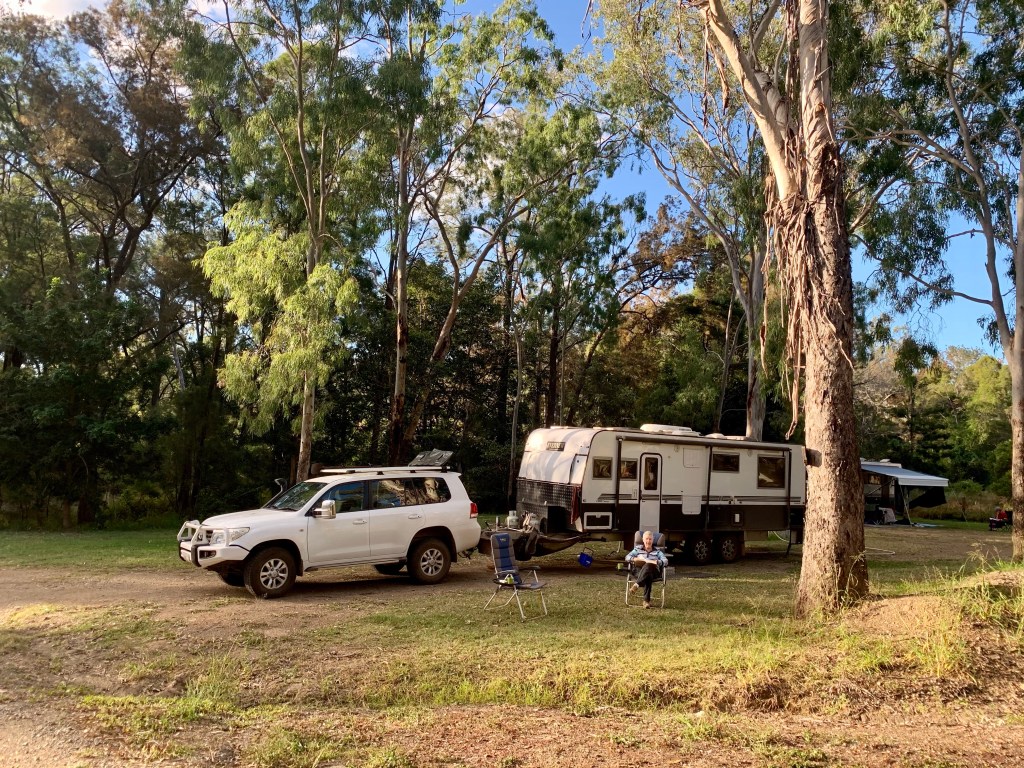
Our neighbours at Kilkivan came from near Rainbow Beach so we picked up good information about this part of Qld before we moved on to Rainbow Beach for a night.
Then the fun started. After several days of rain in Rainbow Beach and on Fraser Island, we were told by “everyone” that the sand on the beach would be firm and we would have no trouble.

Instead of deflating tires before boarding the ferry for the 10 minute ride, we decided to wait until we disembarked the ferry on the beach at Fraser Island and do it there.

The three trucks disembarked before us, churning up the beach and guess what! – our caravan got bogged as soon as the wheels left the ferry ramp.
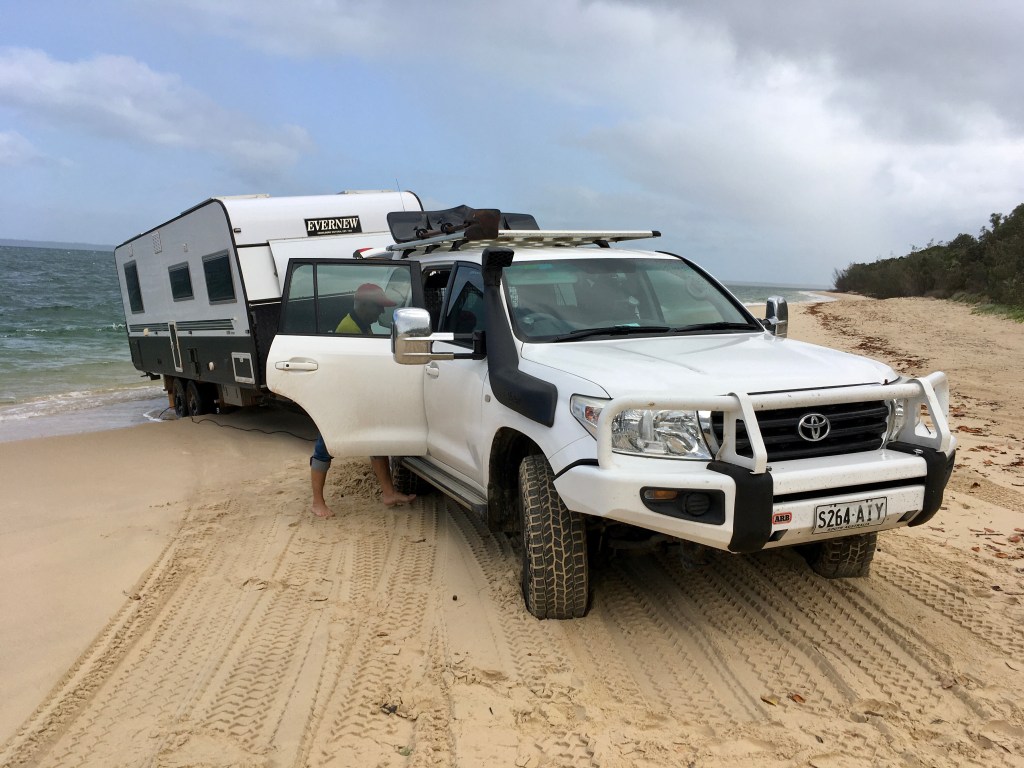
After deflating our tyres, which we should have done before boarding the ferry, and borrowing 4 max tracks, we escaped from the soft, wet sand and headed north along the firm beach. 800 people had been on the island over the weekend for a volunteer clean-up event so the beach was like a highway in the rain. We have never seen so many 4WD’s in one location. There were also a few trucks and tourist buses, even a plane using the beach for sightseeing flights – an amazing drive that included the famous dingos on the beach.
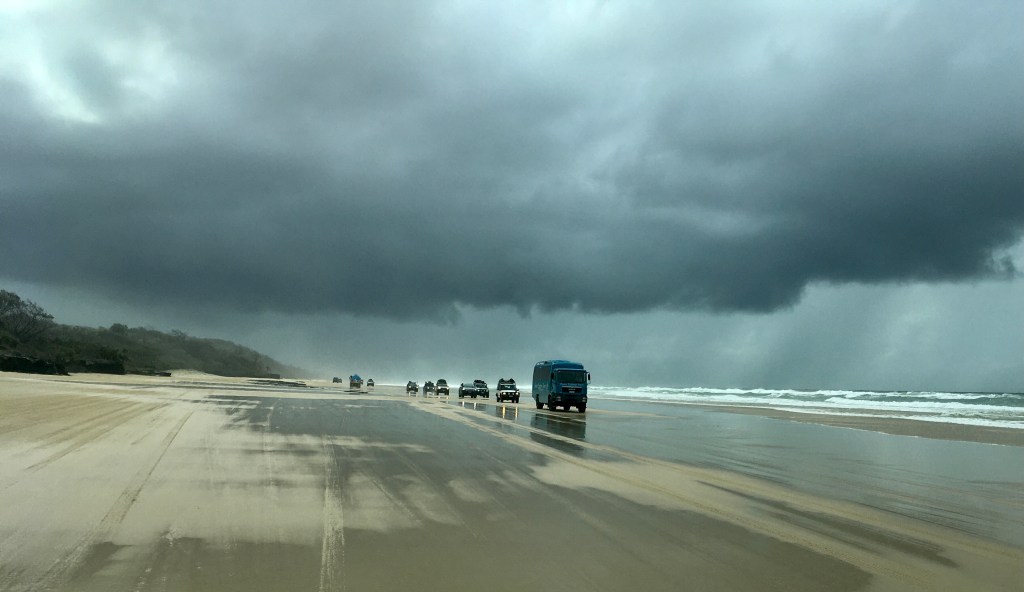
Photo of cars on the beach, plane taking off, dingos
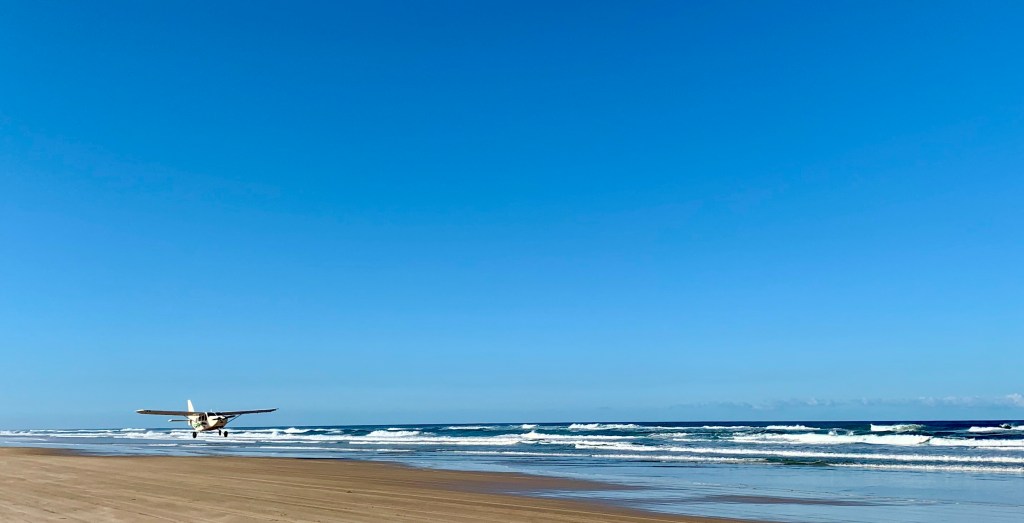
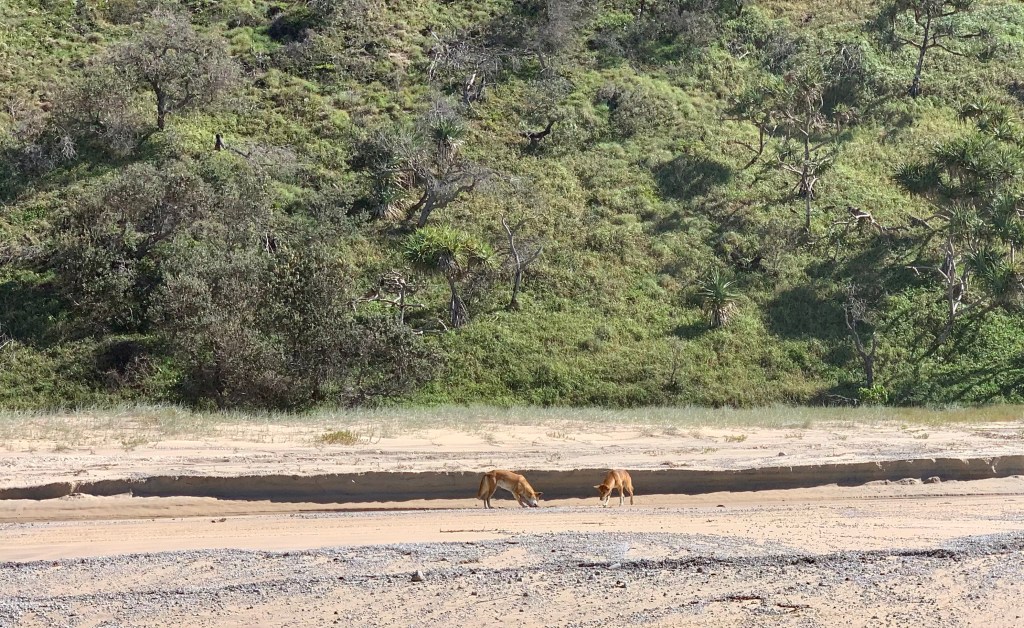
Two hours later we settled in at Cathedrals caravan park, setting up between showers of rain and relaxed for our first evening. It is a beautiful park a couple of hundred metres off the beach, with trees, shrubs and green grass everywhere.

The next morning, after a visit from the local goannas, we started exploring, with an hour driving along the beach and a long drive along a rough sandy track to Orchid Beach for lunch. Oops! Lunch was not on that day so we had a pie instead. Beach and sandy track driving is good fun and we had no trouble finding our way back to the caravan park where we enjoyed a camp fire evening with neighbours.
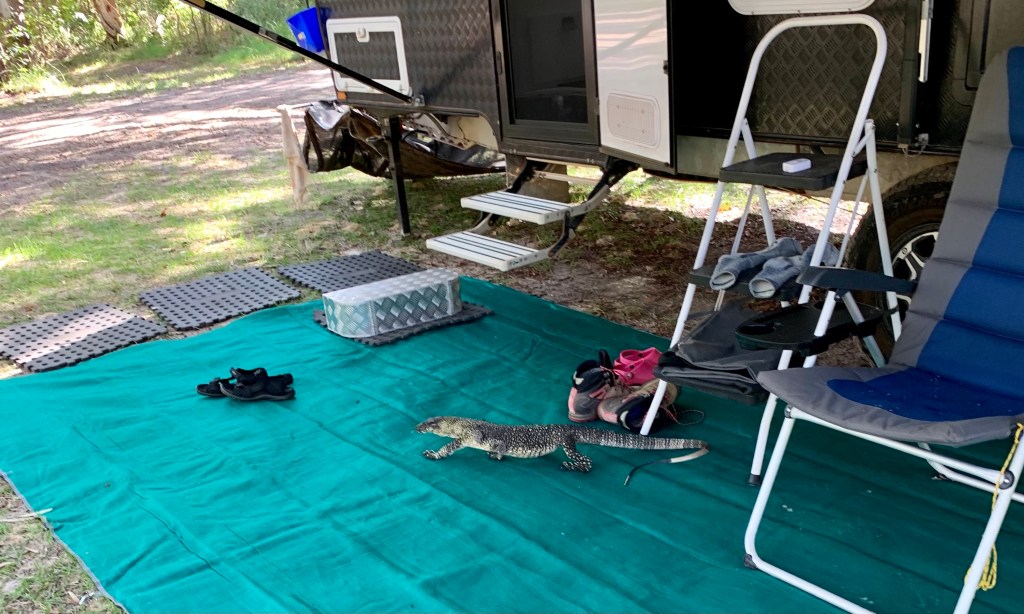
Every Fraser Island trip involves beach and inland sandy track driving. On the second day we went along the beach to Eurong, where we stayed all those years ago, then inland to beautiful Lake Mackenzie in the centre of the island. Only 6 months ago over half the island was burnt in a huge bushfire but it has recovered at an amazing rate, due the sunshine, warmth and rain that happens in coastal Qld. Trips here take a long time because the narrow, rough tracks that allow an average speed of only about 10 kph. The scenery is beautiful, with hundreds of varieties if vegetation.
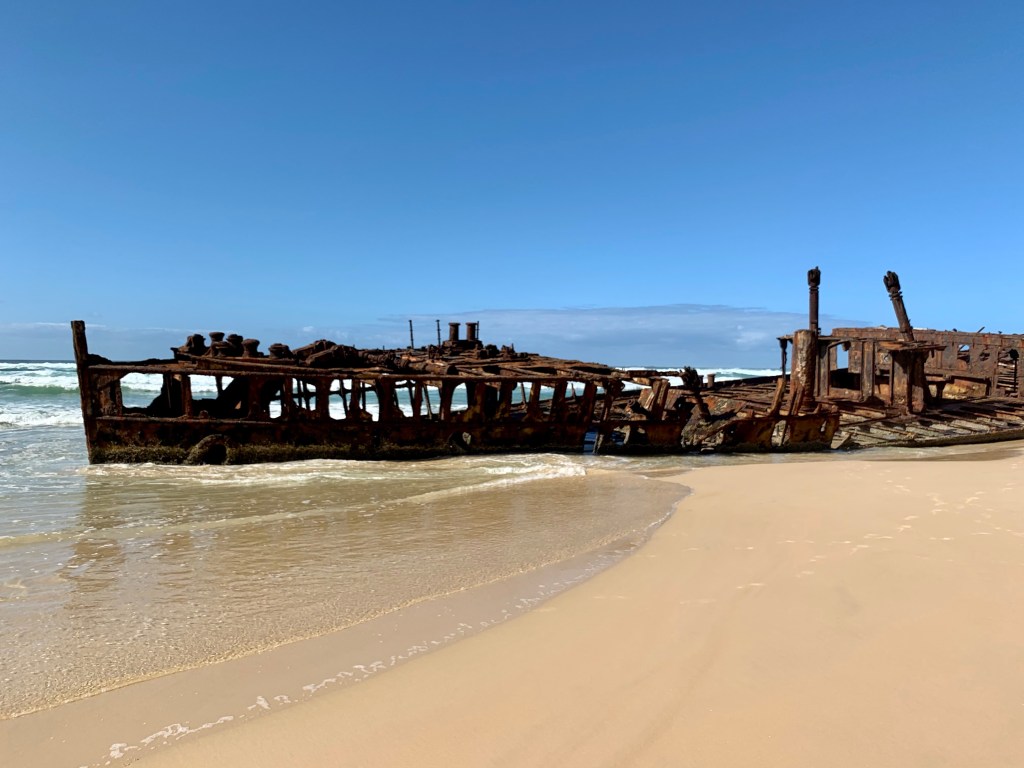

All driving needs to occur within 3 hours each side of low tide so that means paying attention to tide times. Therefore instead of having lunch in the caravan we had to buy pies and cream buns at the Eurong bakery and eat them beside the inland track; it’s a tough life.
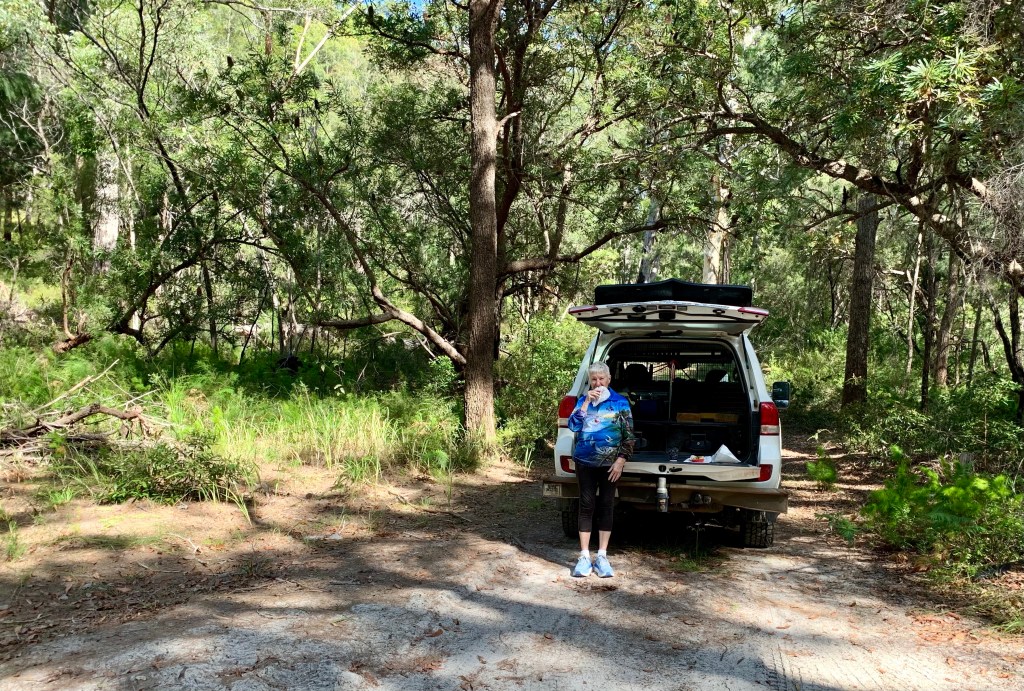
After another camp fire evening we decided to take a short drive for our 3rd day on the island. We started with hamburgers at the caravan park, then a 10 minute beach drive and a 10 km Sandy track, which took over an hour. This took us to Lake Allom, a freshwater perched lake, in sand dunes 150m above sea level where fish and turtles live in isolation from the rest of the world. It’s incredible to see nature at its best. The short drive and a bush walk took 4 hours.
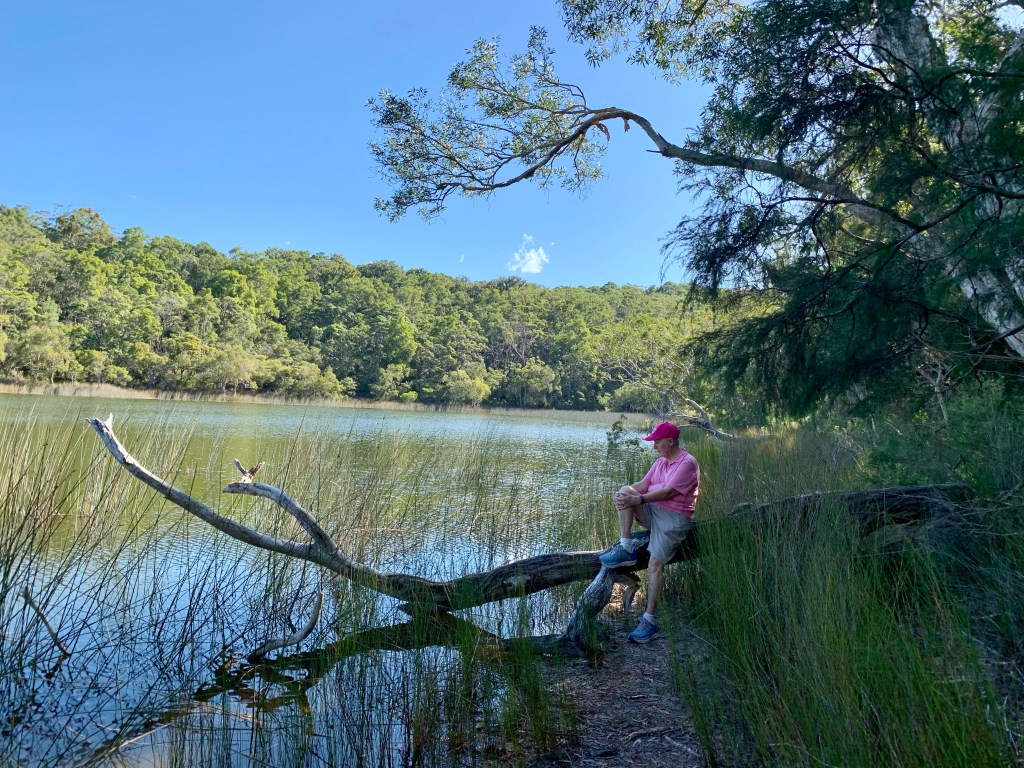
Unfortunately we couldn’t stay on Fraser Island any longer so, after waiting until 1.00 to catch the low tide, we drove the 80km back along the beach to Hook Point where we caught the ferry back to Inskip Point.


This time, despite being a bit nervous about getting bogged again, we had no problems. The barge ramp was level and, after driving through soft sand for a few hundred metres, the sand was firm and level at the loading point. It was also good on the mainland. At Rainbow Beach we got the car and caravan washed thoroughly and checked in at the caravan park. Dinner at the surf club finished the day well.
Now we are at Hervey Bay for a couple of days, on our way to visit friends in Mackay.
Until next time, everyone keep safe and healthy.
Ted and Jo
 Ted and Jo