2018: Japan, 7

Oops! On the way to Busan the Captain informed us that there had been another change of plans. Because of delays caused by the two typhoons, after Busan we would not have enough time remaining to go to Aomori and Hokodate, both of which are in the north of Japan. Instead we would go to Nagasaki and to Shimizu, returning to Yokohama along the southern coast again. The Captain said this is the first cruise ship that he has heard of to have been so affected by two typhoons.

Busan is interesting, South Korea’s 2nd largest city after Seoul, and a very busy cargo port. In fact the port consists of 5 container terminals as well as 2 passenger terminals and there seemed to be millions of people around. The number of high rise buildings with 80 or more levels is incredible and the roads are like spaghetti, going everywhere at multiple levels. We drove on a couple of bridges that were 7.5 km and 4 km long. It’s all amazing. A short shore excursion took us to a Buddhist shrine situated right beside the sea which was very colourful and very busy, then to a very pleasant park on the coast. Within the park, overlooking the sea we saw the building that was built for the 2005 APEC summit meeting, a beautiful building that now does nothing but remind everyone that the meeting was held here – what a waste!

Bussan’s Shrine by the sea.

After cruising overnight we re-entered Japan at Nagasaki, watching the sun rise over a beautiful harbour. Nagasaki is a nice city that is proud of it history as the first port to be opened to the western world about 150 years ago, after Japan had been isolated for centuries – but it also has a dark period in its history. It was here that the 2nd atomic bomb was dropped to end the 2nd World War. The bomb had a devastating effect that would have been even bigger if the mountains within and near the city had not reduced the impact of the bomb. We visited the Peace Park museum and the memorial at Ground Zero and could only wonder how humans can treat each other so badly; it was very sad. On a brighter note we spent a couple of hours wandering around the city centre and enjoyed brief encounters with local people, especially kids.
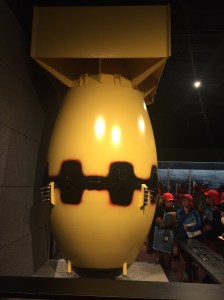
A life size replica of the awful bomb that hit Nagasaki. It destroyed everything for many kms.

It took 2 nights and a full day at sea to reach Shimizu, the port that allows wonderful views of Mt Fuji; from the ship, from the port, from buses and from several vantage points visited by the range of shore excursions – except we were there on a cloudy day and hardly saw the mountain. Luckily we had seen it with Kana and Gutti 3 weeks ago. We did visit a Shrine, of course, and a pleasant park on the lower slopes of Mt Fuji which included the Shiraito waterfall, which comes not from a river but from water seeping out of a cliff near the base of Mt Fuji. It was good to be in a rural setting again after several large cities. After the morning excursion we again spent a couple of hours wandering around the dozens of harbour side shops and stalls set up for a festival.

Crystal clear water from Mt Fuji, at a Shrine near Shimizu.
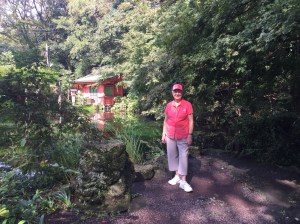
Blending colourfully in the garden at the shrine.

Shiraito waterfall, cascading peacefully from the base of Mt Fuji.

Our final port on the cruise was Yokohama, back where we started. On arrival, early in the morning we were able to see glimpses of Mt Fuji. Some passengers hadn’t seen it yet so we were pleased to show off our local knowledge and point it out to them. During a full day in port, with a couple of friends we rode part of Japan’s amazing rail system to Kamakura, had a traditional lunch in a small restaurant, rode the tiny, old train called Enoden, visited Daibutsu (a huge bronze Buddha statue 800 years old and restored 300 years ago), which we first saw 21 years ago, then found our way to the ship. On the final night Yokohama dazzled us with a great view of harbour side lights.

Daibutsu and friends.

Lights of Yokohama, including the Ferris wheel.

This morning we disembarked and found our way by rail to the hotel Courtyard by Marriott, near Tokyo Station. We took a wrong turn soon after leaving the ship and dragged our suitcases for 40 minutes instead of 15 minutes, despite having rehearsed it yesterday. Eventually we made it and now we are looking forward to an alcohol free light meal after 2 weeks of compulsory eating and drinking on the cruise ship.

Tomorrow we will see some of our Japanese friends before flying home overnight. This will be the final update for this trip. It has been great fun.

Love to all!!

Standard

2018: Japan, 6

Typhoon Trami caused severe damage in parts of Japan but luckily for us by the time it got to Tokyo it was just a nuisance. Yokohama port was closed by the port authority so we had to stay another night in Tokyo, at Celebrity’s expense. The typhoon passed Tokyo very quickly, really just strong wind during the night and we awoke to a beautiful calm, sunny day. On the way to Yokohama we could see Mt Fuji several times between buildings, then as we sailed out of the harbour the setting sun behind Mt Fuji was an amazing sight.

My Fuji creates its shadow in the sunset

Once we got out of Tokyo Harbour the sea became rough and stayed that way over night but by the next day it had calmed down. We sailed all day, missing out on Shimizu, from where most passengers had booked an excursion to see Mt Fuji. They were disappointed of course but we had already seen it with Kana and Gutti so we weren’t concerned.

Kobe was the first port we visited. Most passengers visited either Ōsaka or Kyoto but we stayed in Kobe and wandered around the city. It is about the same size as Adelaide but Ōsaka, with 3 million people is only 30 km away there are buildings, roads, bridges and other infrastructure for the whole distance along the coast.

After 2 nights in Kobe we sailed to Kochi, a small city of 300,000 people on the south coast of Shikoku Island. The main attraction here was the castle, one of Japan’s 12 remaining authentic castles.

The quite big swell in the harbour reminds us that Typoon Kong-rey was out in the Pacific Ocean and headed for Japan in a few days. Just as we were to leave Kochi we heard that Hiroshima port would be closed the next day and we can’t go there. We couldn’t stay in Kochi either because that port is too exposed so we have return to Kobe. Unfortunately it means that we can’t see the Peace Park at Hiroshima and the Red Gate on Miyajima Island. After 3 visits to Japan we still haven’t seen these places so we are very disappointed – but at least we are not out a sea during the typhoon.

As we sailed east along the Pacific coast we had another rough night, even rougher that the first night, because Kong-rey was getting close, but once we entered shelters waters near Kobe the sea settled down again. The weather is pleasant so this afternoon we will take another stroll around Kobe before we head out to sea again. The plan is to spend the next 2 days at sea, going to Busan, South Korea, hopefully in calm seas as we follow behind Kong-rey.

We will see!!!

Standard

2018: Japan, 5

Tokyo gets more fascinating every time we come here. Train lines go everywhere, above ground in the suburbs but underground in the massive metropolitan area. Many of the stations are connected by long tunnels so you can go to many places without seeing daylight, and without getting wet when it is raining. So many shops, cafes and restaurants exist beneath the ground that it is almost like another city below ground. No matter what time the trains always seem to be full in both directions. We went the wrong way on one line but we found later out that even the locals do that so we needn’t worry.

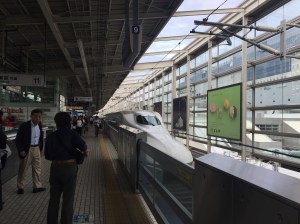
The amazing Shinkansen (Bullet Train)

It was great to see Yoko again. She took us to an interesting Buddhist temple near the fish market, then to the incredible fish market. It will close in a week to move to a new facility about 15 minutes away and of course people who have been buying and selling here for generations have mixed feelings. We found out later that Reiko’s husband, Daijiro, works for a company that provided concrete for the new market so that’s what progress and development are all about. We saw dozens of fish shops and had a great sushi lunch at one of many crowded traditional Japanese restaurants.

The big white blocks on the trailers are frozen tuna.

After lunch our next stop was the most incredible light and sound show we have ever seen, at Odaiba TeamLabs. The colours, patterns, movement and variety in the many displays could have kept us entertained for hours, except we were starting to get tired by late afternoon.

Jo and Yoko amongst the lights.

The lights on the flat boards look like water lilies.

On the way home we saw a Tokyo sunset, which we believe is not very common unless seen from a high-rise building.

Jo and Yoko in charge of the electric (driverless) train into the sunset.

That was Thursday. On Friday we had to do the laundry, which is actually quite an interesting chore when in a foreign country, following which we explored the train route that we would take the next day to see Reiko. Everything went smoothly so we were confident about Saturday’s excursion.

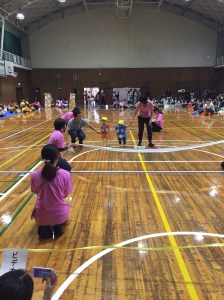
Confidence doesn’t always solve the problem. We forgot that Saturday’s timetable would be different and what we thought would be easy was a bit tricky. Some of the trains were express and we could have ended up anywhere. But we made it just on time to be met by Reiko’s mother, who took us to meet Reiko, Daijiro and Mana to see Mana’s first sports day – not every visitor to Japan gets to see that. We had a great day with Reiko and her family.

Mana in the orange vest in her first race, helped by her Dad. Watch for her in the 2036 Olympics.

Tomorrow should be an easy day. Yoko’s husband, Shoichi, will pick us up from the hotel and take us to the port at Yokohama to start our cruise. Sounds easy – but a typhoon has hit southern Japan and it should be in Tokyo tomorrow night. The locals don’t seem to be worried (they have already had 7 typhoons this season) so we have decided not to worry either. The ship will depart earlier than planned, presumably so that we can get out to sea before the typhoon arrives. It will probably be rough but on previous cruises we have had only calm seas so it had to happen eventually.

We will provide details in the next update. Meanwhile, keep safe.

Standard

2018: Japan, 4, Japan

The express train from Kanazawa to Kyoto, the Thunder Bird Express, was fast and comfortable, not as fast as the Shinkansen but we still took only 2 hours and 20 minutes to travel the 230 km. For about 90 km the track is beside the huge Lake Biwa (Biwako in Japanese) so that added some interest to the trip.

At Kyoto we walked around the streets for an hour or so while waiting for check-in time then settled in at the hotel before spending a couple of hours at a local laundromat. Even tedious stuff like laundry can be interesting when being helped by local people who are quite happy to explain how the machines work.

Eating noodles in soup is much cleaner when the restaurant supplies a paper bib.

It was great to see Mieko and Yuichiro Hirose again, after 10 years. Although we can’t speak Japanese and their English is limited we still manage to enjoy each other’s company. We went north by train to a ropeway (cable car) that took us up about 1000m to a lookout and restaurant where we spent a couple of hours looking at the view, waiting in the queue for lunch, then eating a light lunch. Biwako is huge, supplying most of the water used in Kyoto, Ōsaka and Kobe from one main river.

Overlooking Biwako on a cloudy day

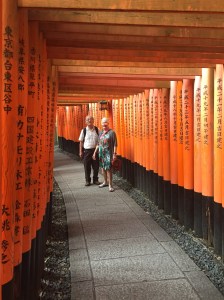
After the return trip to Kyoto station we took another short ride to Fushimi Inari Shrine, one of the most interesting shrines we have seen. Inari is the God of rice, so imagine how many Inari shrines there are in Japan. The Inari Shrine at Fushimi is the most important so it receives thousands of visitors every day. It’s main Gate and main building are impressive but about 4 km of smaller bright orange gates, set about 150mm apart, make it really interesting.

The entrance to the Inari Shrine

It takes about 2 hours to see all the thousands of gates; we didn’t see them all.

Dinner that night was amazing; a delicious tepanyaki meal at a hotel adjacent to the Kyoto station, with a view of the Kyoto Tower.

Next morning we met Mieko and Yuichiro again and walked across the road to the Tokyo Tower, with an observation floor 100m high showing great views of the city, surrounded by mountains. We saw the Shinkansen (Bullet Train) arriving at the station, the one we would catch the next day (there are dozens each day but of course the one we saw must be ours). The Hirose’s proudly showed us their home town from above, on a clear day.

From the Kyoto Tower; see the Shinkansen pulling into the station.

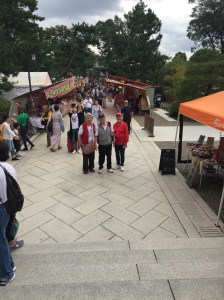
Using a local bus we visited the Kitano-tenmangu Shrine, especially interesting because on the 25th of each month it operates as a flea market, occupied by hundreds of small stalls with vendors selling a huge range of food, souvenirs, craft, textiles and second hand products. This was followed by a light lunch in a tiny local guest house.

A small portion of the flea market

As it started to rain we took a taxi across town to Heianjingu Shrine, famous for its beautiful gardens. The rain stopped while we wandered around, enjoying the peaceful grounds with dozens of different plants and reflecting pools.

Enjoying the serenity

Back at Kyoto Station we went up 11 escalators to a Tempura restaurant and enjoyed another really good meal. The Japanese certainly know how to turn simple fresh produce into incredible food that looks and tastes wonderful.

Feeling exhausted and full we returned to our room to pack for the next phase of the holiday, a few days in Tokyo. We will travel by Bullet Train, the Shinkansen, taking about 2 hours 20 minutes to go about 450 km; looking forward to that.

Standard

2018: Japan, 3

It took a couple of hours to reach Shirakawago, driving through very high, very steep mountains. Driving “through” is the right word because Japan must have thousands of tunnels, some only 100 m long but we drove through several long tunnels. In one case a 15 km tunnel was followed by 100 m in the open then another 8 km tunnel. The road system must be very expensive to build. It occurred to us that whenever more rock is needed for concrete (for buildings, roads, bridges, etc) they dig another tunnel.

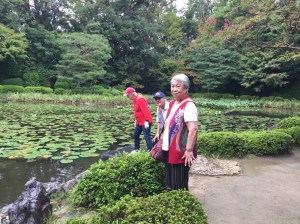
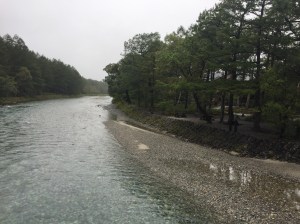
We stayed at Gosenjaku Lodge on the right bank of the river in Kamikochi National Park, during 24 hours of steady rain.

The mountains certainly are beautiful, with dense forest up to the tree line at about 2500 m in this area, and a mixture of green grass or moss and exposed rock above the tree line. The trees are starting to turn to autumn shades so it should be quite pretty by the time we leave Japan in 3 weeks.

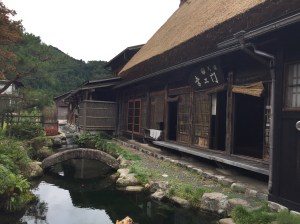
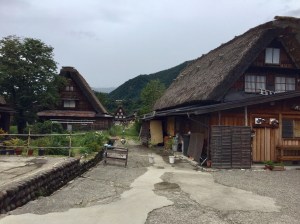
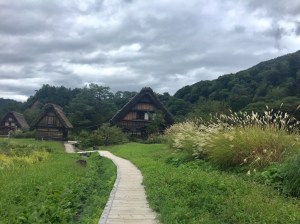
Shirakawago is a 350-year old village nestled in a narrow, flat valley between tall mountains, with several cold, clear streams running amongst the buildings. The rain stopped and we enjoyed a couple of hours wandering around the village. Some buildings are solely for tourists, e.g. shops and museums but most are still used as homes for local people. Most of the buildings have thatched roofs in original style while some have been modernised with iron roofs and gutters. Rice fields and vegetable gardens co-exist with buildings and streets. Visiting this town is certainly worthwhile and we saw lots of local tourists and a few westerners.

A couple of hours later we arrived at Kanazawa, a large city on the northern coast, facing the China Sea. It’s a nice city and Kana and Gutti chose a good hotel right in the city centre. After dinner in the hotel’s Italian restaurant we farewelled Kana and Gutti who were to leave for Tokyo early the next morning. It was sad to part from them as we have really enjoyed their company and they have been such wonderful hosts.

The next day, Saturday, we wandered around Kanazawa for several hours, visiting the train station, to buy tickets for Kyoto; the Samurai district, a very old part of town with original style housing; the Kenrokuen Gardens, beautiful green gardens with several lakes; Kanazawa Castle, a well preserved 350-year old structure in the centre of the city; and the fish market, filled with locals buying an incredible range of fish produce.

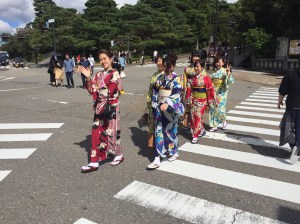
Lots of people, especially young women, dress up for special occasions such as public holidays.

Beautiful Kenrokuen Gardens

Kanazawa Castle

That was a full day, with 13 km of walking, so we hit the beds very tired, to get ready for the next phase of the trip, a few days in Kyoto.

Standard

2018: Japan, 2

On Monday morning it was nice to see Kana and Gutti again after 10 years. They took us to their house only 10 minutes by car from the Tokyo station where we were fascinated by the great view over Tokyo city. We left half our luggage there and drove for a couple of hours to a camp site a few km west of Mt Fuji, where they had reserved a cottage for two nights. On the way we saw our first view of the mountain but then it disappeared behind clouds for the rest of the evening.

Our first view of Mt Fuji, from the car

Kana and Gutti cooked a bbq dinner on the table and we sat around eating and chatting for a couple of hours. Gutti promised that the next morning we would see Mt Fuji from the front patio.

Our cottage near Mt Fuji

No such luck. The cloud was still covering the mountain. Leaving the camp site mid-morning we drove to a car park 2200 m up the northern slope of Mt Fuji, then walked for 3 hours up to 2500 m and along the side of the mountain for about 2.5 km. The cloud cleared and the views both up and down the mountain were very good. It was strange to think that we were walking at the same height as Australia’s tallest mountain. It is easy to see why this mountain has a special place in the hearts of Japanese people. After 3 hours of cloud-free views the the clouds moved in again as we finished our hike.

With Kana and Gutti on the slopes of Mt Fuji

Back at the cottage Kana and Gutti prepared and cooked a really nice sukiyaki dinner, following which we re-packed for the next day’s adventure when we could take only overnight luggage in back packs.

We drove for a couple of hours to Ogizawa, where, at 1400 m, we started a very interesting mountain experience:

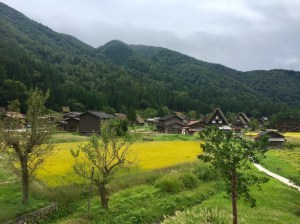
Ripening rice fields on the way to Murodo

* an electric bus took us through a steep tunnel beneath Mt Akazawa for 15 minutes, during which we climbed about 100 m to the Kurobe Dam, a large dam built in 1956 to supply hydro-electricity and water to areas.

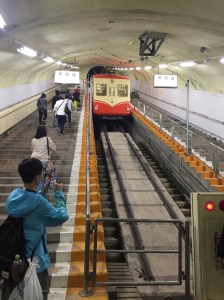
* after walking across the dam wall we rode in a cable car through another narrow tunnel, up a 31 deg slope climbing another 400 m.

Check out the slope on the cable car track

* the next step was a rope-way that took us across a wide gully and up another 500 m. The scenery at each of the stations and from the rope-way car was breathtaking.

Looking down from the cable car to the dam wall (bottom right)

Looking up from the cable car. Our mountain lodge is over the top of the range.

* finally we boarded another bus for a further 200 m tunnel climb beneath Mt Tateyama-Machi to Murodo, a volcanic plateau famous in Japan for its hot springs, mountain climbing, sulphur emissions and amazing scenery. At 2500 m there was no snow but the maximum day temperature was 10 deg and by the time we arrived late in the afternoon it was down to 5 deg. Overnight it was 2 deg. On a clear day we could have seen the ocean on the north coast looking past the city of Toyama. We ate a great set-course dinner, then settled down for sleep on the futon mattress laid out on a tatami mat floor.

The first view of our lodge at Murodo, during the final 15minute walk.

One of many active volcanoes, from the lodge

Setting off the next morning, at 5 deg.

On Thursday we reversed the trip down the mountain and drove for a couple of hours toward Matsumoto Castle. Well that was the plan; the weather deteriorated to misty rain then steady rain as we travelled so we changed plans and went directly to Kamikochi instead. We parked outside the National Park because private cars aren’t allowed in the park and took a taxi into the park, then walked through light rain to really nice mountain lodge. Dinner in the lodge restaurant was another really great meal.

Lots of monkeys, deer, birds and bears at Kamikochi National Park

Buffet meal, Japanese style – delicious

Living like locals

Tomorrow we will go to Shirakawago to see an old town that has been on our bucket list for years.

Standard

2018: Japan, 1

We were excited about returning to Japan to visit friends and take a cruise around Japan. It will be very busy but should be a lot of fun.

After an uneventful flight (that’s the best kind of flight) and the 70 km trip to Tokyo we checked in at Hotel Metropolitan Tokyo Station, very conveniently right next to the station. We spent the next day just wandering around the station district, getting our bearings and getting used to the crowds.

Shopping near Tokyo Station

We had a wonderful sushi dinner with Toshi, Midori and her two children, Madoka (9) and Hayato (7). It was great to see them. The restaurant was within easy walking distance of the hotel so we could get amongst the locals as they live their normal lives. Already we are seeing the benefit of having Japanese friends.

Chatting with Madoka and Hayato

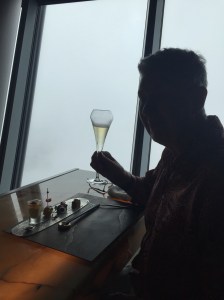
This weekend was a long weekend so on Saturday morning, as we walked around the neighbourhood, we could see that people were more relaxed than on a week day and there were not as many in the streets and shops. Toshi took us by train to the Sky Tree tower, at 600 m one of the highest in the world, where we met Midori, Nario and the kids. The lift took us up 350 m at 600 m per minute to an amazing tepanyaki restaurant amongst the clouds. The meal was great and the company was great but the view was mainly white cloud. Never mind, we still had fun.

The view from the tepanyaki restaurant at the top of the Sky Tree

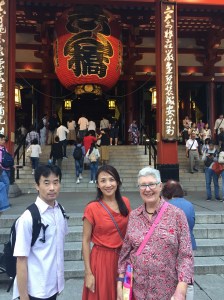
Next stop was Asakusa, just a short train trip away. This is a very old temple that we saw 21 years ago and it is interesting to revisit attractions that we have seen before. Midi and Toshi found a tiny traditional bar where we had a fascinating range of dishes for an early dinner, accompanied by beer and sake.

With Toshi and Midi at Asakusa

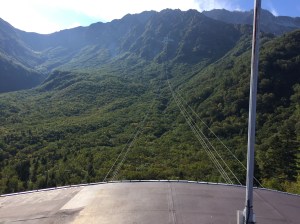
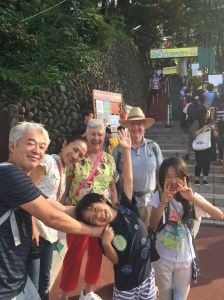
On Sunday we found our way through Tokyo Station and caught the train to Mt Takao, meeting the others on the train. Some of us walked the steep path to top of the 600 m peak, while Jo and Toshi rode the cable car, through quite beautiful lush, green forest, different to the eucalyptus forests of Australia. Lunch was an outdoor buffet, all-you-can-eat and drink in 2 hours. We tried hard but couldn’t eat and drink for the whole time, although we did enjoy it.

With Midori’s family at Mt Takao, a National Park close to Tokyo

After returning to the hotel we had a light dinner and packed for the next stage of our holiday, then to bed feeling tired but relaxed.

Standard

2018: Going North Again – Update 9

Hi. This is just a short note to let everyone know that we have arrived home safely and well.

We had a great holiday and are now looking forward to relaxing at home for awhile.

For those interested in statistics, during the 3-month trip we travelled 12,000 km, being 10,000 km with the caravan and 2,000 km on side trips. We relocated the caravan on 41 days at an average of 240 km each time we moved; we did 400 km or more on 6 days and less than 100 km on 7 days. It was a more relaxing holiday than most of our other trips have been because we stayed longer in some places than normal for us.

Until our next holiday, keep safe.

From Ted and Jo

Standard

2018: Going North Again – Update 8

It’s more than 2 weeks since our last update and everything is still going well for us. We hope it is for you too.

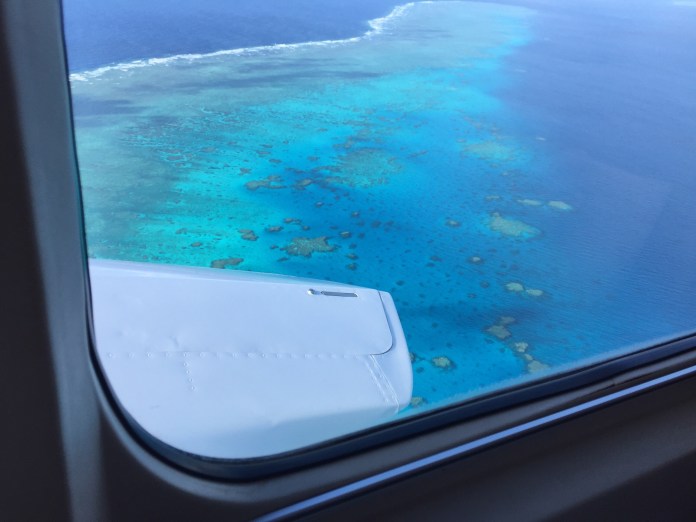
We spent a week in Cairns and were lucky to be able to spend time with friends who live in Cairns so that was nice. A highlight of the week was a 1-hour flight to Lizard Island, flying over the Great Barrier Reef then 6 hours on the island, swimming, snorkelling, walking on the beach and having a fabulous picnic lunch, including wine. We flew back along the coast, looking over the rain forest and places that we had previously visited by road, such as Cooktown, Wonga Beach and Port Douglas before returning to Cairns. It was a great day.

The amazing Great Barrier Reef on the way to Lizard Island

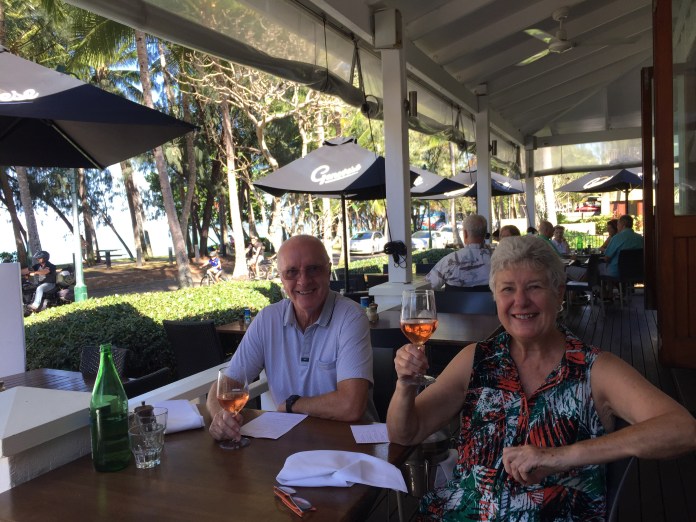
Life is tough at Palm Cove, near Cairns

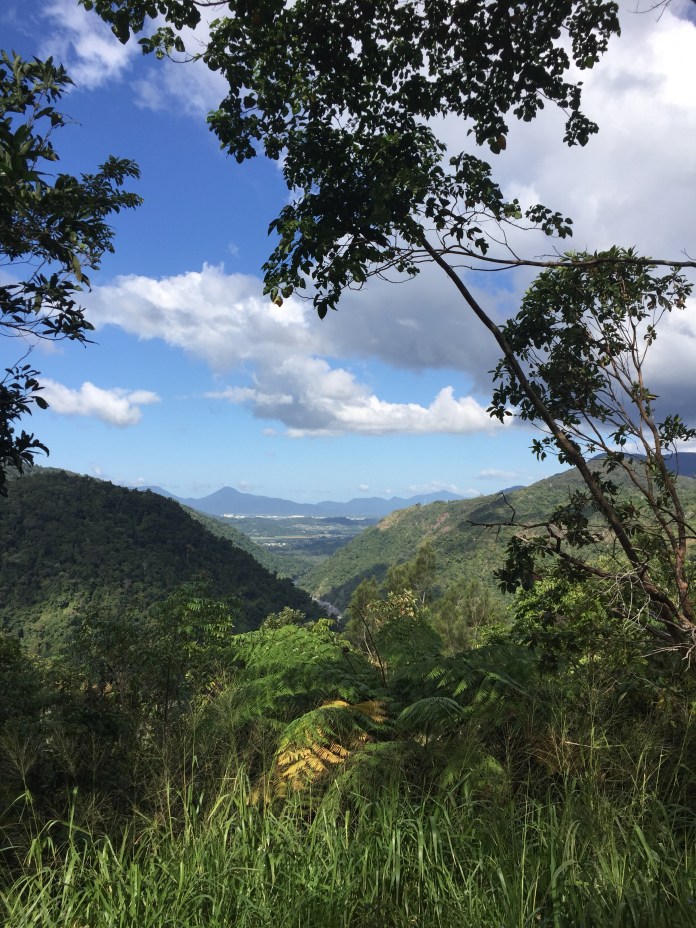
Rainforest in the mountains at Kuranda, with Cairns in the background

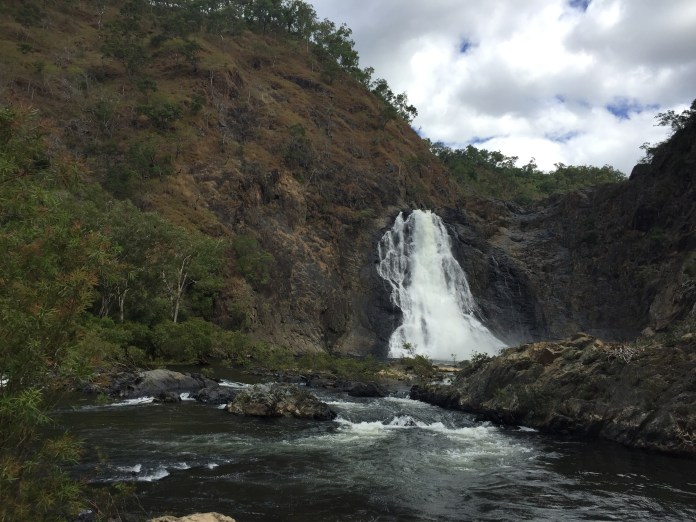
After leaving Cairns we drove 90 km to Bramston Beach where we stayed for 4 nights. This small town has a hotel, one cafe and one small caravan park. At least half of the people in the park are regulars who stay for up to 3 months every year. They enjoy the fishing, although this year has been a bad year for fishing, and generally relaxing in the warmth. While there we spent quite a lot of time over 2 days washing the remainder of the caravan that still was covered in red dust from the previous few weeks. We also visited Babinda and a couple of local water holes, the Babinda Boulders and Josephine Falls.

Next stop was Etty Bay, which is one of the best beaches we have ever seen. The Bay is only 400m wide, with beautiful sand, very small waves, warm water and lots of shade. We swam every day and Ted helped the small life saving club with its nippers program on Sunday morning. There are crocodiles in the area but everyone ignores them at this time of year, just as we ignore sharks at Brighton. A crocodile was sighted only 200m from the beach in the morning that nippers were in the water but presumably it wasn’t hungry as we all survived. Etty Bay is really just a tiny van park, a cafe and a life saving club and we loved it. We hope to be able to return one day.

Sunrise at beautiful Etty Bay

A cassowary enjoying a stroll at Etty Bay

Unfortunately it was time to start the journey home as we had 3100 km to travel in 10 days. We did 390 km to Charters Towers, 380 km to Clermont, 250 km to Rolleston, then 100 km to Carnarvon Gorge National Park. We stayed at an amazing new camp site called Sandstone Park, about 5 km outside the National Park, on the top of a ridge with spectacular views of the white sandstone cliffs along the gorge. The camp site has no water or power but does have toilets and the huge sites all have a view. The gorge is very interesting, with a variety of terrains and vegetation along some quite challenging walks. We walked 14 km in 3.5 hours then rewarded ourselves with a steak burger and chips. Sandstone Park has been open for only 4 months and is already known for its sunsets – but they are not as good as Brighton.

Sunrise at Sandstone Park, Carnarvon Gorge

A creek crossing in Carnarvon Gorge, with a new friend.

Now the pressure is on to get home for some appointments that we made awhile ago. So we drove 450 km to St George and, leaving Queensland behind, 530 to Bourke,NSW, where we are now. From here we have 1150 km to Adelaide over 3 days, if all goes well.

Love and regards to all. From Ted and Jo

Standard

2018: Going North Again – Update 7

The caravan brake problem that we had in Cooktown turned out to be not a problem at all. Water had got into the back of the caravan power connection, probably when we crossed the 600-700 mm deep Normanby River a few days before, and the dust that had built up inside the adapter turned into mud.  This caused a short circuit, preventing power from getting to the brakes. It would eventually have dried out but with a quick clean it was ready to.

It’s hard to believe that all that happened almost a month ago. Since then we have enjoyed a week in Melbourne with 3 of our grandchildren, a few days in Cairns with friends who live in the beautiful Goldsbourough Valley, 5 days at Wonga Beach and a week at Port Douglas. These places are all close to each other so we haven’t done much driving, apart from 2 days when we went to Cooktown via the Bloomfield Track and stayed overnight in a caravan park cabin.

The Bloomfield track is a 4WD track along the coast going north from the Daintree National Park. Driving was not difficult but we would not want to take our caravan along it because we would have to take up all the road on some of the tight corners and that would be awkward with quite a lot of traffic coming toward us.  We would also be slow and vehicles would have to overtake us on the narrow road.  It was an interesting drive with a few creek crossings, some steep climbs and beautiful rain forest beside the road.  We did see a very large crocodile near the Wujal Wujal Falls – that’s why we didn’t swim there.

CA4EC483-E0F0-48C3-B945-565038D063AC

We have been able to do some bush walking in the rainforest; here is Jo climbing a steep track, known as The Bump Track, which was first used 150 years ago by bullock and horse teams pulling supplies over the mountains.

A1DBD06F-A602-40EA-8542-7D32D74CB019

It was much steeper than it looks in the photo but the view from the top, and the welcome rest on the only seat on the track, made it worthwhile.

89EE0697-9CCB-42CC-8B59-F3652B02E6AA

Sometimes we come across unexpected sights, such as a peacock at Wonga Beach Caravan Park (not to be confused with the blue tent in the background), a kookaburra digging for worms at the caravan park near Port Douglas and a wild pig crossing the track in the National Park at Mossman Gorge.

47C2D358-33CF-4FF2-80A5-C5713CE80F32

2D405167-2F99-4CCE-B95B-F499EB5F605D

EAD31D98-EB38-4FDC-88F7-4B49E7D0C1FD

It has been a relaxing month and we are enjoying ourselves. As the weather is very pleasant (maximum daily temperatures of mid 20’s and minimum nightly temperatures of about 18 to 20 deg) we have decided to stay in this area for another couple of weeks.  Tomorrow we will go back to Cairns for a week, then somewhere else for a week. Then we’ll do a quick 10-day trip to Adelaide rather than working our way gradually home, so as to spend as little time as possible in the cold weather once we leave here.

As usual, we are thinking of our friends and family while we are away. Hope you are all well. Bye for now.

Ted and Jo

Standard