On leaving Alice Springs it was interesting to see about 25 aircraft standing idle at the airport, in storage during the COVID-19 pandemic.
Aircraft storage in the dry climate of Alice Springs.
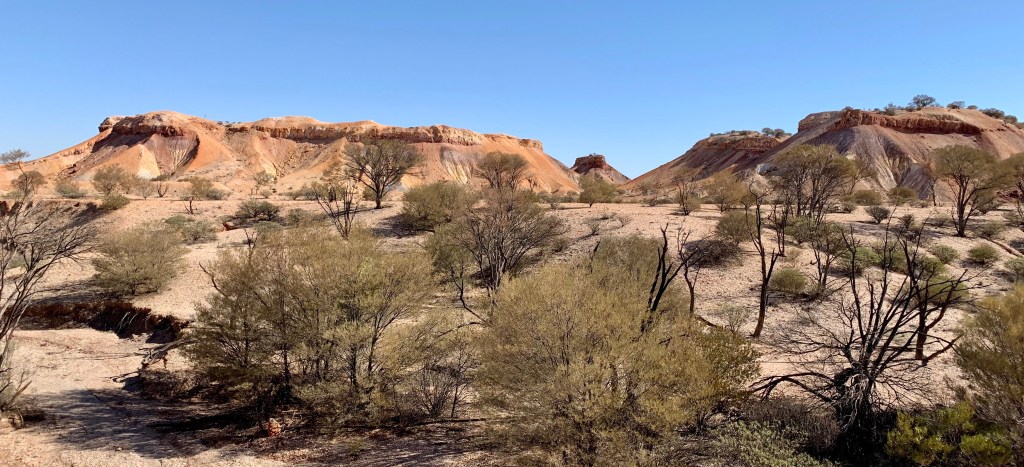
Surprisingly entering South Australia was effortless, with no checkpoint to worry about. We spent a night at Marryat Rest Area then drove to Cadney Park, a roadhouse and basic caravan park 150 km north of Coober Pedy, where we left the caravan while we visited the Painted Desert. This involved taking a 90 km rough road to Arckaringa Station to see the amazing red, yellow, white and grey sand and rocks in the Arckaringa Hills.
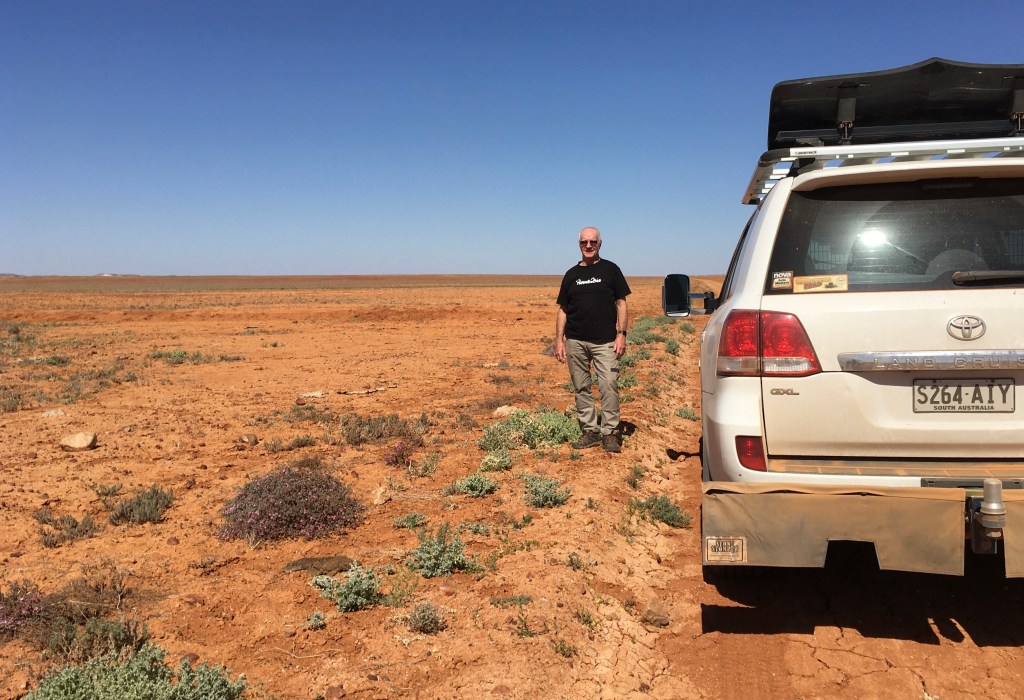
The flat, open country on the way to the Painted Desert.A short walk amongst the Painted Desert hills was very interesting.
At Coober Pedy we decided to stay overnight at Riba’s caravan park, about 5 km out of town, where we were able to put the caravan in one of several large shade-covered sites. During a 32 degrees afternoon that was welcome. After sightseeing and shopping in Coober Pedy we did an underground opal mine tour at the caravan site and really enjoyed 2 hours with a small group and the park owner, who is also a miner.
A 2-hour opal mine tour was very interesting.
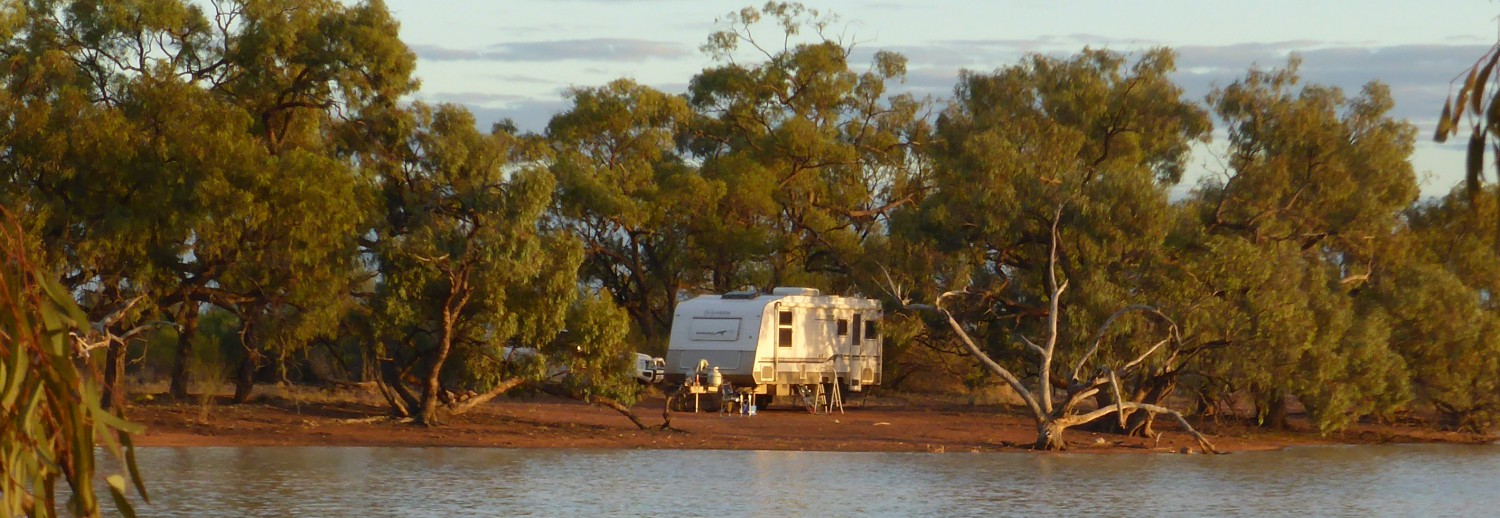
On leaving Coober Pedy we decided that, as the weather was still quite warm, we would drive all the way to Port Augusta, 530 km. That’s further than we usually drive with the caravan but the road is good so it’s not difficult. The next morning we took the much shorter 30 km drive to Spear Creek caravan park. This bush park is on a working sheep station at the foot of the southern Flinders Ranges, nestled amongst large 400 year old river red gums. There are about 40 powered, non-powered and bush camp sites along the banks of the usually dry Spear Creek. It’s a great place to stay and we will certainly return one day for a few days – this time we stayed only one night because there was rain forecast over the next couple of days and the clay ground could become very sticky/slippery.
A friend had told us that if we are in this area we should visit the bakery at Stone Hut and stay at the Laura caravan park. Thanks Burgo; they are both worth a visit. The bakery sells great pies, pasties and cakes and the Community owned park at Laura is a delightful park right in the town. The manager brings freshly baked scones with jam and cream to each site late in the afternoon; after 11 years of caravanning that’s a first.
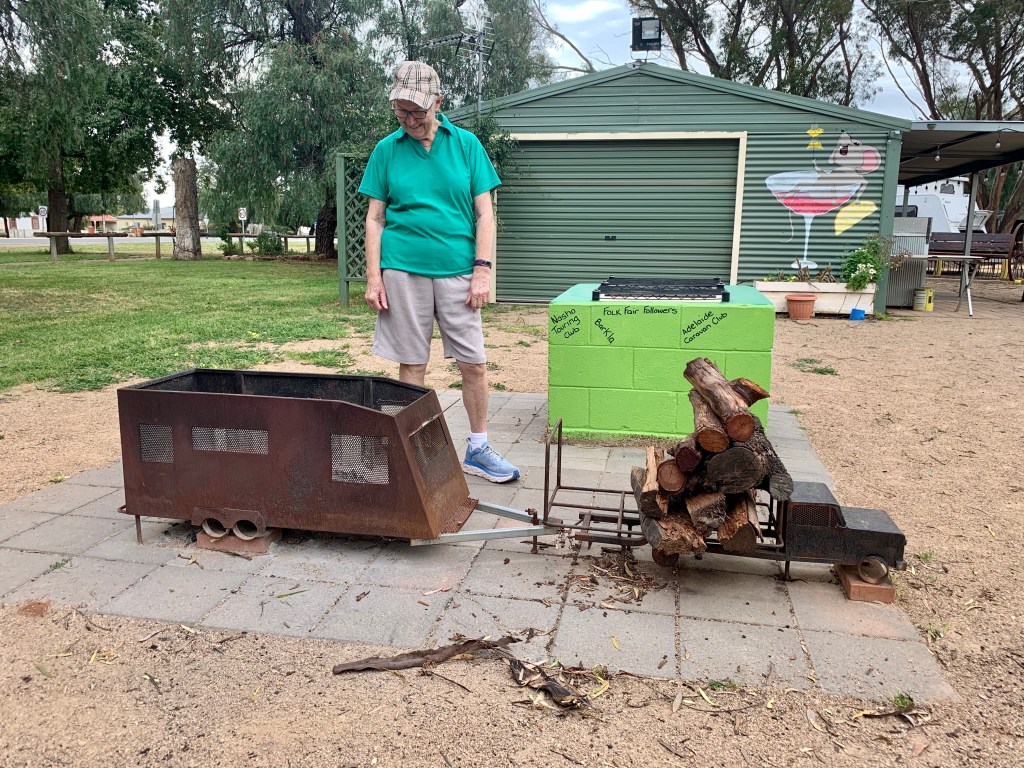
Healthy lunch at the Stone Hut bakery.This caravan at Laura caravan park doubles as a fire bucket.
The forecast rain did come overnight although not as much as was expected. We are still not in a hurry to get home so today we will go Cadell on the River Murray, where we will stay at a Caudo Wines which is owned by friends. It will be the first time we have been there and we are looking forward to seeing our friends and camping beside the river.
How lucky we are in South Australia. After a few months of serious COVID-19 lock down we were allowed to travel within SA, then in July the borders between SA and some states were opened up. This means that we can travel to Northern Territory where we will be able to enjoy some warmer weather. Adelaide has been very cold – perhaps it always is cold in winter but we are are never at home then so we wouldn’t know. We decided to head north for warmer weather.
First we took a short test run to Goolwa, 2 hours south of Adelaide and of course we did find a problem. The hot water service was leaking and we couldn’t get it fixed in time for our NT trip. We isolated the HWS and will get it repaired when we return to Adelaide in October. Meanwhile we can use our water tanks instead of connecting to mains pressure water and can use boiled water whenever we need hot water.
Enjoying the cold weather near Goolwa.
We left Adelaide on a cold, wet and windy day and drove 320 km to spend the night in Port Augusta.
About to depart from cold Brighton caravan park, near home.
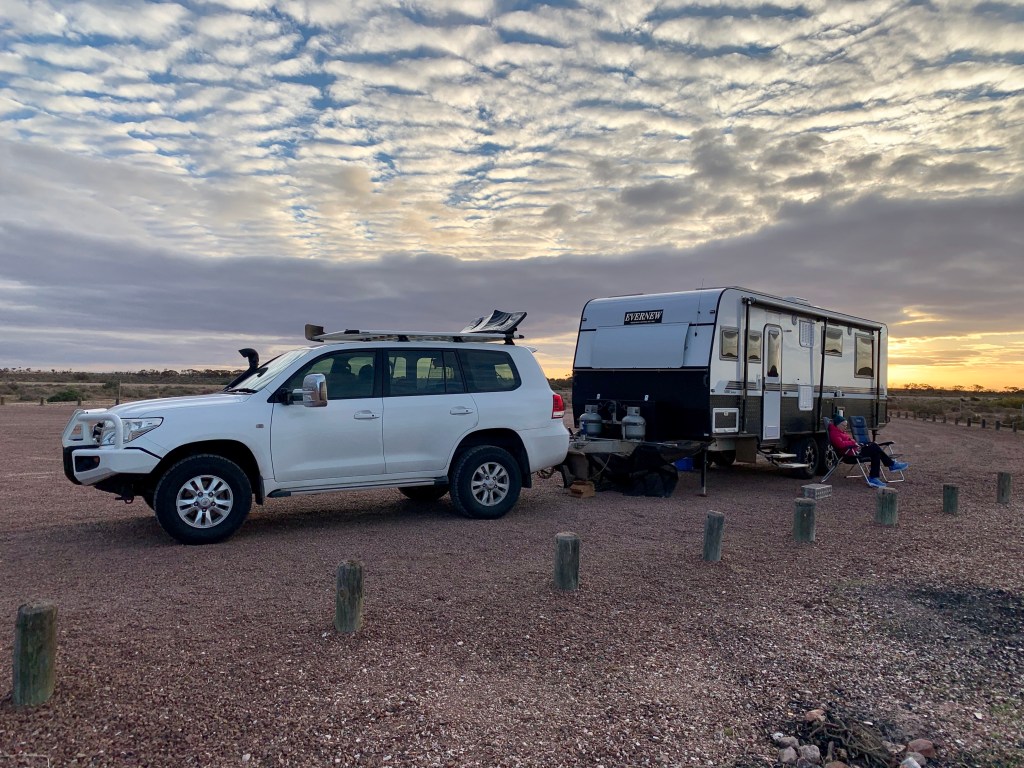
Driving north along the Stuart Highway from Port Augusta the next morning was strange because the traffic was so light. Normally we would see dozens of caravans, motor homes, camper trailer and cars but this time there were just a few. Covid has kept people at home. We camped at a roadside rest area 370 km up the highway, known as Bon Bon rest area, sharing it with 3 other rigs. The minimum temperature was 3 degrees and the maximum 20 degrees.
Sunset at Bon Bon rest area.
Continuing north 180 km further we arrived at Coober Pedy and discovered that we had a broken shock absorber on the caravan. We checked into the caravan park, phoned RAA and within an hour a technician arrived to inspect to the van. Great service from RAA.
Looking after the fire at Coober Pedy, while Jo was cooking dinner.
The next day the RAA agent replaced the broken shock absorber with a used one, at no cost, so we could continue on. Unfortunately rain last week meant that the bush roads we had wanted to take were closed, so we had to stay in the bitumen roads to Alice Springs.
Rainbow Valley National Park is 75 km south of Alice Springs and 22 km off the highway. The park was very quiet, partly because it is accessible only to 4WD vehicles but also because of the low numbers of tourists around. It was very peaceful and we enjoyed a pleasant couple of days there. The sunset was nice with red, yellow and white hills being the highlight.
Colourful sunset at Rainbow Valley.Unusually quiet camp ground at Rainbow Valley.
Arriving in Alice Springs on Friday morning, a week after leaving home, we went straight to the suspension workshop where, as we had guessed, we were informed that all 8 shock absorbers on the caravan needed to be replaced. Luckily parts can be brought up from Adelaide and fitted on Tuesday. We checked in at G’day Mate Caravan Park and settled in for a few days. Feeling lazy we did only a few tourist things, most of which we had seen before. Temperatures had improved to 7-27 degrees.
As planned the caravan repairs were done on Tuesday and we headed off to explore the West McDonnell Ranges. Immediately we could see that there were not as many people around as normal. There are no international visitors and very few caravanners compared with a normal year. Covid-19 has had a devastating effect on the tourism and hospitality economy.
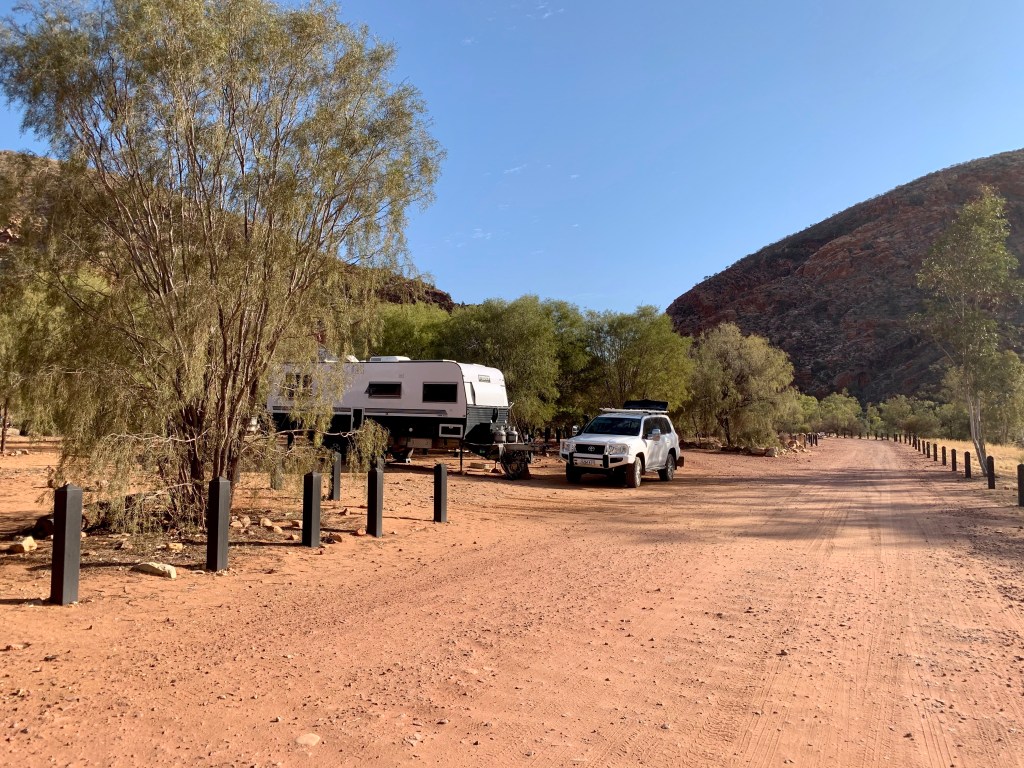
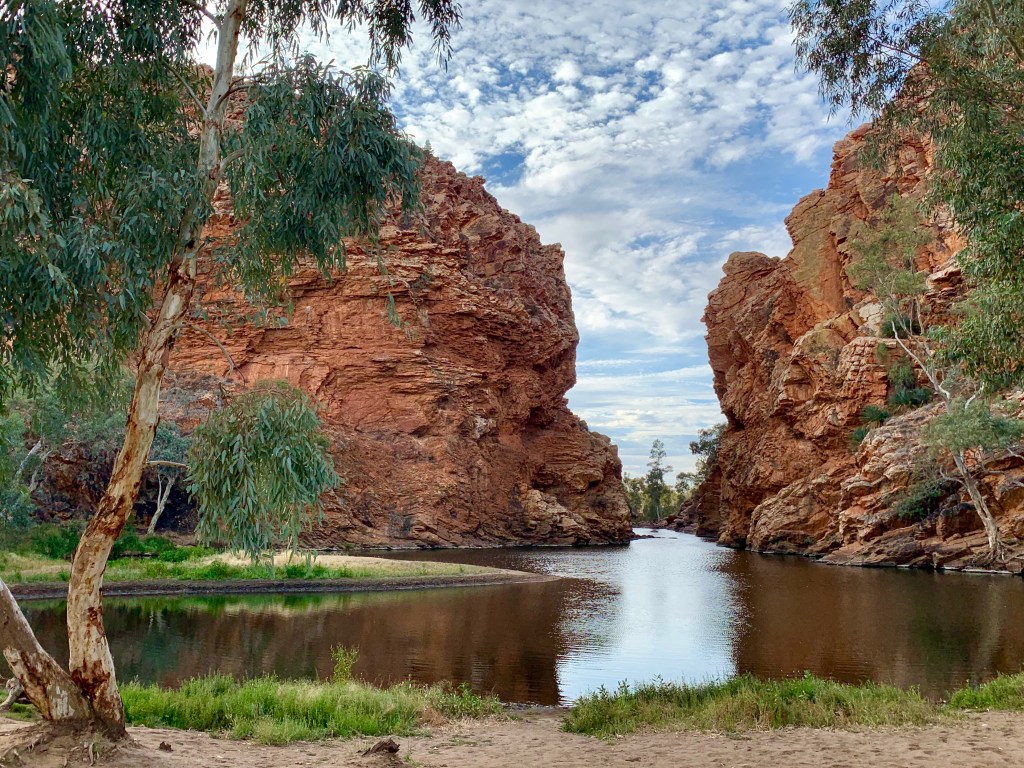
A fellow caravanner had told us that Ellery Creek Big Hole was a good campground so we checked in for 2 nights, then another 2 and finally a fifth night. About 12 rigs can fit in separate bays, set in a large circle. Inside the circle are 3 fire pits, 2 gas bbq’s and 2 shaded benches. The spring-fed permanent water hole is just a 5 minute walk away, surrounded by steep cliffs and shady trees. It certainly is a comfortable place to stay. Minimum temperature had been about 15 degrees each night and daily maxima 30-32 degrees. Evenings have been calm and campfires with new friends have been good fun. Unfortunately the water in Ellery Creek, as inviting as it looks, is too cold for swimming but we are not complaining.
Another quiet camp ground, Ellery Creek Big Hole. We are 2nd from the left. No immediate neighbours. The water hole is in the gorge in the background.The water hole in Ellery Creek, beautiful but icy cold.
From Ellery Creek camp ground we visited some of the other gorges in the West MacDonnell Ranges, all interesting but by now the weather was getting too warm for us to undertake long bush walks.
Stanley Chasm is probably the most spectacular of the gorges.Ormiston Gorge is good too.
After a night at Redbank Gorge camp ground we drove back to Alice Springs and checked in for a week on a powered site so that we could relax in shade and use the air conditioning during the hot afternoons. The day temperature had been up to 35 degrees and the nights have been in the mid- to high-teens. Highlights in Alice have been visits to the School of the Air, the Desert Park and a light festival, showing images on the nearby cliffs.
Three weeks into our 6-week holiday we have decided to head south again, looking for cooler, but not too cold weather. We might go via Renmark to visit friends – but we might not, depending on how we feel at the time.
Keep safe everyone. Think of you, especially our family in Melbourne.
Well you never know what’s going to happen in these times of Covid19/Coronavirus. We left Adelaide a week ago, bound for Tasmania via Melbourne. During the few days with our Melbourne family the Coronavirus situation deteriorated so we decided that, rather than risk being in lock-down in Tas we would return home.
We will be back in Adelaide this afternoon, ready to hide at home for whatever it takes for life to return to normal. If we are lucky we might get away later in the year.
Meanwhile the Caravan Trip vs Covid19 battle has been won by Covid19.
Today was our last full day on the cruise. We took a 2-hour cruise with just 8 passengers in one tender boat, allowing us the chance to visit more villages meeting smaller, more intimate groups. Although the main needs of the people in this area are better education and health services our small gifts were gratefully received. One village councillor explained to me in Pigin that teachers sign a 5-year contract to teach in remote areas but commonly at the end of their first year they go on leave and don’t return.
A farming couple with their 6-month old baby and a new mosquito net
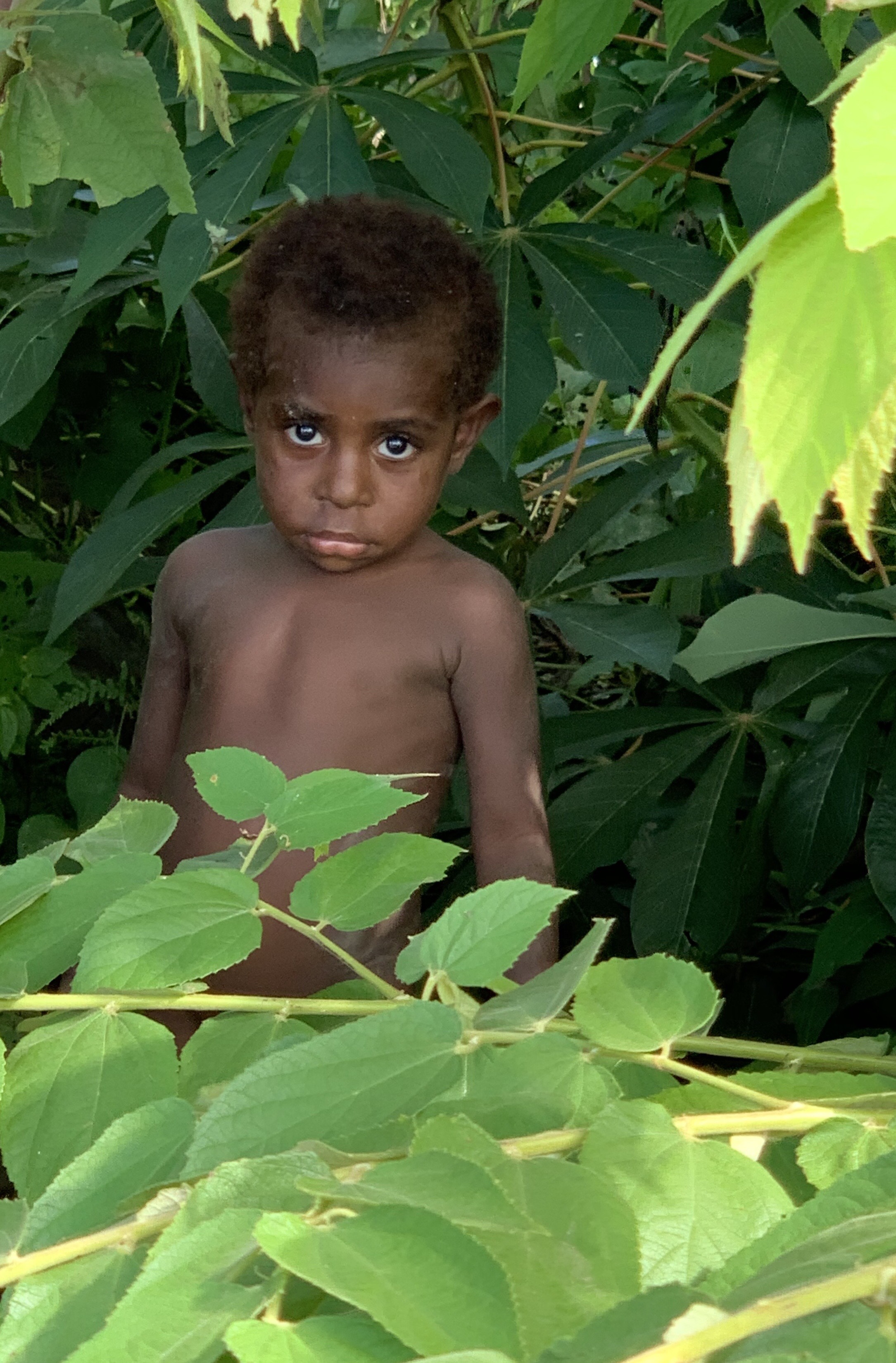
Spot the frightened child hiding from the strange white people
Here she is
Even the smallest gifts were received with excitement
After lunch we climbed into the helicopter and flew for an hour up the Sepic, past the stilt village that we saw yesterday.
It’s difficult to imagine living here. The small separate huts are toilets.
The crowd that gathered around us yesterday, taken from a drone
At a village beside the Sepic we walked amongst the locals providing another opportunity to talk, take photos and and admire the beautiful scenery.
How can anyone resist photo opportunities like this?
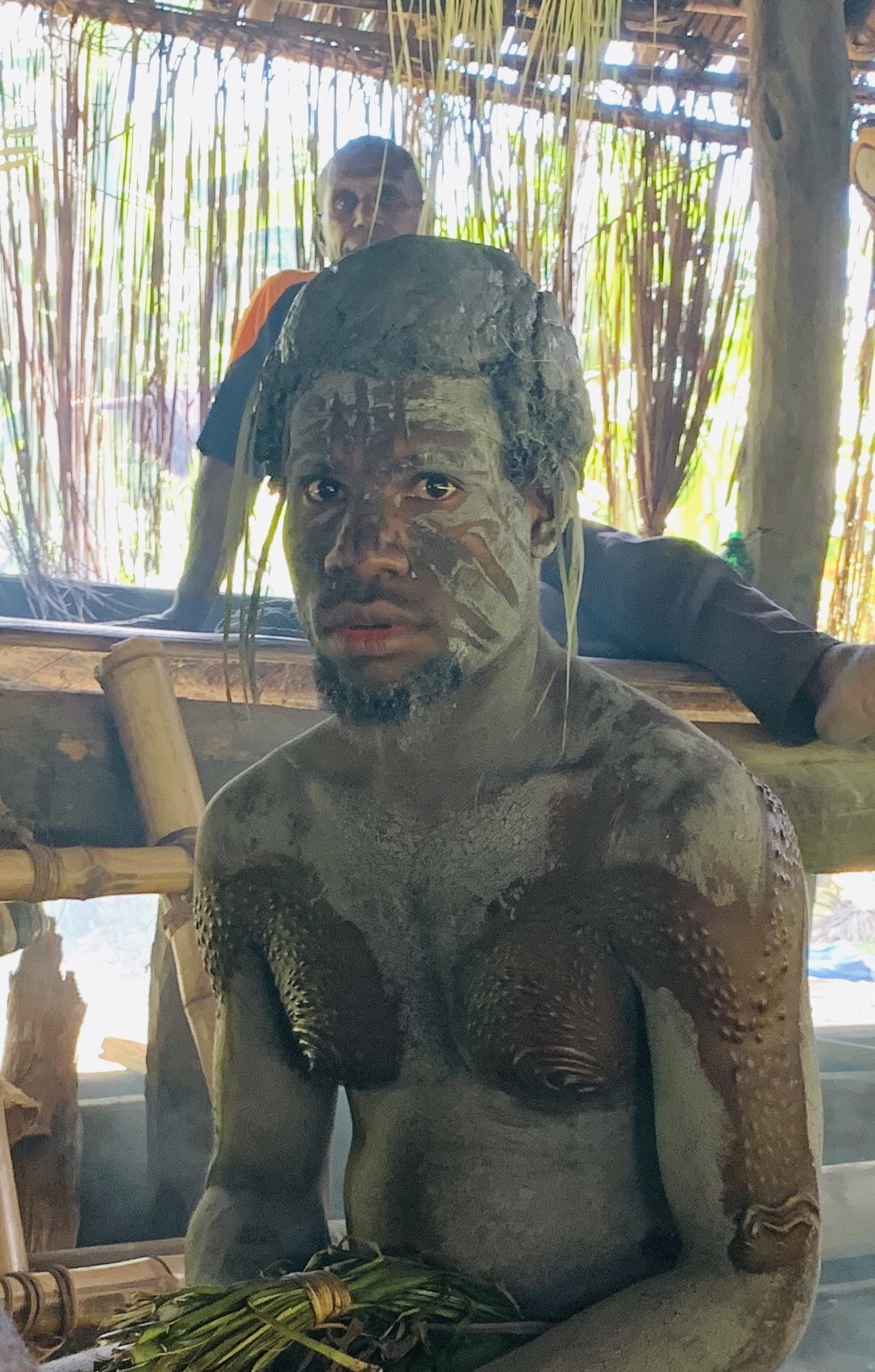
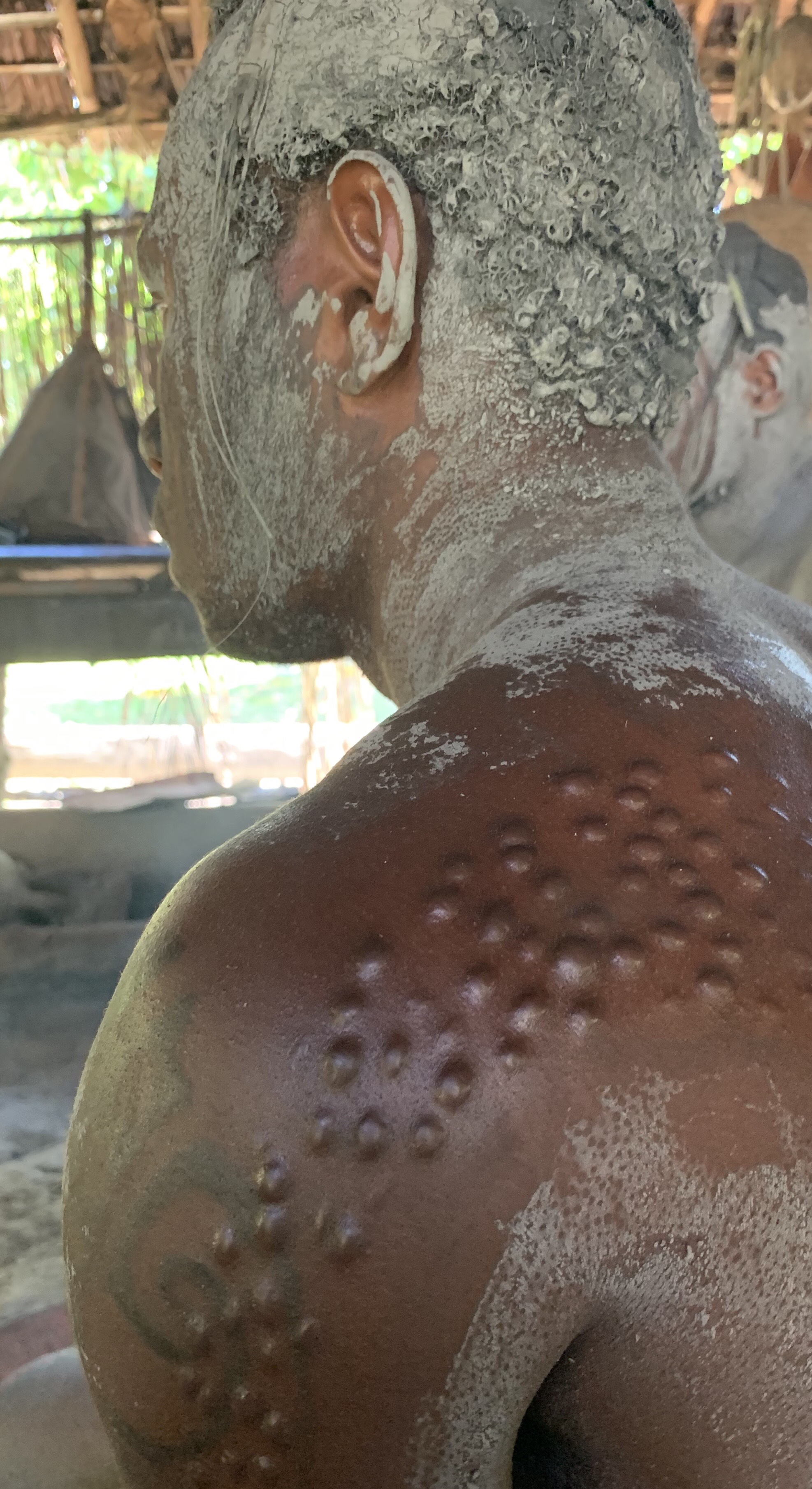
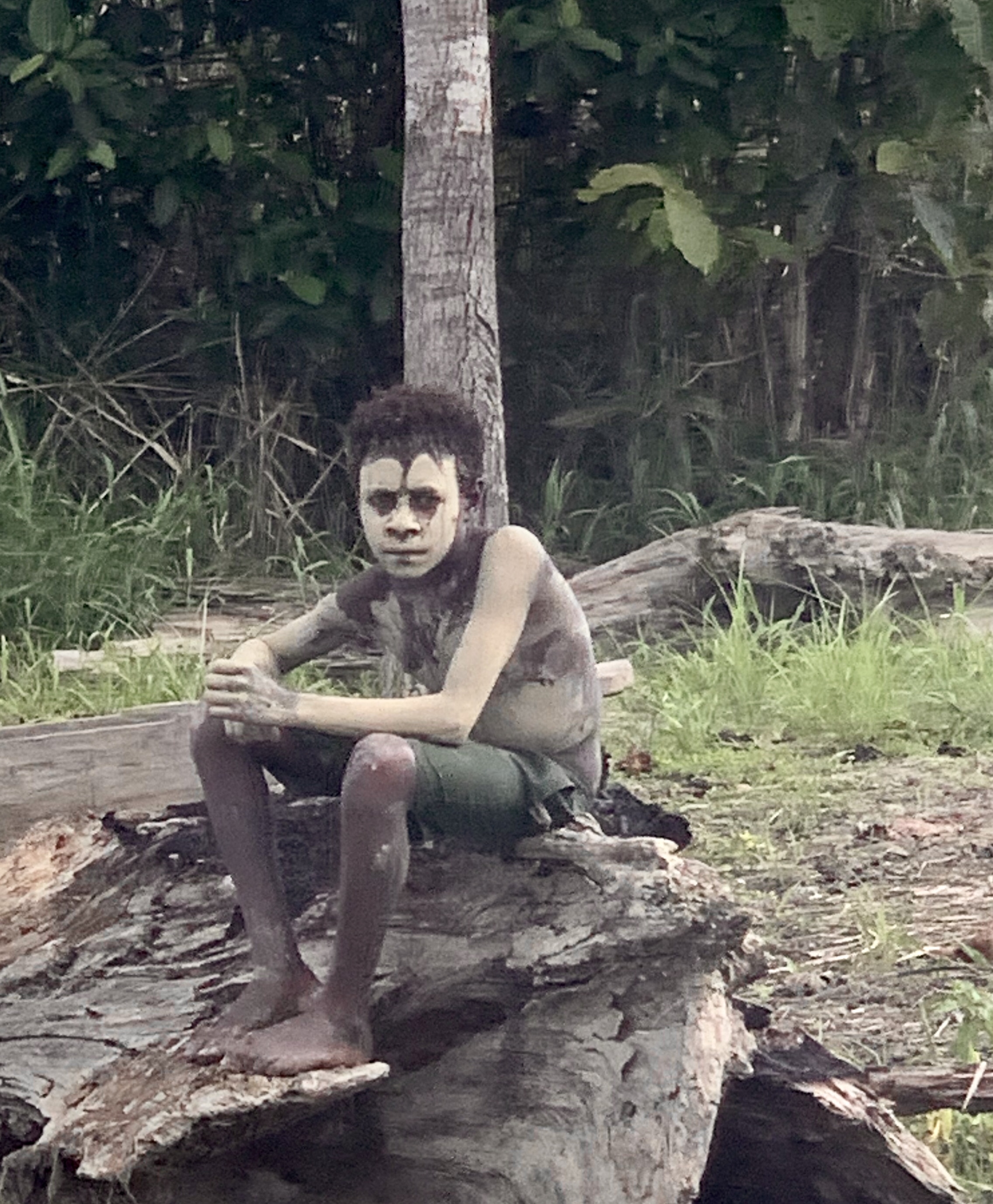
A short walk brought us to a Spirit House where several young men where nearing the closing stages of their initiation ceremony. To demonstrate their manhood they undertook a painful scarification process during which their skin was cut with a razor blade and treated with mud so that when it healed after about 6 weeks their skin resembled the skin of a crocodile. Luckily the healing process was almost finished when we saw it.
The whole torso is covered with crocodile markings
It’s an incredibly painful process
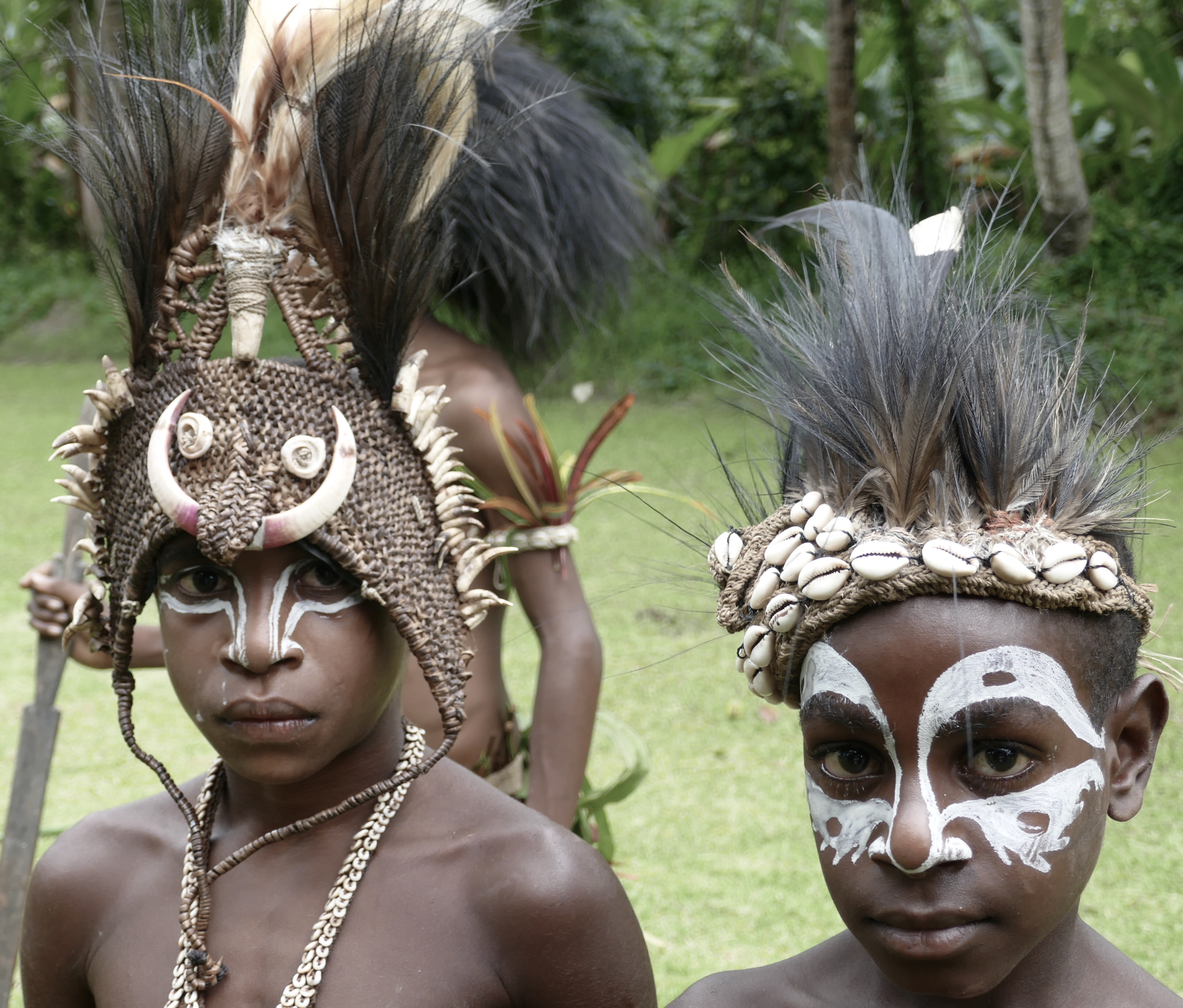
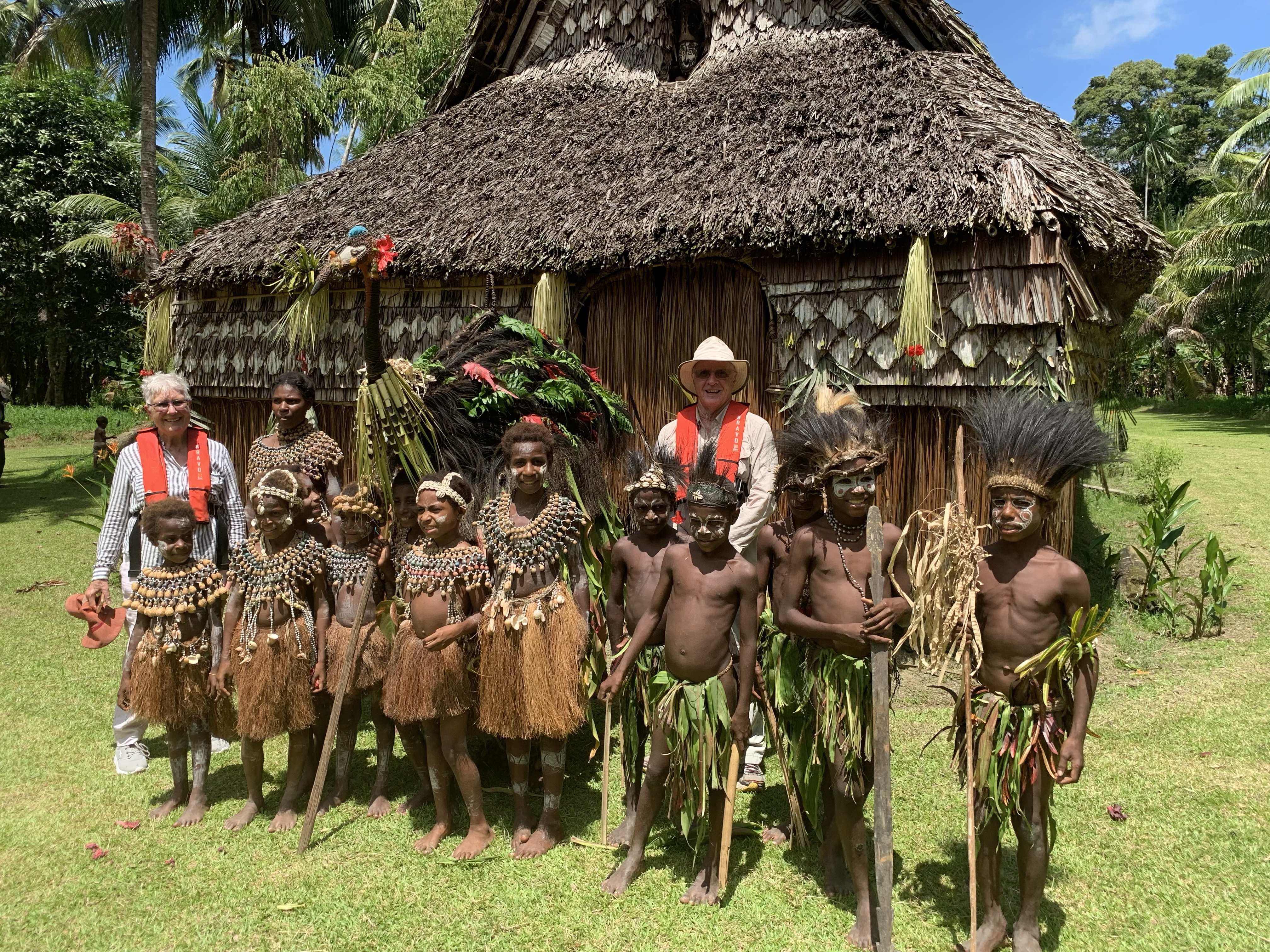
Several young men and boys wore their traditional costumes in support of the initiates and possibly to welcome us.
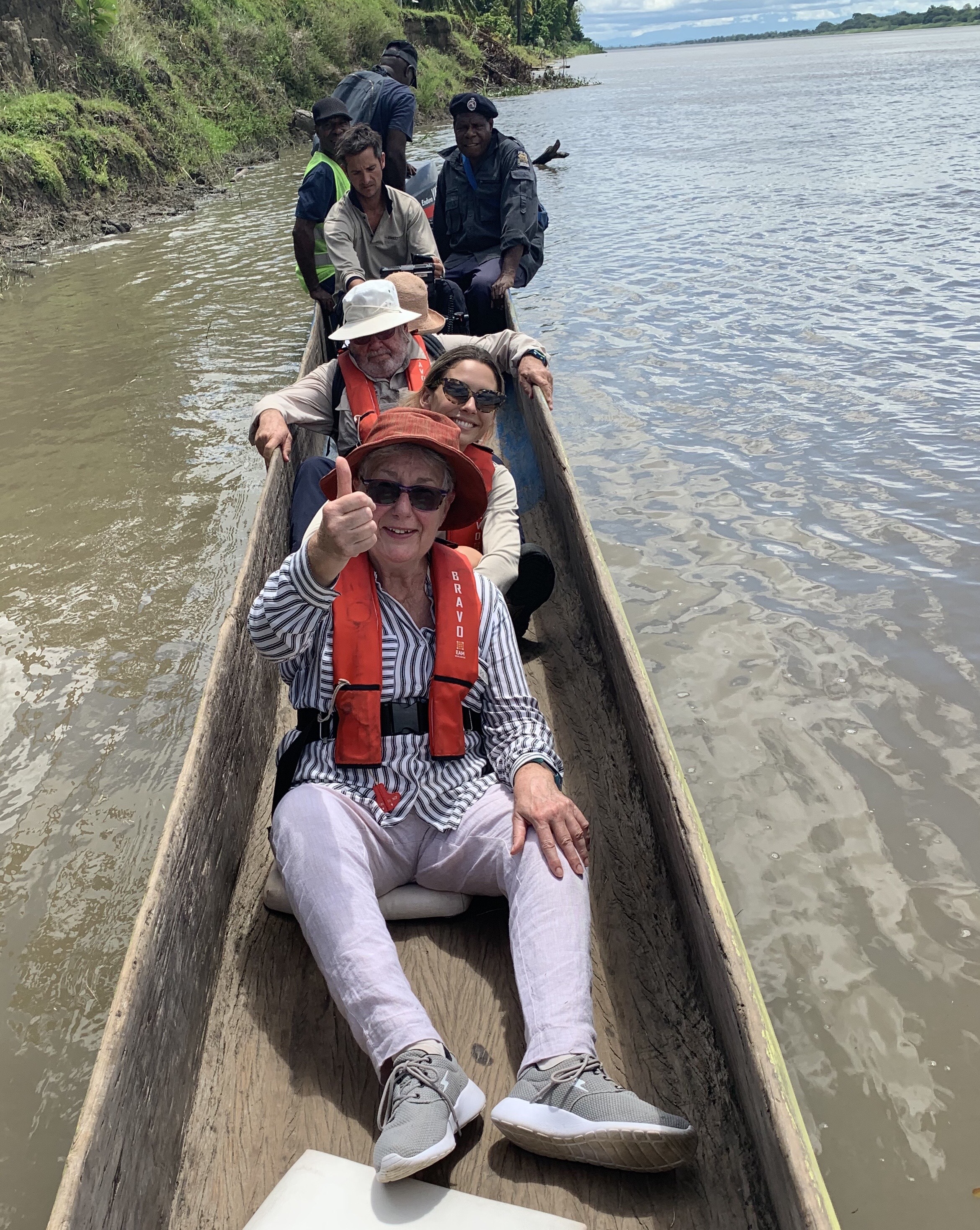
A 20 minute ride in a dugout canoe was not luxurious but it certainly was a talking point over a few drinks that night.
Comfortably seated and ready to go
At the next village young people performed a ceremonial dance that included a large cassowary. Much of the PNG wildlife is similar to northern Queensland, not surprisingly because PNG and Australia were once joined.
A cassowary surrounded by hunters
Did they think our life jackets were our traditional dress?
Back on board True North we cruised for several hours to the River mouth, again with people paddling out to meet us along the way. We still had some basketballs left and there was much excitement when they were tossed into the water.
Kids 200m from the shore in the middle of crocodile territory, paddling in a race to get a ball
After another great dinner and a good night’s sleep we arrived at Madang for a relaxing couple of hours on board, a 30 minute drive to the airport, a lengthy passport checking and check in process and a 2-hour flight to Cairns.
The full group on the last morning
Before completing this final blog here a a few photos taken by others that are worth showing.
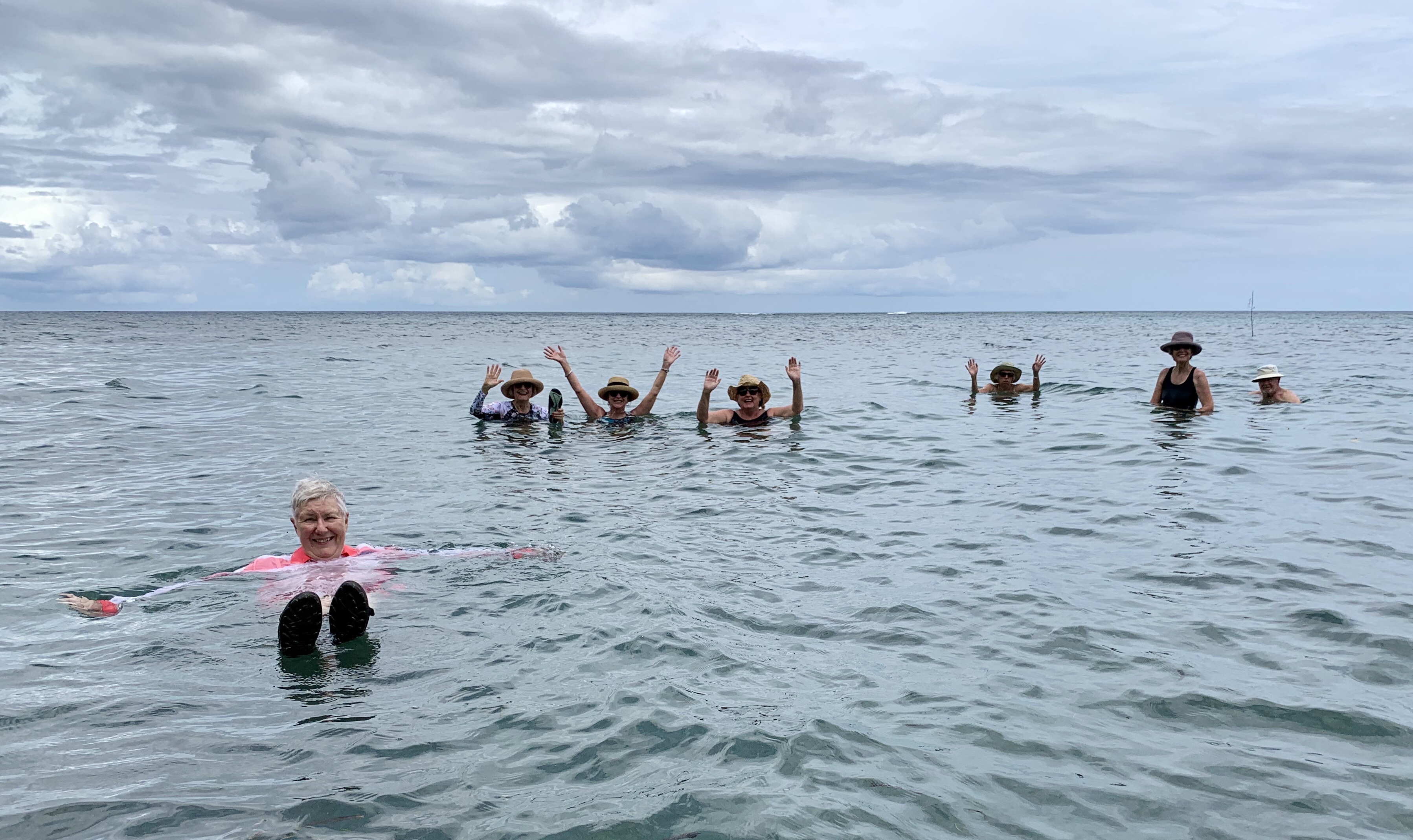
Jo, 2nd from left, relaxing on a tropical island while Ted was snorkeling nearby
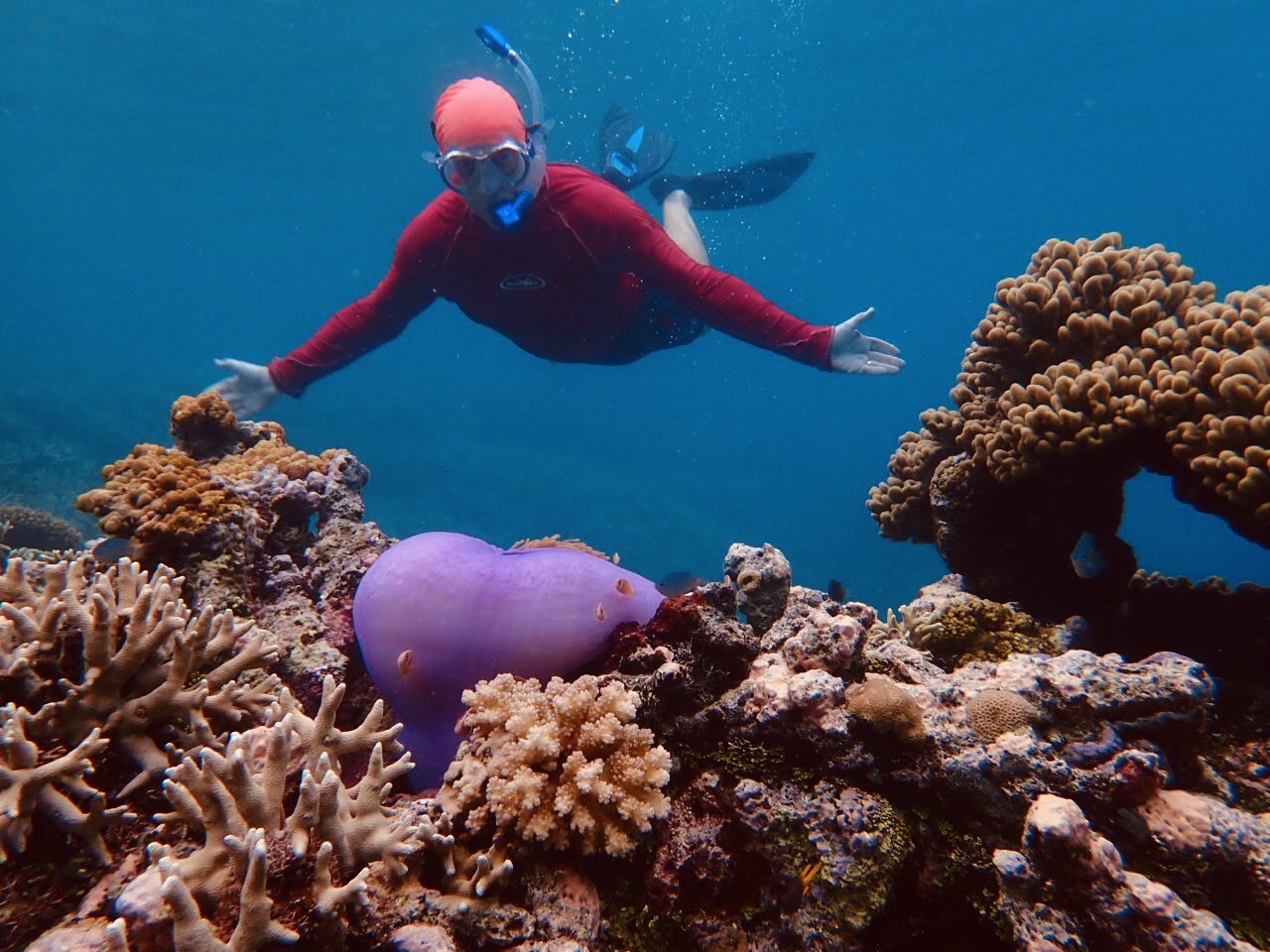
Snorkeling in pristine waters
Sights like this were everywhere
Coral Trout. Most fish caught were either released or given to villagers, but not this one
Spanish Mackerel? We kept only enough fish for the chefs to use on board
We cruised overnight to the mouth of the Sepic River, waited at the entrance until daybreak then began our approximately 150 km trip up the Sepic. This amazing river is one of the greatest wild rivers on earth, remaining virtually as it has been for thousands of years. The valley is wide and flat, 1100 km long and meandering along in huge sweeping bends. Today the water is about 20m deep water along our route but sometimes it floods to several metres deeper. Even now the flood plain has dozens of large deep lakes and many tributaries so during flood it must be incredible.
Thousands of people live in remote villages. Their subsistence lifestyle is based on fishing and gardening, growing such crops as yams, taro, corn, bananas, water melon and sago. Fish are still plentiful and the land hasn’t been over cropped so there is no reason that it can’t survive for a long time yet. Sepic people believe that they are related to crocodiles and their special relationship with the River is obvious.
These were amongst the first to meet us when we entered the Sepic
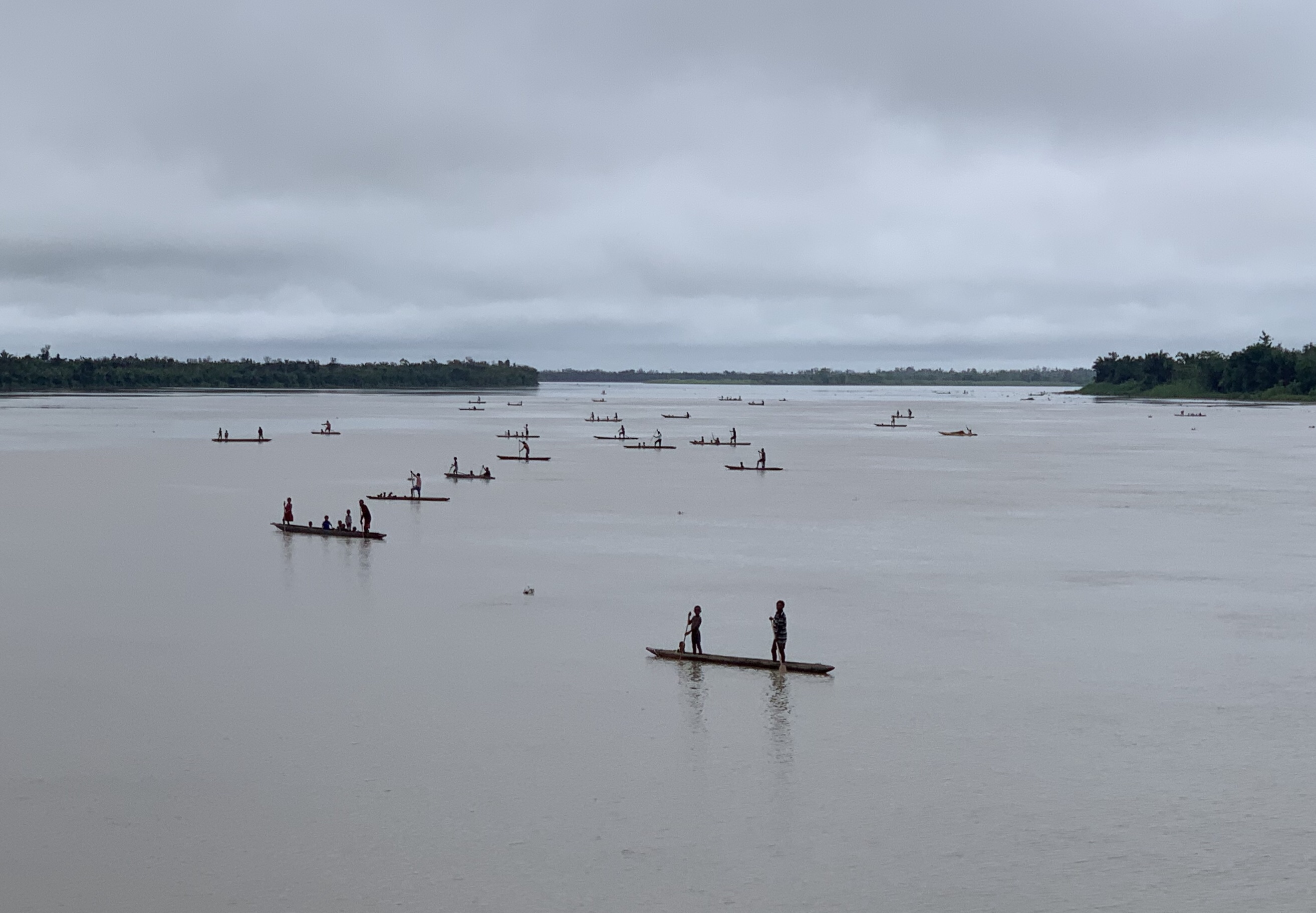
Then hundreds met us along the way, hoping for us to kick balls to them, which they gathered enthusiastically
Our visit created much excitement, 25 canoes at this village, just one of many
We took 2 trips in the tenders, firstly to Angoram for artifact shopping.
Sepic artefacts are magnificent, this one for $1500; we didn’t buy it.
I came here 50 years ago and things don’t appear to have changed much. The most obvious changes since 1969 are a phone tower that would be used mainly by government officials and now there are more people speaking English, although still not many. Pigin is of course the prevalent language so I had lots of fun trying out my Pigin skills.
The next trip was through a long, deep creek/channel with villages dotted along the banks. Kids and adults alike sang out to us, partly to say Hi but also to either sell us produce, e.g. tiny live crocodiles or water melons, or to ask for mosquito nets or clothing that they knew we would have.
They weren’t all trying to sell something
True North visits the Sepic 3 or 4 times each year and the villagers know that the crew bring gifts. The gifts are gratefully received and often people give us water melons or flowers in return. Next stop was at a stilt village comprised of 30 or 40 houses built high above the lake on wooden posts, presumably above flood level. The Government provided land for these people a few years ago so that they could have more stable living conditions but within a few months they had all moved back to the lake. They paddle their boats for a couple of hours to tend their gardens and raise pigs in their stilt houses. They also farm crocodiles and can make quite good money from that. Although they are poor they seem to be quite content.
A warm welcome at the stilt village
A neighbourhood chat at the stilt village
Today’s trips on the Sepic certainly gave us plenty to think and talk about back on the True North for the night.
Perhaps last night’s party was not such a good idea after all
Before dawn on day 8 we arrived a Karkar Island, another volcanic island occupied by traditional people and a large copra and cocoa plantation owned for 100 years by the Middleton family. This family has been long time friends with the family of the PNG e pert that we have traveling with us for the whole cruise, by the name off Simon Tewson. Simon was born in Australia, raised in PNG and for most of his life has been involved in tourism and mining all over the country. His knowledge is immense and he is a good story teller so we have been able to learn lots more than we would have without him. His relationship with the Middleton family is the main reason we are at Karkar.
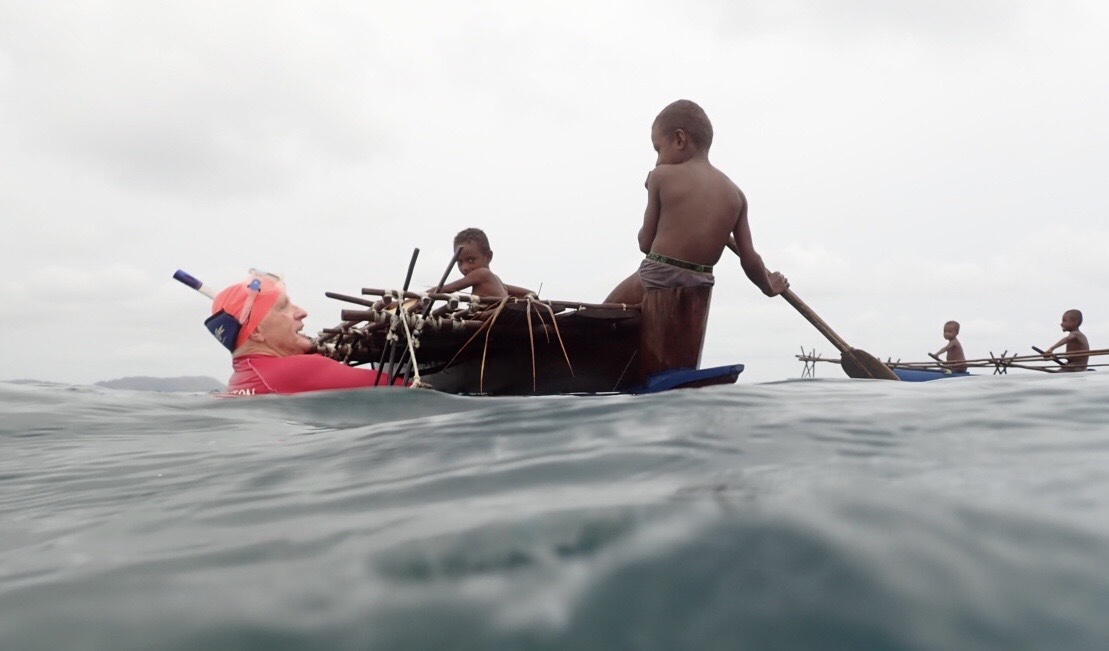
This morning the weather was cloudy and we couldn’t see the top of the mountain so the chopper flights were postponed. We tried snorkeling in a few spots but it wasn’t as good as previous places. In fact I spent much of the snorkeling time either swimming or talking to local kids who came to visit in their canoes.
This afternoon we visited the working copra and cocoa plantation on the island.
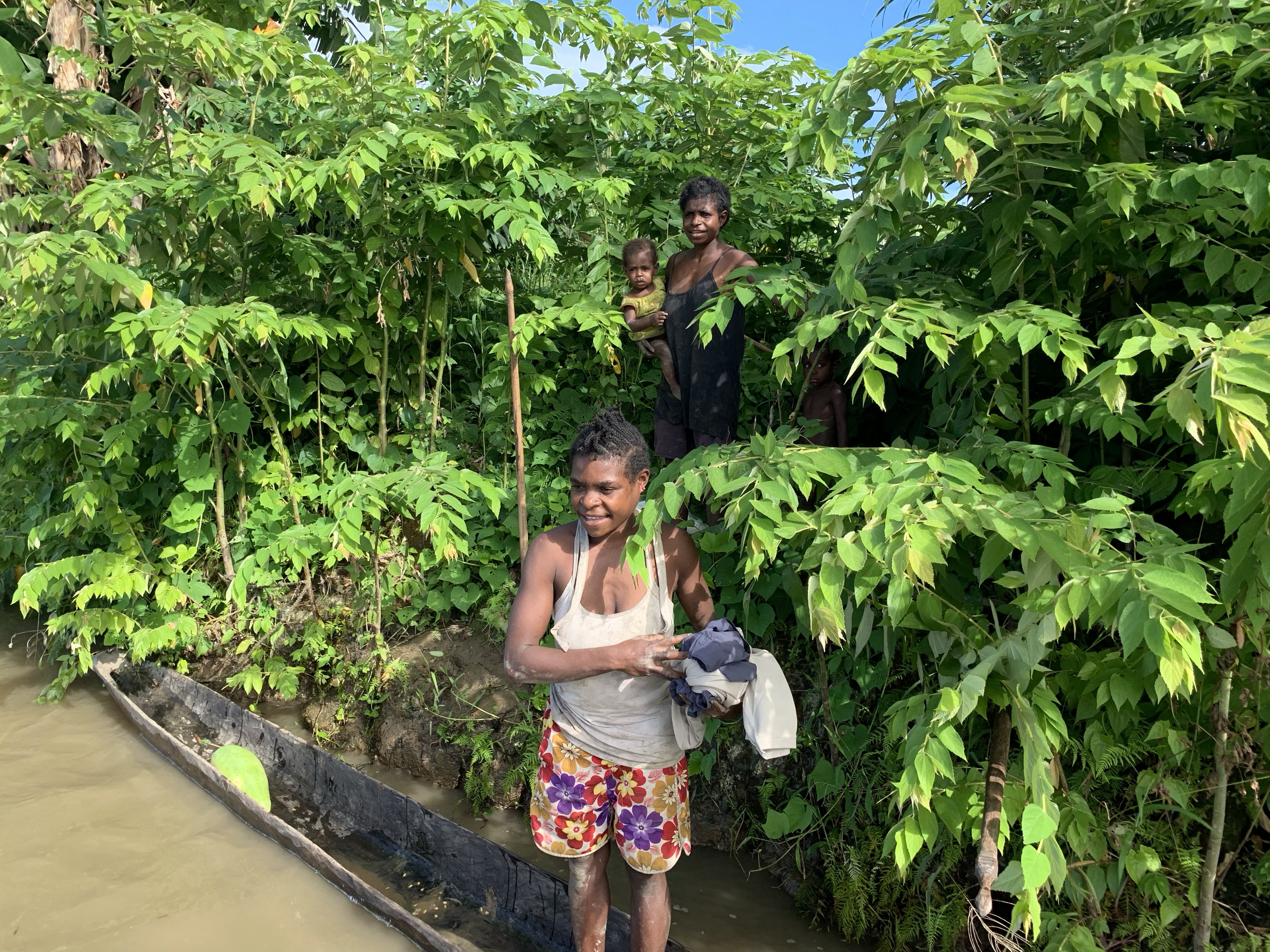
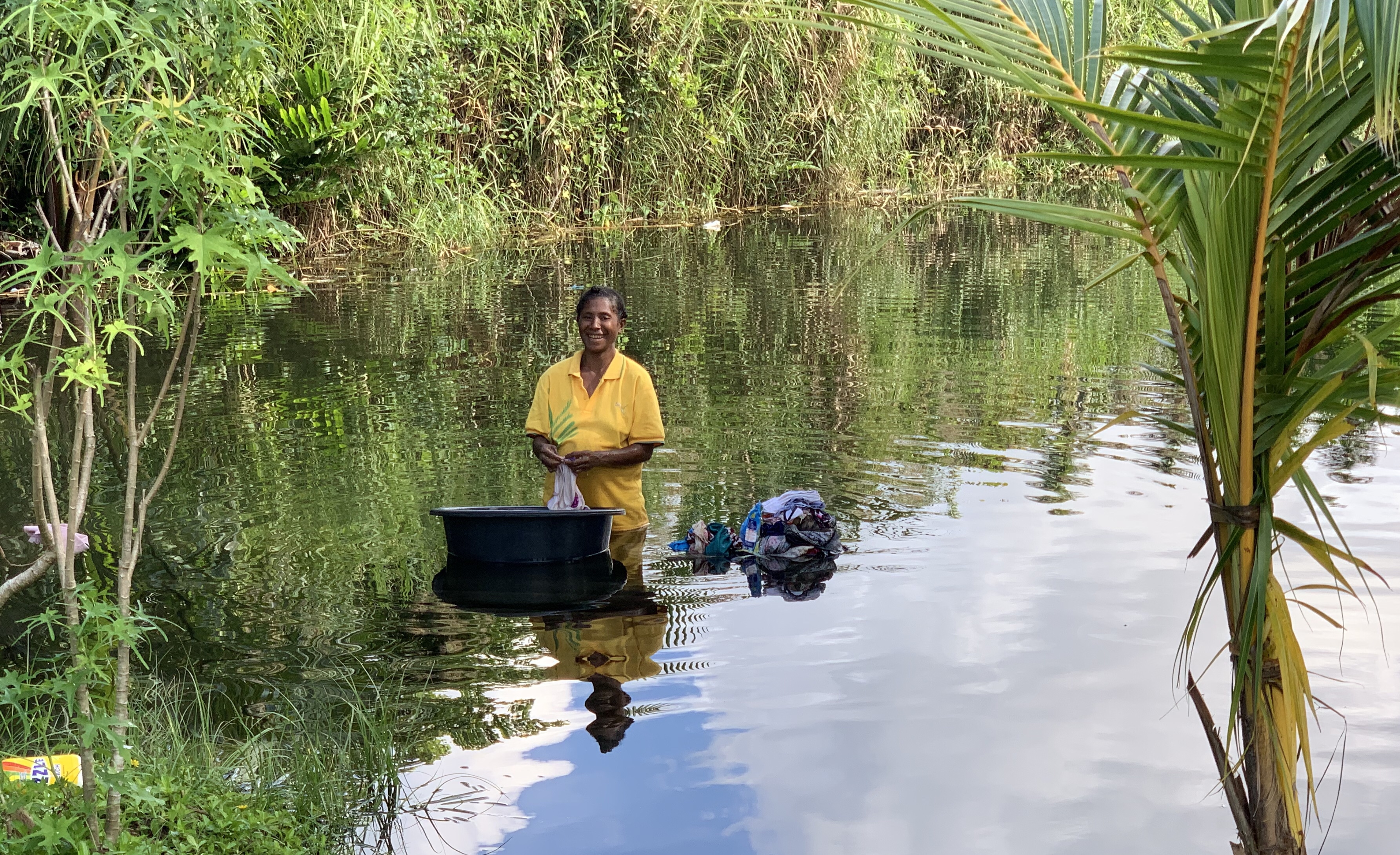
Laundry duties, PNG style
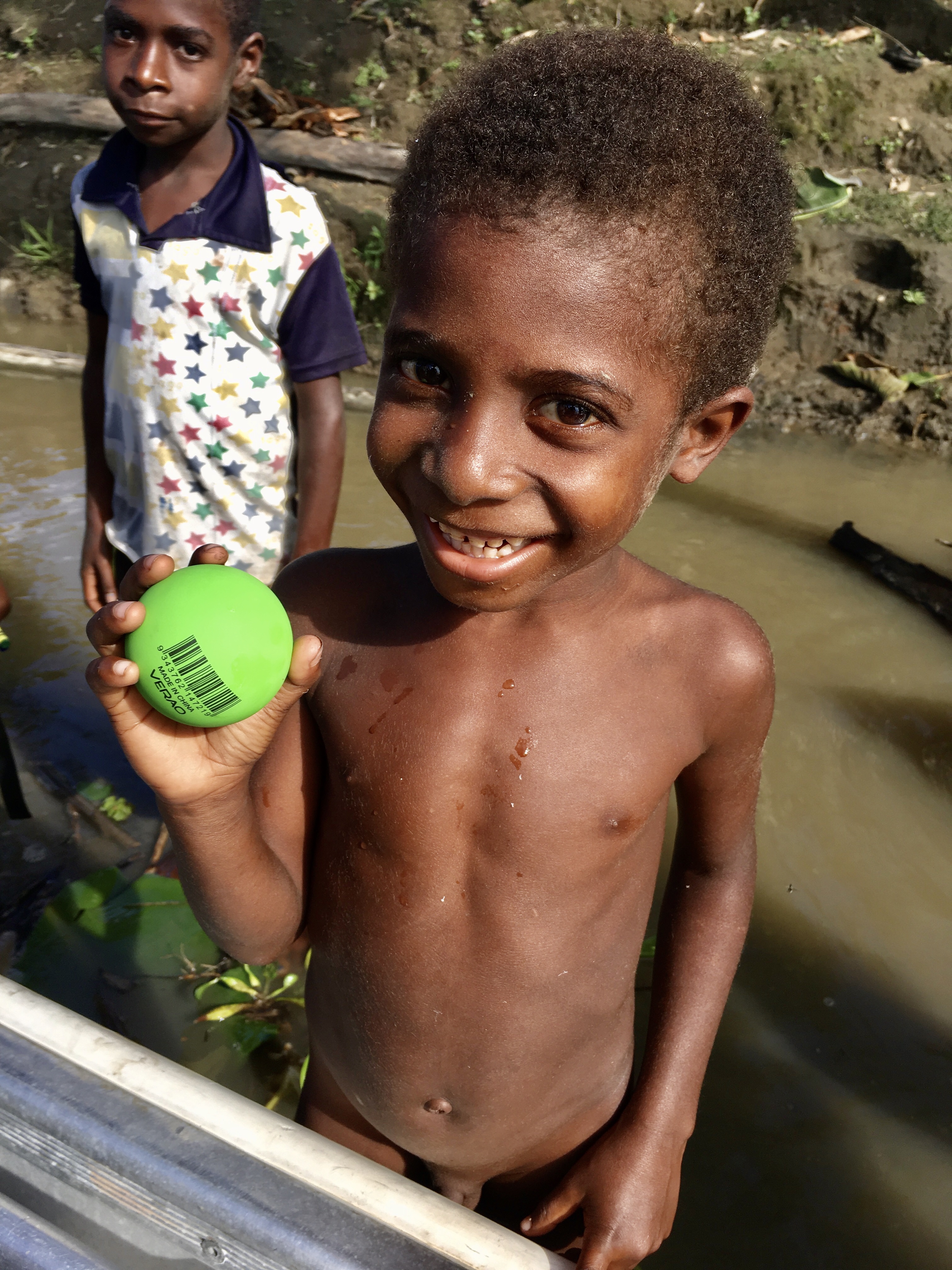
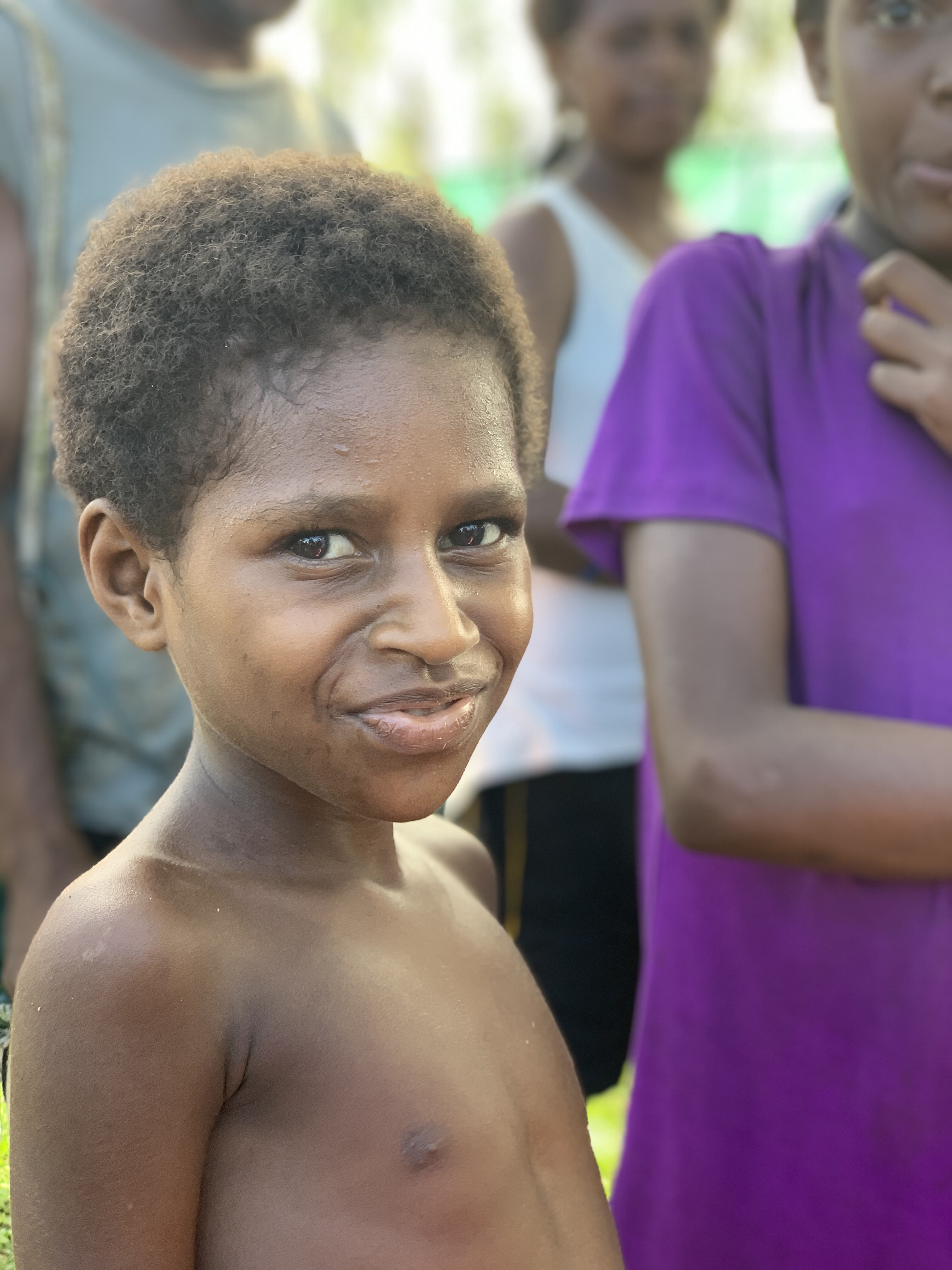
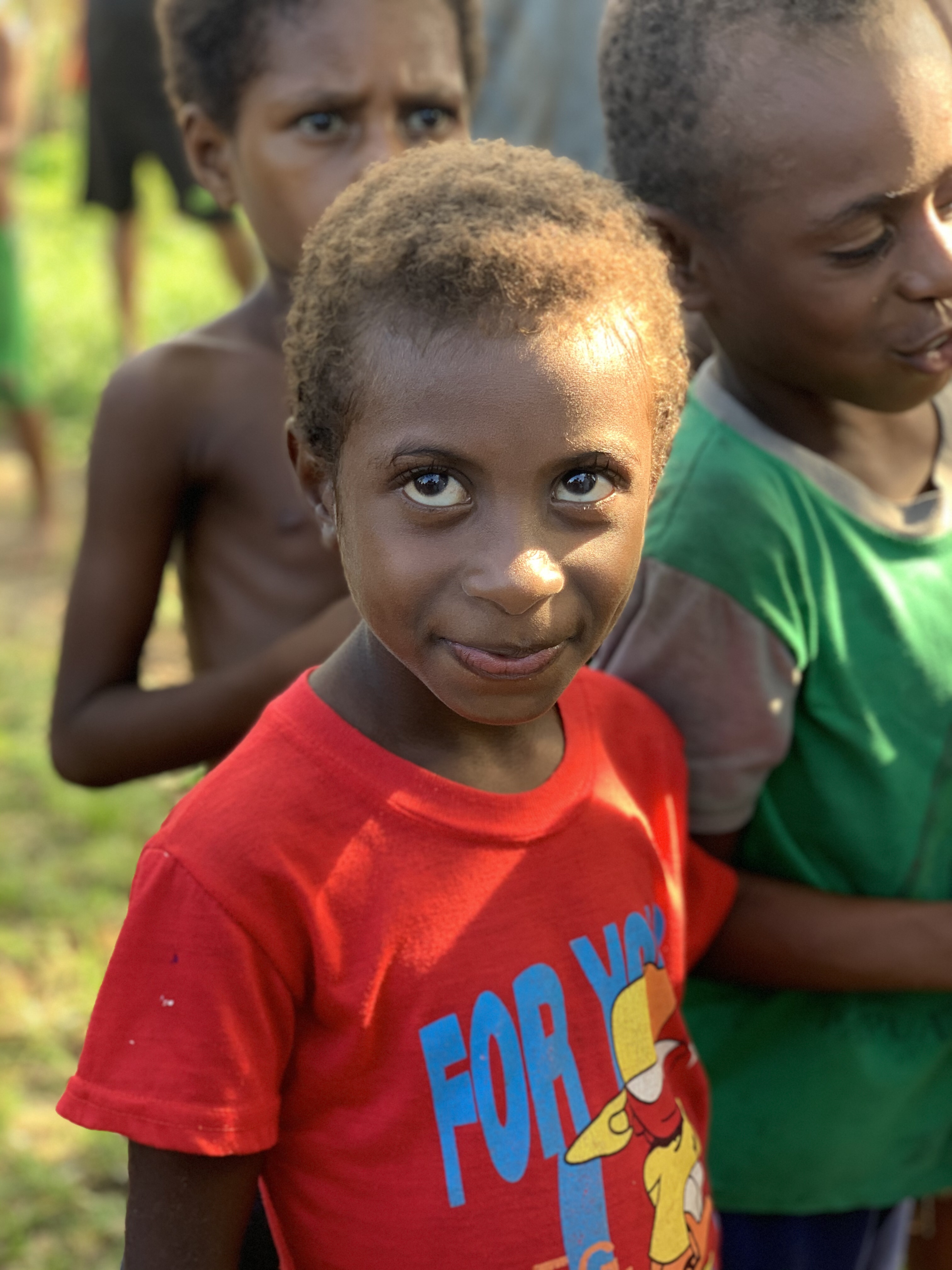
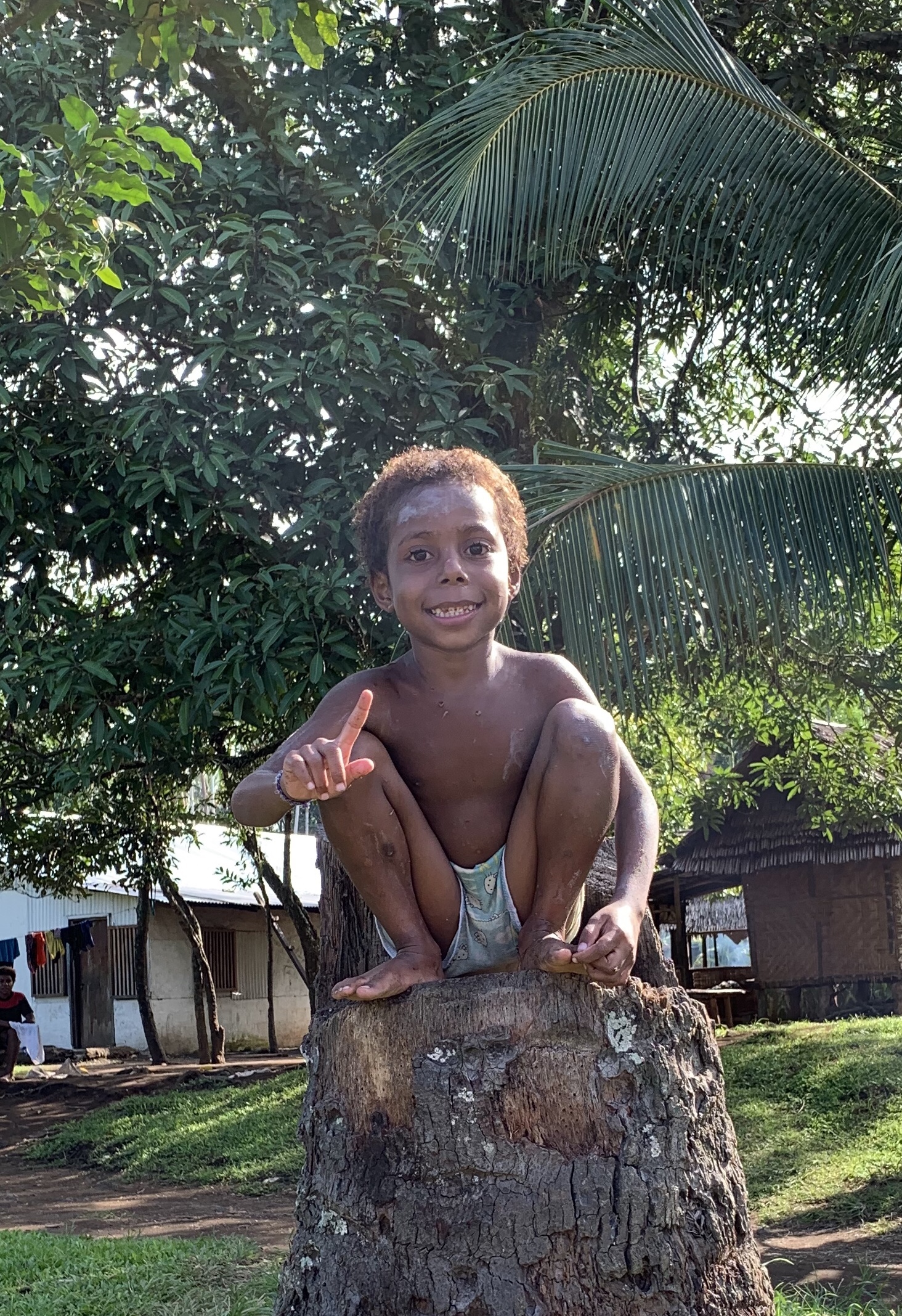
It was surprising to see such a labor intensive process, employing 1500 people. Of course it could be done more efficiently but employment is the main reason the PNG government allows the foreign owned plantation to continue. After the plantation tour I again chatted with locals, mainly with the cook and cleaner who work for the “missus” but also with lots of children. Here are a few of the friendly kids we met.
This is one of my favourite photos
Back on board, at happy hour I gave a slideshow presentation to the guests and a few of the crew. I had been asked to do that by several guests so I got one of the crew to help me convert some of my photos from an 11 year old Word document, then added a couple of maps and recent Isurava photos. Everyone seemed pleased so I was happy.
Eight hours of overnight cruise brought us to cruise day 7 at Sakar Island, inhabited by 700 people, all living in one village. Typically in the islands village councillors have taken over the role of “chief” and somebody nominated by the councillor, or the councillor himself will board visiting vessels to control activities. They don’t want us anchoring, fishing, diving and snorkeling just anywhere. They also usually don’t allow visitors to fish with sinkers and often won’t allow spear fishing. We are not allowed to catch turtles, dugongs, sea cucumbers and other of their favourite foods. The councillors on Sakar also kept a tally of snorkelors, divers and fish caught so that we could pay a fee for us to use their assets. These sensible rules appear to be partly about reef and species preservation and partly about maintaining control over their territory.
Sakar Is. is actually a dormant volcano which last erupted about 1880. Much of the island is very fertile volcanic soil but on some of the steep slopes landslides have stripped away the top soil, leaving almost bare rock. It is interesting to see jungle covering 75% of the island beside large areas where grass can exist on the slopes but not trees or gardens.
Early morning at the volcanic Sakar Island
An early morning flight took us up to the top of the volcano and into the caldera with it’s lake.
The lake in the caldera, at the top of the volcano
On the way back to True North we saw a huge pod of spinner dolphins, perhaps 100 of them, a large shark and a manta ray.
Later in the morning a dozen or so youths swam about 400 from the fringing reef to join others with their canoes at the rear of True North. They wanted to come on board but the village councillor and his assistant kept them under control. Their water skills are amazing, not surprisingly because the water is both their work place and play ground.
The group in the middle are balancing on an upturned canoe
We went ashore for an hour or so, visiting the gardening area beside the beach where the local farmer grows coconuts, betel nuts, bread fruit, cocoa and yams. This was a good opportunity for a beach swim.
A great time at the beach
The afternoon was for snorkeling again, this time in a trench or almost a lagoon, where again we marveled at the varieties of coral and fish, including a large turtle and a reef shark.
Colourful underwater creatures
And fun above the water
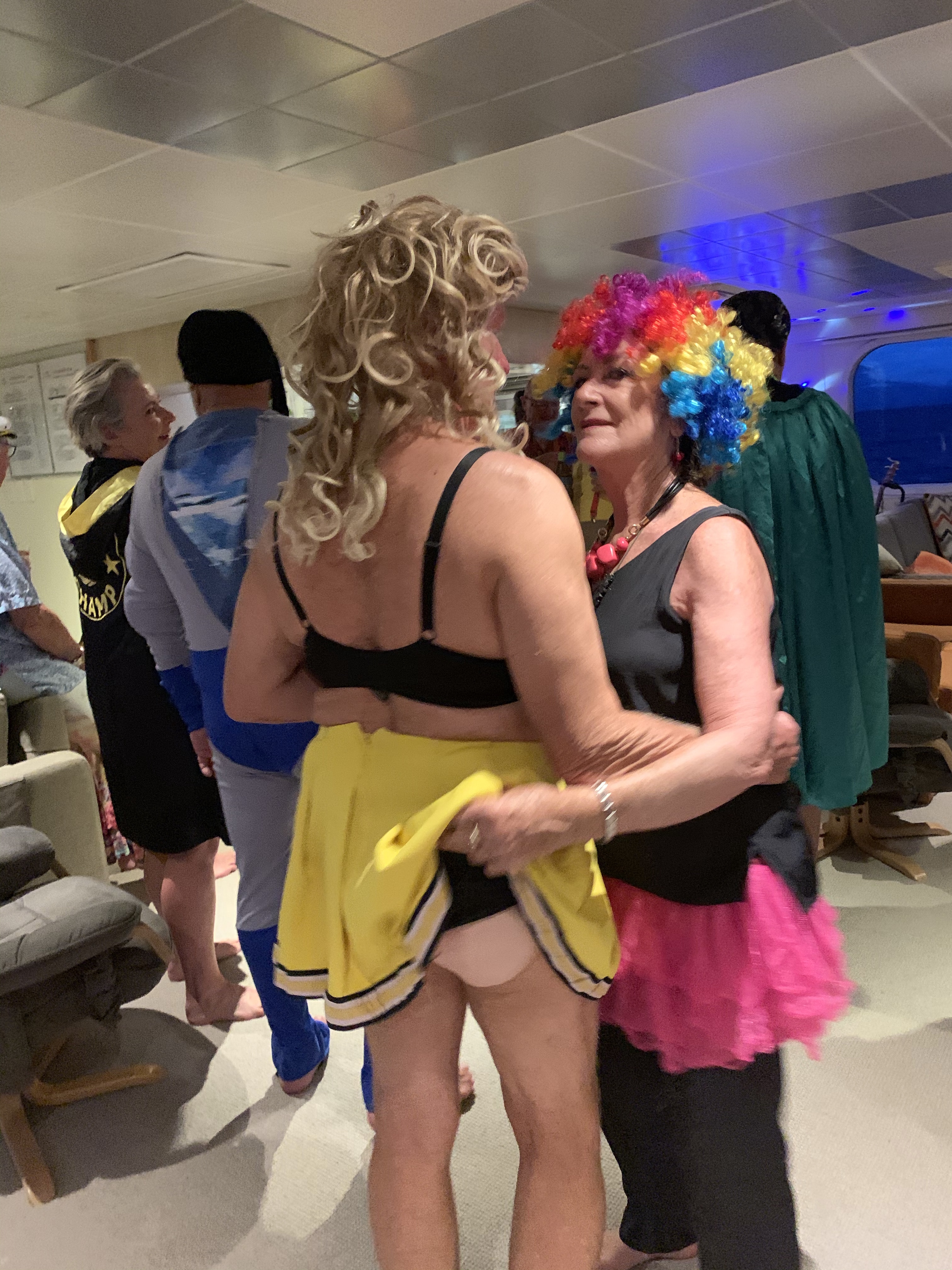
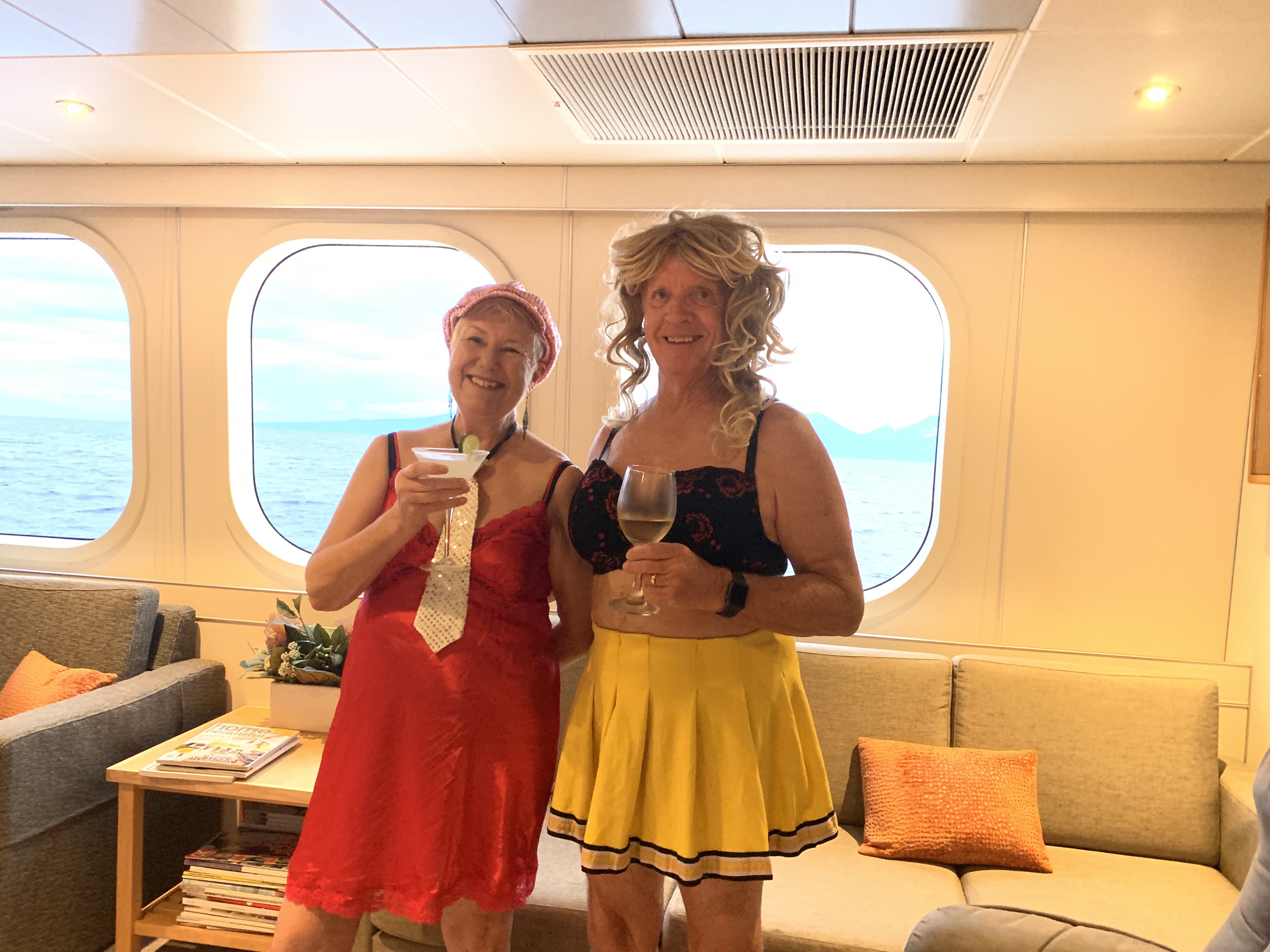
Then it was party time. True North carries lots of old clothing for fancy dress and, helped by cocktails we all soon got into party mode. There were some crazy outfits. Jo went in a red petticoat and I had on a short cheer leaders skirt with black bra.
Easy to party
By 9 pm a few of us were siting in the fresh air at the bow for an hour or so, while we cruised to our next island, with the party still going until about midnight.
On cruise day 6 we arrived at the Arawe Islands, at the south western end of New Britain. After a rocky night and traveling it was nice in a fairly calm bay.
The day stared with an early morning helicopter flight that was supposed to be for an hour but cloud cover prevented us from going where the pilot had intended so it was shortened to 30 minutes. We didn’t mind as the scenery was still interesting; we even saw a whale.
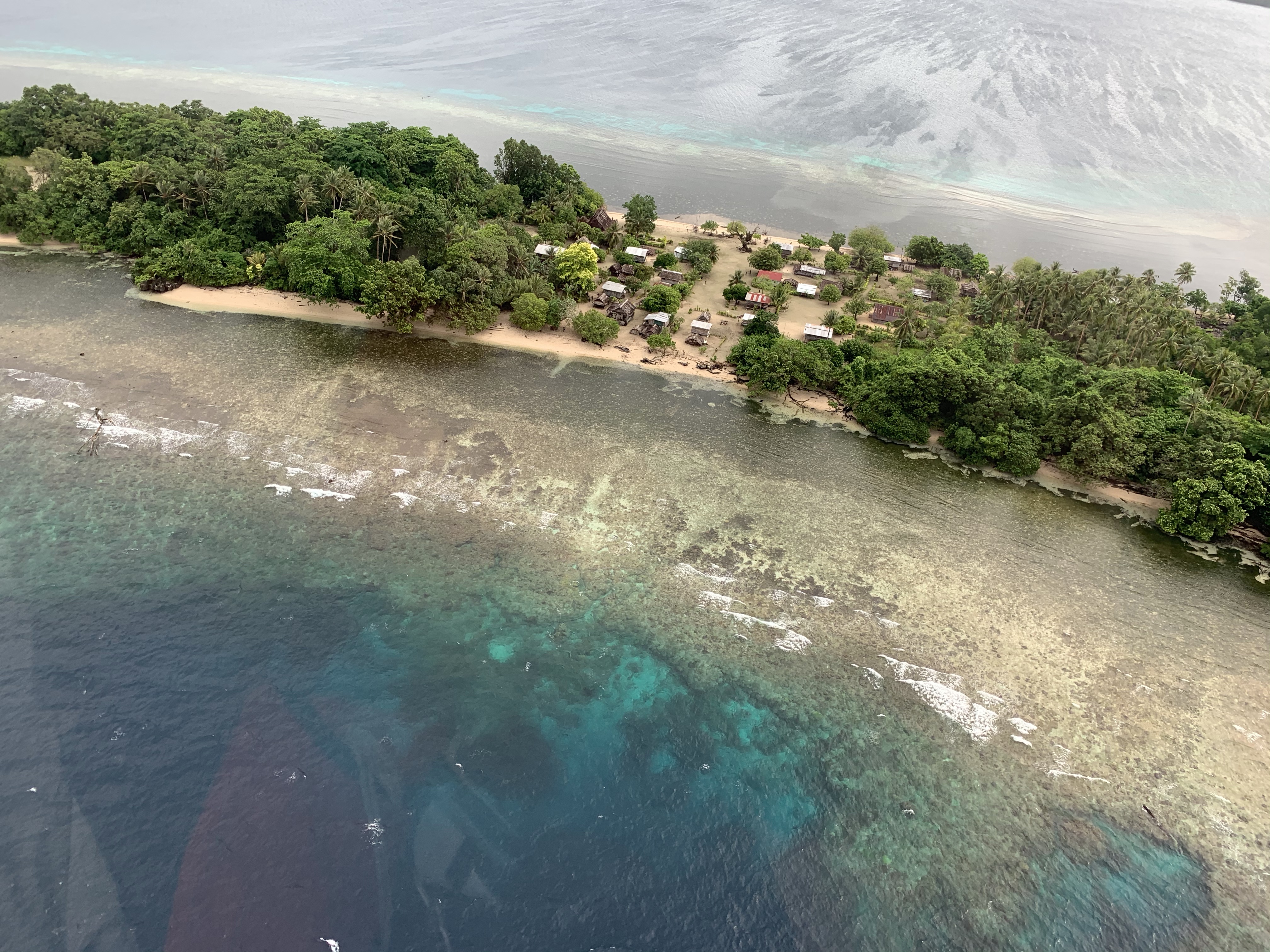
A tropical paradise
During the morning snorkeling trip the coral was a little different in that there was much more soft coral than we had seen in other places. There we still lots of fish and even a sea snake about 2 m long. The highlight of this trip was visit by about 8 local kids and adults on their outrigger canoes while we were in the water. While most continued snorkeling I talked to the kids from the water. They seemed to enjoy my attempted pigin discussion; well they laughed a lot so I think they enjoyed it.
Having fun with local kids
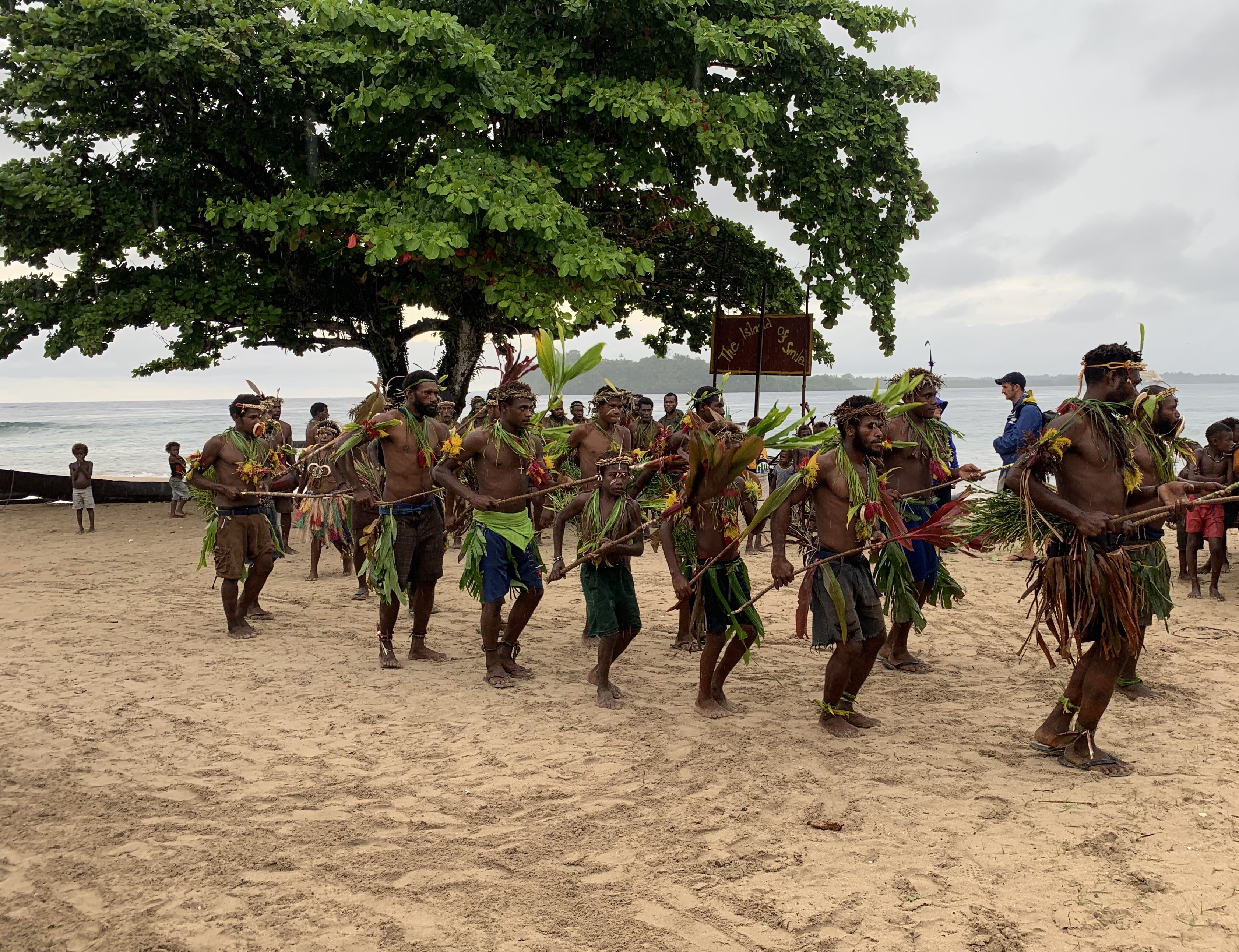
We spent a couple of hours in the village on the nearby island where we were made unbelievably welcome. The whole village, or so it seemed, met us on the beach with much frivolity, welcome dancing and impromptu singing. They didn’t know we were coming until we arrived almost on their door step at dawn the festivities were unplanned.
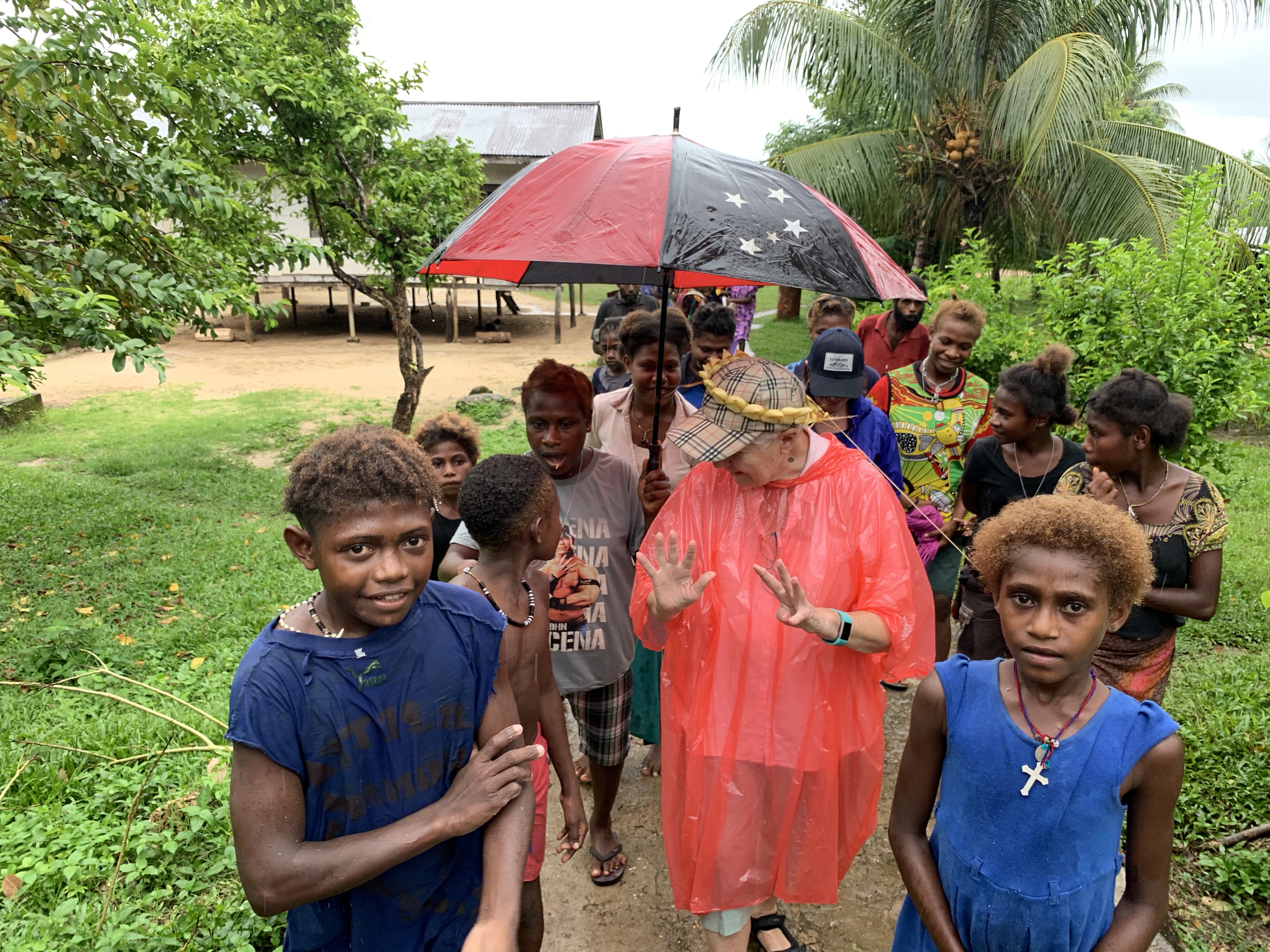
We found ourselves surrounded by hundreds of children and adults, many of whom could speak quite good English and were keen practice as much as possible. Girls and women adopted Jo and a separate, smaller, group took me under their wing.
Chatting with locals during an impromptu village tour
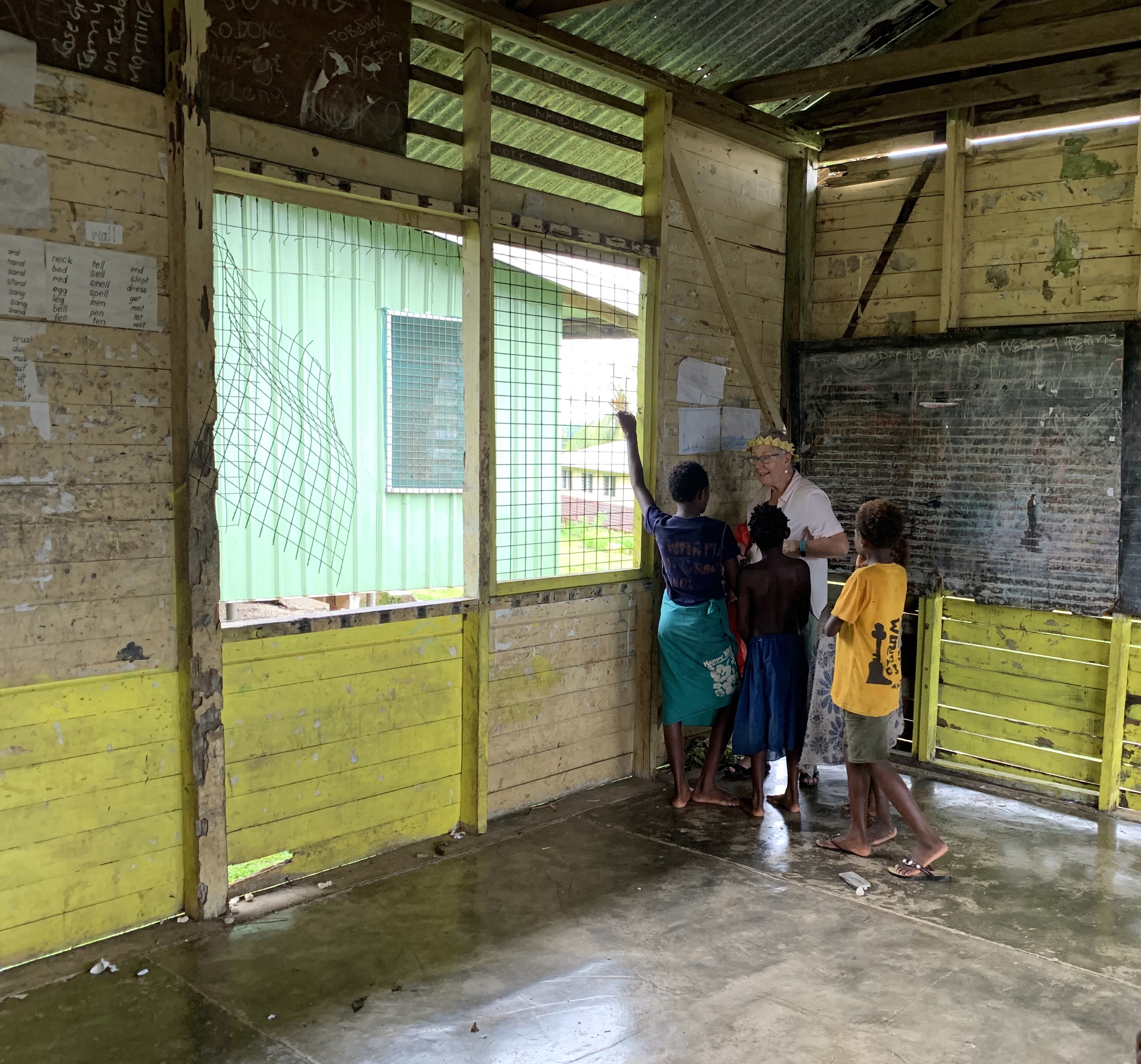
They showed us their school and church as we walked around the village.
Proud students showing us their classroom
Spontaneous singing happened all over the place; obviously singing is a big part of their life.
Eventually they walked us back to the beach and onto our boats.
Walking down hill on a slippery track – with eager helpers
Some of Ted’s guides during the village tour
It was a wonderful experience and just the kind of experience that I have told Jo about and was so keen to share with her.
It was sad to leave the villagers, even if it meant that we could enjoy a hot shower, lovely meal in air conditioned comfort and a soft bed in our own cabin.
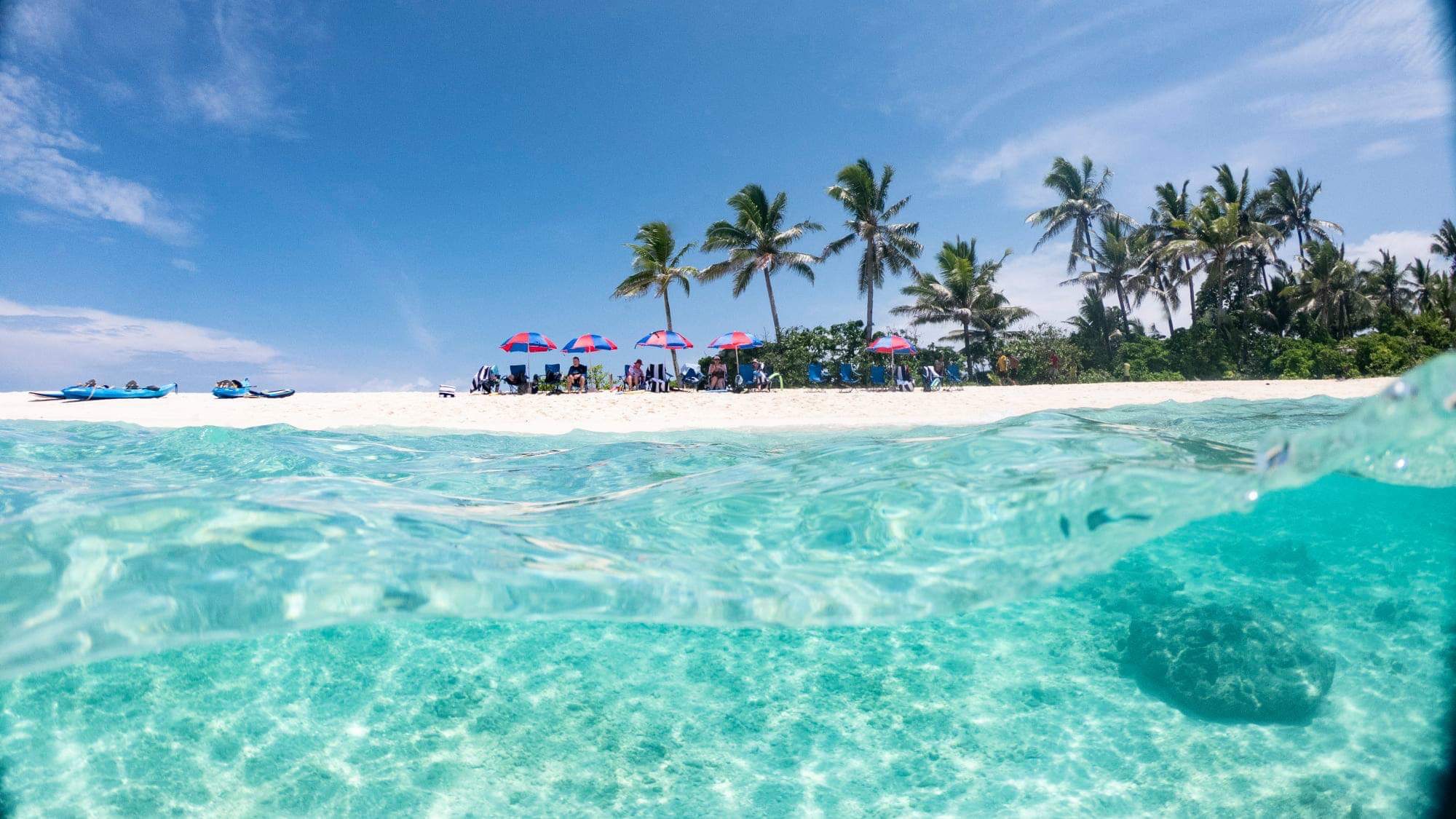
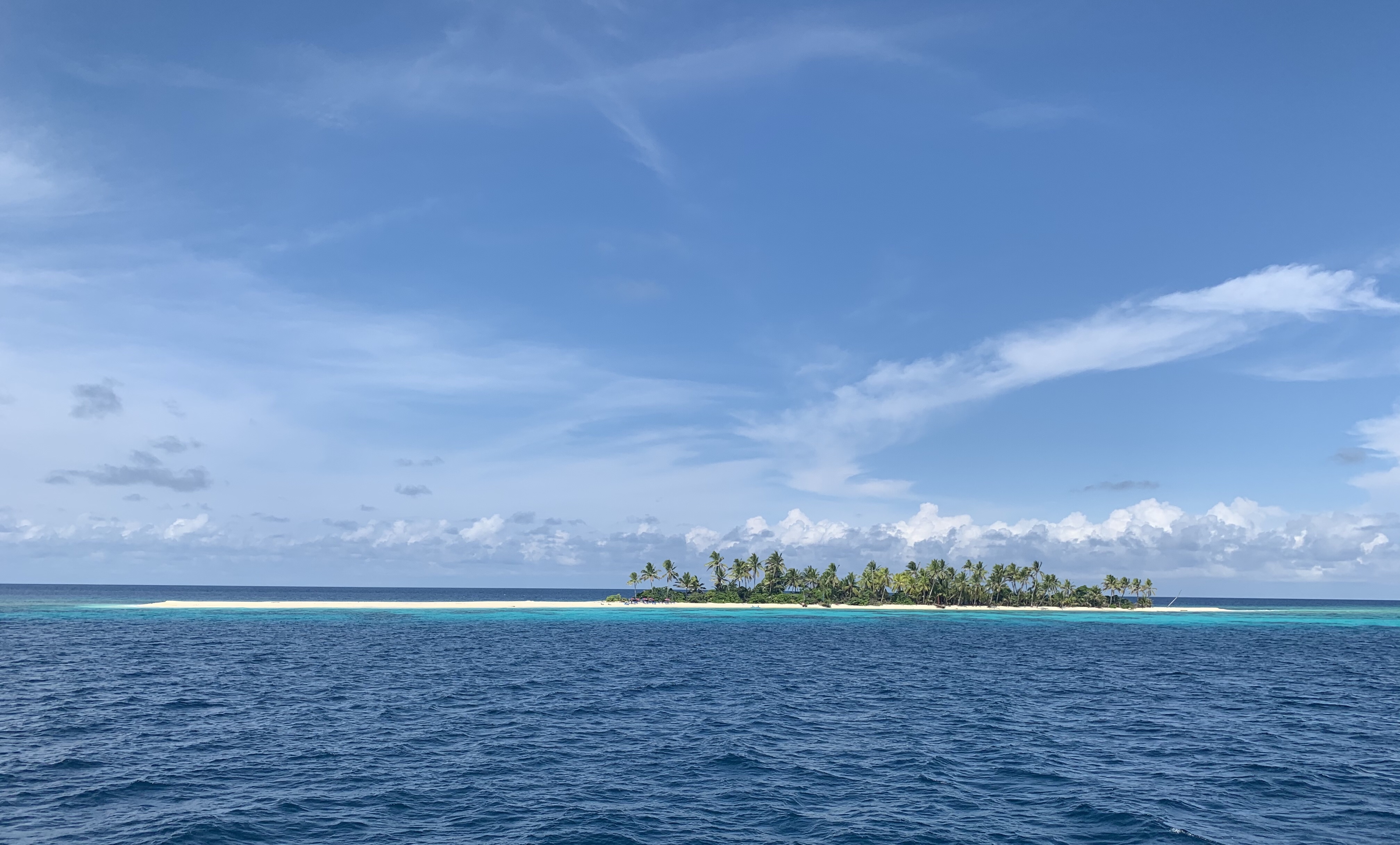
On cruise day 5, having traveled for only 4 hours last night, we arrived at the Lusancay Islands. These islands are mainly coral atolls and only a few are inhabited. We awoke to see that we were at anchor beside a beautiful uninhabited sand and coral island, with palm tress and some undergrowth, surrounded by coral reef.
We dream about tropical islands like this
Today was a fairly relaxing day, with 3 snorkeling tours for Ted and a beach visit for Jo. During the snorkeling trip we saw less interesting coral than in previous excursions because it was mainly grey, almost appearing to be dead. It can’t have been dead though because the fish life was just stunning, much better than we had seen in other locations. We saw every imaginable colour of fish ranging from tiny finger nail size to large reef sharks. There were also large fish such as barracuda , grouper and cod and also a turtle.
While we were snorkeling the scuba divers were enjoying the same success. They have dived twice a day since the cruise began and apparently every dive has been great. One guy went spear fishing and came back with a huge coral trout. People have been fishing every day, usually trawling from the tend boats and sometimes twice a day. For the first couple of days they caught nothing – since then they have caught several including trevally, coral trout and barracuda. Once they have caught enough for our meals they catch and release and they say they have a had a great time. The chefs have produced nice meals from the catch of the day, including sashimi so we have been very lucky.
Late in the afternoon we all went ashore for a swim and sunset drinks.
Sunset drinks on a tropical island
A few local people had sailed over from an island about 20 km away on their seemingly flimsy but apparently very sturdy outrigger sailing canoes. They are returning to their island tonight, navigating by stars or, if the cloud remains heavy, by wind. If the wind is in the wrong direction they will paddle for 10 hours to get home.
It’s cruise day 3 and the helicopter trip to Isurava was just as good as we had hoped. Starting at 5:30 after a light breakfast was tricky but worthwhile. The weather was clear at Tufi and for the first ½ hour we could easily see for long distances – at first the “fjords” to Tufi which are not really fjords but long narrow inlets created between ridges of lava flow from centuries ago; then wide tidal rivers and huge swamps. We saw one crocodile lazing around in a slow moving river. Soon we saw steep, 4,000 m high mountains, fast flowing rivers, steep gorges and lots of low cloud.
The Owen Stanley Ranges are steep, with deep gorges and fast flowing rivers
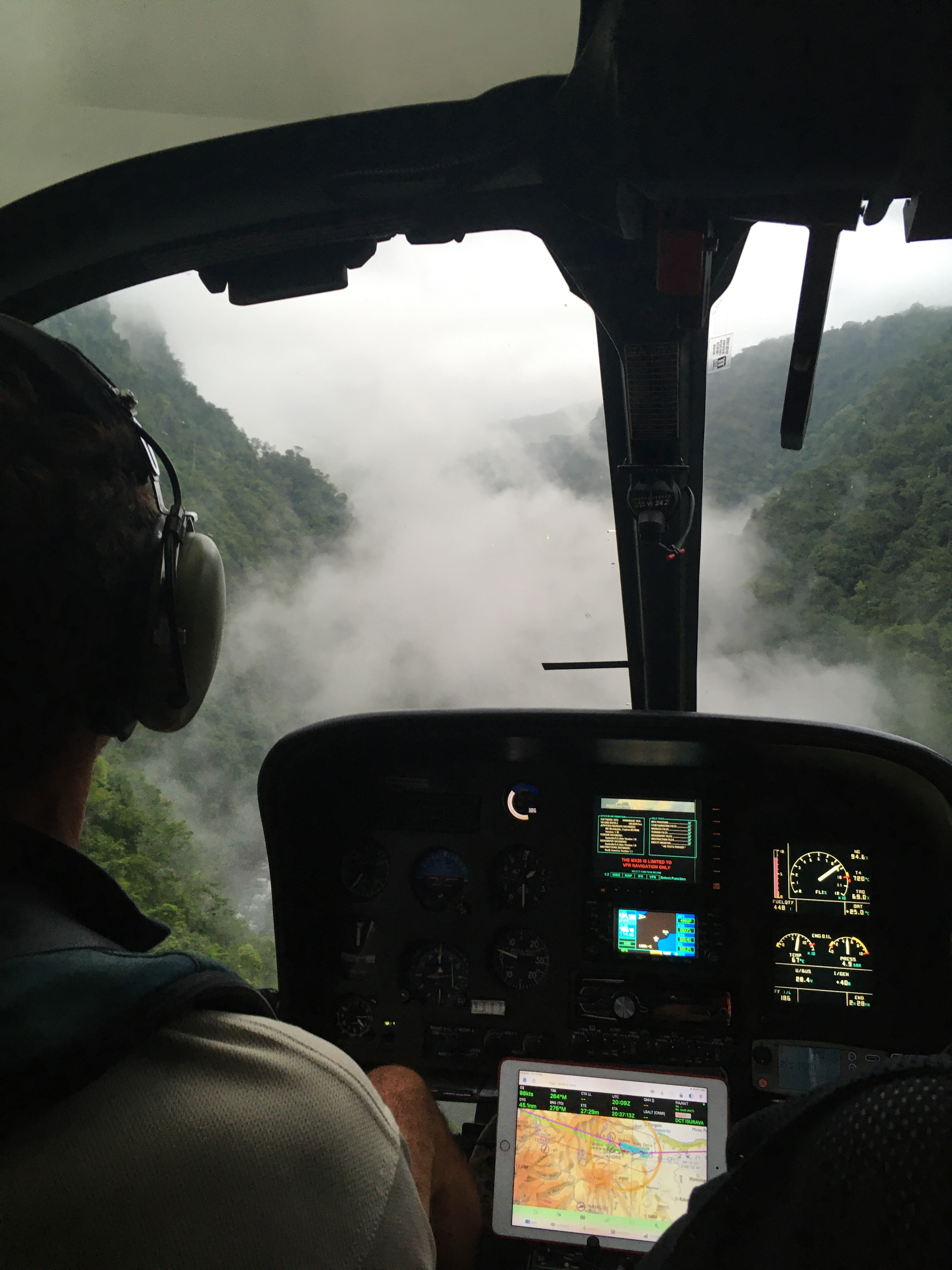
Flying in PNG can be difficult, especially in fog or rain – and we had both
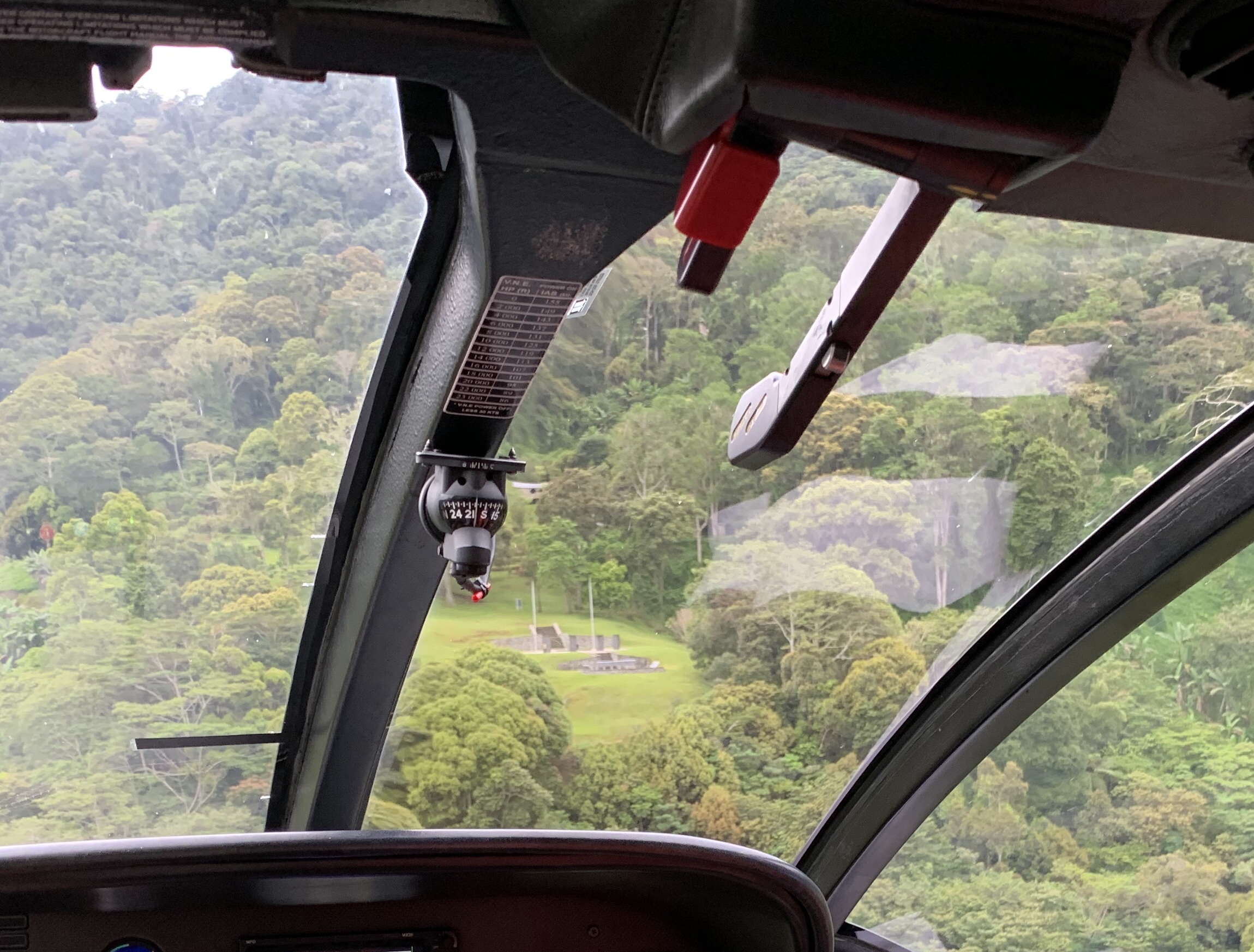
The pilot tried several routes to Isurava and was about to give up and return to True North when he suddenly saw a gap in the clouds and we were able to go up the valley to Isurava.
Approaching Isurava War Memorial, on the Kokoda Track, perched on the edge of a mountain
Being there was special because we had waited a long time to get there. I walked the on the Kokoda Track about 6 to 8 times in 1968/69 and did the whole 96 km walk twice while stationed here in the army. I have always said to Jo that one day I’ll show her beautiful PNG. Then in 2008 I walked the Track with Bevan and one of our nephews and at that time I told Jo about the amazing scenery and the wonderful local people that we met along the way. So when we landed at Isurava it was very special, even bringing tears.
Courage, Endurance, Mateship, Sacrifice; carved in granite pillars at Isurava
Being at Isurava is very emotional, never to be forgotten
At last Jo has been able to walk on the Kokoda Track
Our visit was cut short because we had taken extra time finding our way through the weather to get here, but we didn’t mind. It was as though we had fulfilled a dream to be here. The trip back to the True North was difficult for the pilot. We had to fly low along a narrow gorge in the rain and with cloud all around us, so low that at one stage we saw birds above us in the trees on the gorge sides. Unfortunately only 2 of the 4 flights were able to get away from True North because of rain in the mountains.
Back on the coast the local villagers put on a welcome performance and a demonstration of manufacturing processes, such as fishing nets, thatched roofs, reed walls, baskets, fire lighting and even face tattooing. It was all very interesting and they chatted willingly with us before we returned to the True North.
A painted warrior warning us not to approach the village
This was the second row of defence agains intruders
Traditional costumes; each person makes their own headdress and they are very proud of their work
Jo went on land to visit a butterfly sanctuary which was very nice while I went on another spectacular snorkel trip. The coral and fish were beautiful. Later in the afternoon we went on what the crew called a “raft-up” which involved all the guests and about 8 crew riding to the top of the fjord in 5 tinnies then having drinks and nibbles while the boats were tied together.
A raft-up at Tufi
We saw lots of local birds, mainly parrots, and several local people visited us in their canoes, then a group of 6 local musicians were brought to us in the 6th tinny. It was a very pleasant session, even if it meant having to drink wine and beer earlier that we would normally have.
Curious locals who came visiting during the raft-up
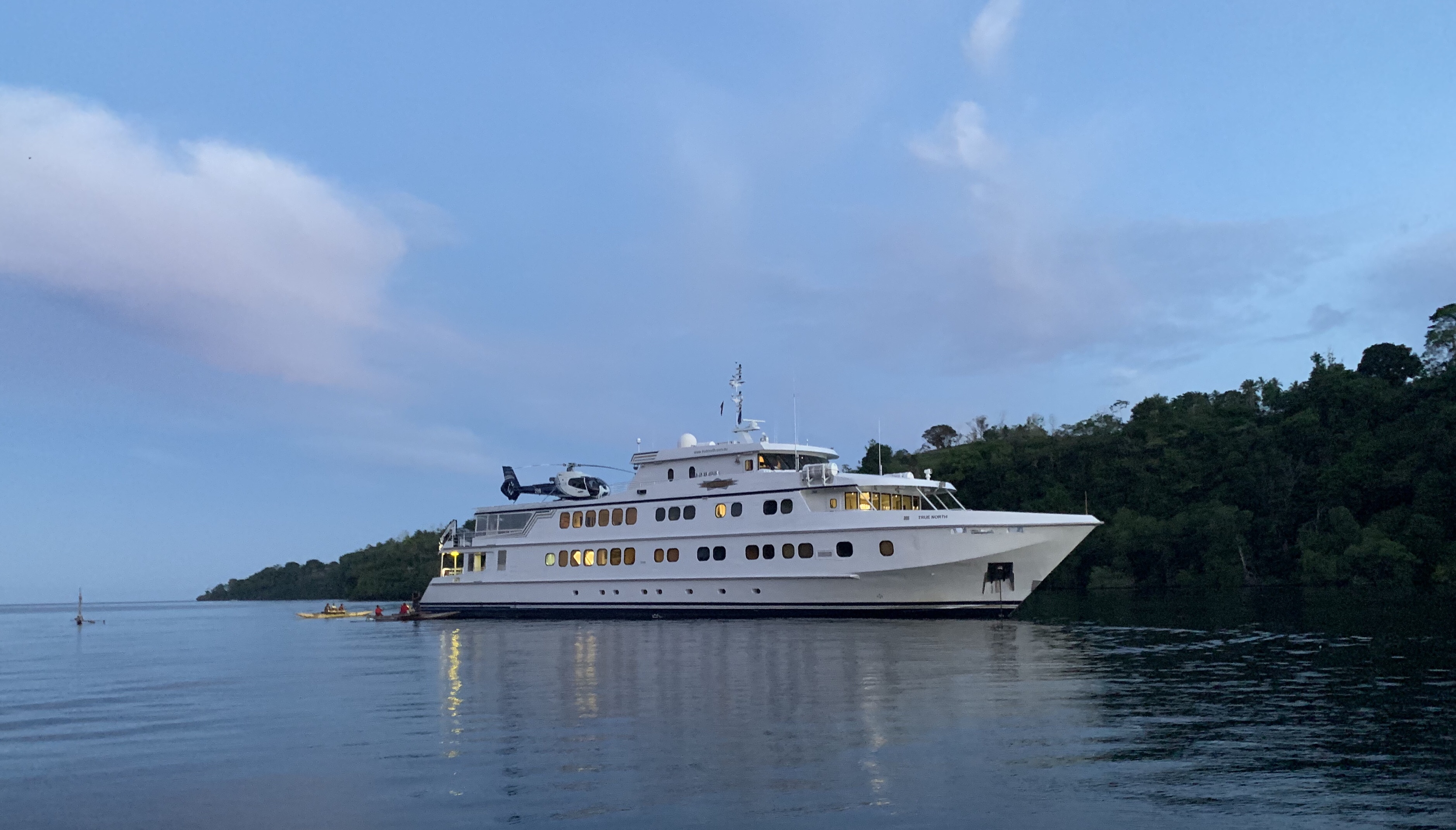
True North at anchor, sunset at Tufi
Dinner at night was as again very nice and we all felt very satisfied after another great day.



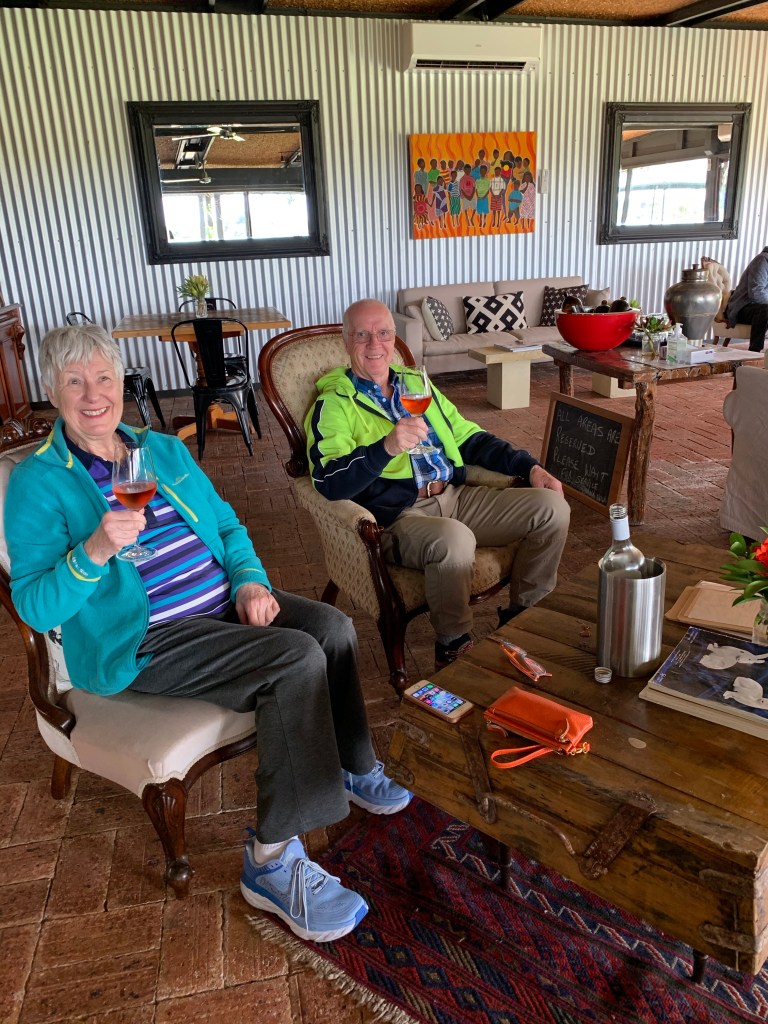





























 Ted and Jo